How to Fix Your Sleep Schedule for Better Energy
TL;DR
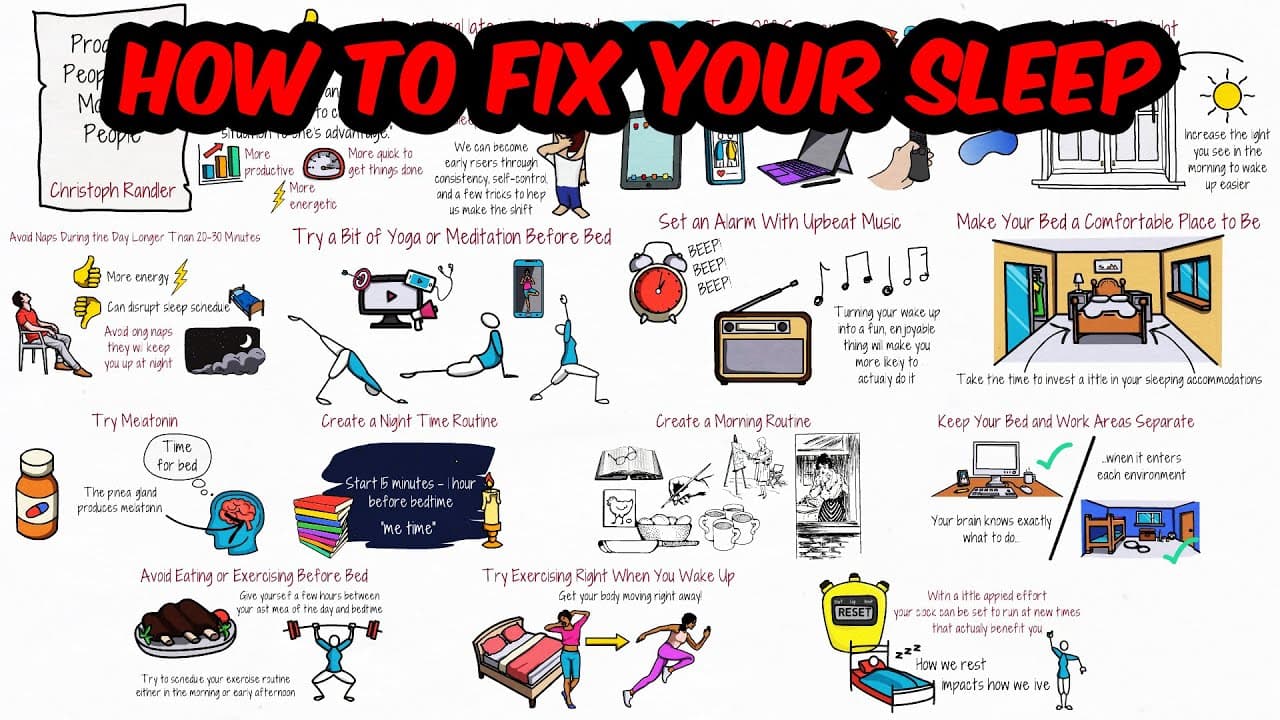
To fix your sleep schedule, establish a consistent bedtime and wake time, limit screen time before bed, and create a calming nighttime routine. Incorporate light exposure in the morning and avoid heavy naps, food, or exercise close to bedtime. Consider using melatonin temporarily to ease into your new schedule and make your sleeping environment comfortable to improve overall energy and productivity.
Transcript
In a 2009 Harvard study, Christoph Randler discovered that people who woke up early in the morning were more proactive in solving problems than those who were late risers. He describes proactivity as “the willingness and ability to take action to change a situation to one's advantage.” Sounds like a great thing to have, right? Of course,... Read More
Key Insights
- 🥺 Waking up early can lead to increased productivity and a proactive mindset.
- 🩵 Screens emit blue light that can interfere with the body's internal clock, so turning them off before bed is beneficial.
- 😴 Creating a comfortable sleeping environment and using an alarm with upbeat music can make waking up easier and more enjoyable.
- 😪 Yoga, meditation, and avoiding naps longer than 20-30 minutes can help regulate sleep patterns.
- 😪 Melatonin supplements can be used temporarily to facilitate a sleep schedule change.
- 🤪 Implementing night and morning routines can make going to bed and waking up a positive experience.
- 😴 Keeping work areas separate from the sleeping area helps train the brain for better sleep.
- 🛌 Avoiding eating or exercising right before bed can help prepare the body for sleep.
Install to Summarize YouTube Videos and Get Transcripts
Explore YouTube Video Summarizer or Get YouTube Transcript Extractor
Questions & Answers
Q: Why are early risers more proactive and productive?
Early risers tend to have higher levels of energy and motivation in the morning, allowing them to tackle tasks and solve problems more efficiently. Additionally, waking up early gives them a head start on the day, allowing for more focused and uninterrupted work time.
Q: Can late risers become early risers?
Yes, late risers can regulate their sleep schedule and become early risers through consistent effort. By implementing the tips mentioned, such as turning off screens before bed and setting an alarm with upbeat music, late risers can gradually shift their internal clock to wake up earlier.
Q: How can controlling light help with sleep regulation?
Controlling light is important for signaling to our bodies when it's time to sleep and wake up. By using blackout blinds or a sleep mask to eliminate extra light during sleep, and exposing ourselves to sunlight upon waking up, we can help regulate our internal clock and improve sleep quality.
Q: How does exercise impact sleep?
Exercising too close to bedtime can stimulate the brain and make it difficult to fall asleep. However, exercising right when you wake up can help energize the body and improve overall alertness throughout the day. By incorporating exercise into your morning routine, you can jumpstart your day and reset your internal clock.
Summary & Key Takeaways
-
Early risers tend to be more productive and proactive in solving problems, but late risers can still regulate their sleep schedule for better energy levels throughout the day.
-
To regulate your sleep schedule, turn off screens before bed, control the light in your bedroom, make your bed comfortable, set an alarm with upbeat music, try yoga or meditation before bed, avoid daytime naps longer than 20-30 minutes, consider melatonin, create a nighttime routine, and create a morning routine.
-
Keeping your bed and work areas separate, avoiding eating or exercising before bed, and exercising right when you wake up can also help reset your internal clock.
Read in Other Languages (beta)
Share This Summary 📚
Summarize YouTube Videos and Get Video Transcripts with 1-Click
Try YouTube Summary with ChatGPT & Claude or YouTube Transcript Generator
Explore More Summaries from The Art of Improvement 📚


Summarize YouTube Videos and Get Video Transcripts with 1-Click
Try YouTube Summary with ChatGPT & Claude or YouTube Transcript Generator