US - China Relationship: What's Next?
TL;DR
As the U.S.-China relationship becomes more strained, understanding the reasons behind the current dynamics is crucial in addressing economic and security issues.
Transcript
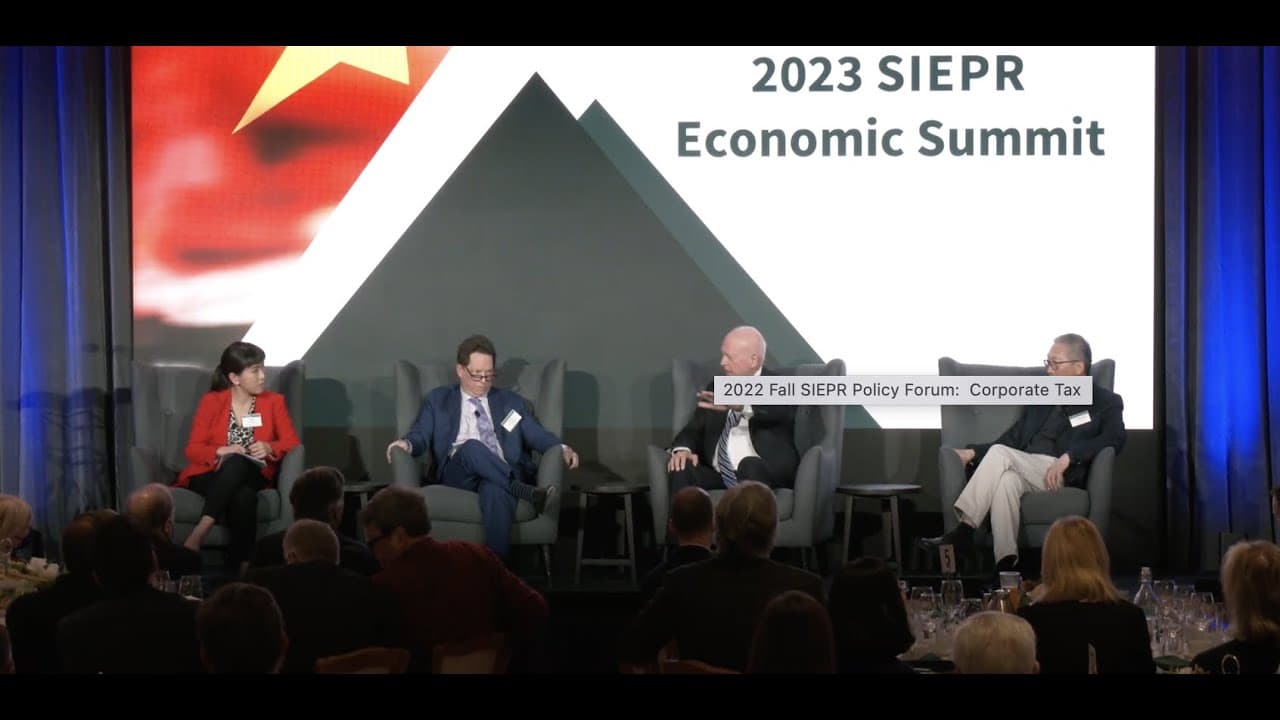
uh the U.S China relationship is a complicated one to say the least but it's one that matters significantly to residents of both countries it's perhaps a good sign that Congress appears to be taking some steps to consider policies that will address economic and security issues in the relationship and we'll be paying close attention to how those thi... Read More
Key Insights
- 🌍 The U.S-China relationship is complex and significant to both countries, and Congress is taking steps to address economic and security issues between the two powers. (
- 📚 Jalu Streeter is introduced as the moderator for the next panel, highlighting their expertise in research, partnerships, and policy. (
- 🇨🇳 China's history, especially its relationship with the West, dates back to the Chinese Communist Party's rise to power in 1949 and President Nixon's visit in 1972. (
- 🔍 China's current leader, Xi Jinping, has changed the country's course by increasing the Communist Party's influence, enhancing surveillance systems, and pursuing more assertive foreign policies. (
- 🏛️ The U.S may have underestimated China's true strength and ambition, leading to questions about the continued support and cooperation with China, or adopting a more hardline strategy. (
- 🌐 Interdependence between the U.S and China brings benefits if managed effectively, but the current sentiments in both Beijing and Washington indicate increased estrangement and a lack of trust. (
- 📕 The Hundred Year Marathon by Michael Pillsbury highlights the questions surrounding China's ambitions, suggesting the possibility of China replacing the U.S as a global power. (
- 💡 Finding common ground and breaking the vicious cycle of distrust between Beijing and Washington will require challenging conventional wisdom and opening up dialogue. (
Install to Summarize YouTube Videos and Get Transcripts
Explore YouTube Video Summarizer or Get YouTube Transcript Extractor
Questions & Answers
Q: What are the main factors behind the strained U.S.-China relationship?
The strained U.S.-China relationship can be attributed to various factors, including differences in political ideologies, economic competition, security concerns, and historical events. Both countries have divergent views on issues such as human rights, trade practices, and territorial disputes, which contribute to the tensions.
Q: How has China's leadership under Xi Jinping shaped its current direction?
Xi Jinping's leadership has brought about a more assertive China, with a focus on consolidating power domestically and expanding influence globally. His policies have resulted in increased control by the Chinese Communist Party, suppression of dissent, enhanced military capabilities, and a push for self-reliance in critical technologies.
Q: How has public opinion in both the U.S. and China influenced the relationship?
Public opinion plays a significant role in shaping the U.S.-China relationship. In the U.S., sentiments towards China have become more negative, particularly on issues like trade imbalances and intellectual property theft. In China, nationalism and a sense of victimhood have become more prevalent, driving support for assertive foreign policies.
Q: What are some potential consequences if the U.S. and China fail to improve their relationship?
The deterioration of the U.S.-China relationship could have far-reaching consequences, including increased economic decoupling, heightened regional tensions, and the potential for military conflict. It could also lead to a more fragmented world order, with countries choosing sides between the two powers.
Q: Can the U.S. and China find common ground and improve their relationship?
Finding common ground and improving the U.S.-China relationship is a complex task. It would require both countries to address their differences through dialogue, diplomacy, and compromises. Building trust and understanding each other's perspectives is crucial for constructing a more stable and cooperative relationship.
Summary & Key Takeaways
-
The U.S.-China relationship is complicated and has undergone significant changes, particularly under the leadership of Xi Jinping.
-
Xi Jinping's leadership has led to a more assertive China, both domestically and internationally, veering away from previous expectations of democratization.
-
The future of the U.S.-China relationship depends greatly on the actions and perceptions of both countries' leadership, as well as public opinion, which remains divided.
Read in Other Languages (beta)
Share This Summary 📚
Summarize YouTube Videos and Get Video Transcripts with 1-Click
Try YouTube Summary with ChatGPT & Claude or YouTube Transcript Generator
Explore More Summaries from Stanford Institute for Economic Policy Research (SIEPR) 📚



Summarize YouTube Videos and Get Video Transcripts with 1-Click
Try YouTube Summary with ChatGPT & Claude or YouTube Transcript Generator