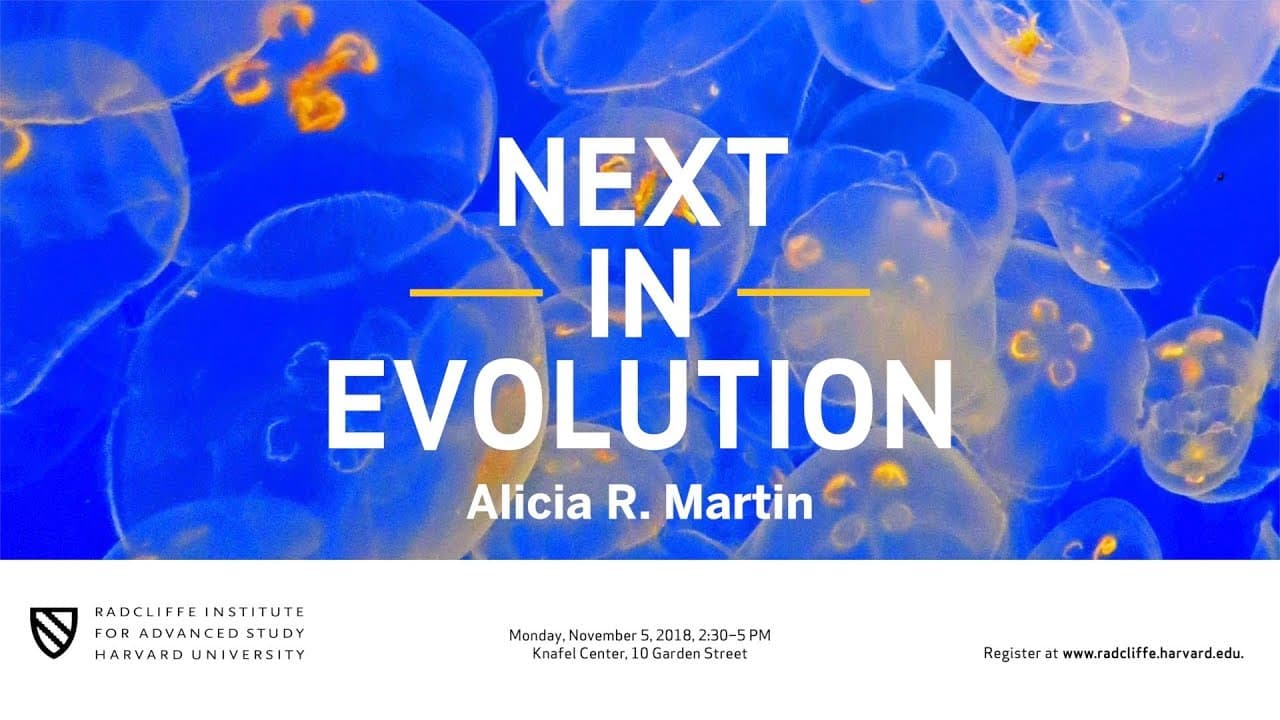
Next in Evolution | Alicia R. Martin || Radcliffe Institute
TL;DR
Genetic differences across populations impact traits and diseases, and polygenic risk scores have the potential to improve health outcomes, but there are challenges in translating these scores across diverse populations.
Transcript
- I would like to introduce Alicia Martin. Alicia received her PhD in genetics from Stanford University and is currently working as a research fellow at the Broad Institute. She is a population and statistical geneticist. And she's very much interested in how human migration impacts health and traits. So Alicia, I'm keeping the intro short because ... Read More
Key Insights
- ❓ Genetic differences contribute to physical variations and complex traits across populations.
- ✳️ Polygenic risk scores have the potential to improve health outcomes by predicting disease risk.
- 💯 Accuracy of polygenic risk scores is influenced by population diversity and the representativeness of study populations.
- 🥺 Genetic studies have been primarily conducted in European populations, leading to disparities in healthcare outcomes and the need for more diverse representation.
- 🧑🏭 The translation of genetics into precision medicine requires considering both genetic and environmental factors.
- 🆘 Mendelian randomization can help identify causal relationships between genetic traits, but its applicability to prediction is limited.
Install to Summarize YouTube Videos and Get Transcripts
Explore YouTube Video Summarizer or Get YouTube Transcript Extractor
Questions & Answers
Q: How do genetic differences contribute to physical differences across populations?
Genetic differences account for variations in visible physical traits such as height, weight, and skin color across populations. These differences arise from variants across the genome that are present in different frequencies in different populations.
Q: What factors contribute to the accuracy of polygenic risk scores?
Polygenic risk scores are more accurate within populations that were involved in the studies used to develop the scores. Accuracy decreases when predicting risk in populations that were not adequately represented in the studies. Furthermore, the accuracy of polygenic risk scores is influenced by the size and diversity of the study population, as well as the precision of the genetic instruments used.
Q: Can polygenic risk scores be used as standalone predictors?
Polygenic risk scores should be considered alongside other factors such as lifestyle, diet, and environmental exposures. They provide valuable information about genetic risk, but they do not account for environmental influences. Combining polygenic risk scores with other factors can improve the accuracy of risk prediction.
Q: How can the lack of diversity in genetic studies impact the generalizability of research findings?
Genetic studies have been primarily conducted in European populations, which limits the generalizability of the findings to other populations. This can result in inaccurate predictions and disparities in healthcare outcomes. Increasing the diversity of study populations and pooling genetic data from diverse sources is necessary to address this issue.
Summary & Key Takeaways
-
Human genomes are about 99.9% identical, but there are still millions of sites that vary across the genome in different populations.
-
Genetic differences contribute to visible physical differences across populations, as well as complex traits like height and weight.
-
Genetic risk of diseases and complex traits must be considered in combination with environmental factors for accurate prediction.
-
Polygenic risk scores, which only consider genetic differences, have the potential to be incorporated into clinical practice, particularly for cardiovascular disease.
Read in Other Languages (beta)
Share This Summary 📚
Summarize YouTube Videos and Get Video Transcripts with 1-Click
Try YouTube Summary with ChatGPT & Claude or YouTube Transcript Generator
Explore More Summaries from Harvard University 📚




Summarize YouTube Videos and Get Video Transcripts with 1-Click
Try YouTube Summary with ChatGPT & Claude or YouTube Transcript Generator