How Fear and Anxiety Drove Human Evolution | Nat Geo Explores
TL;DR
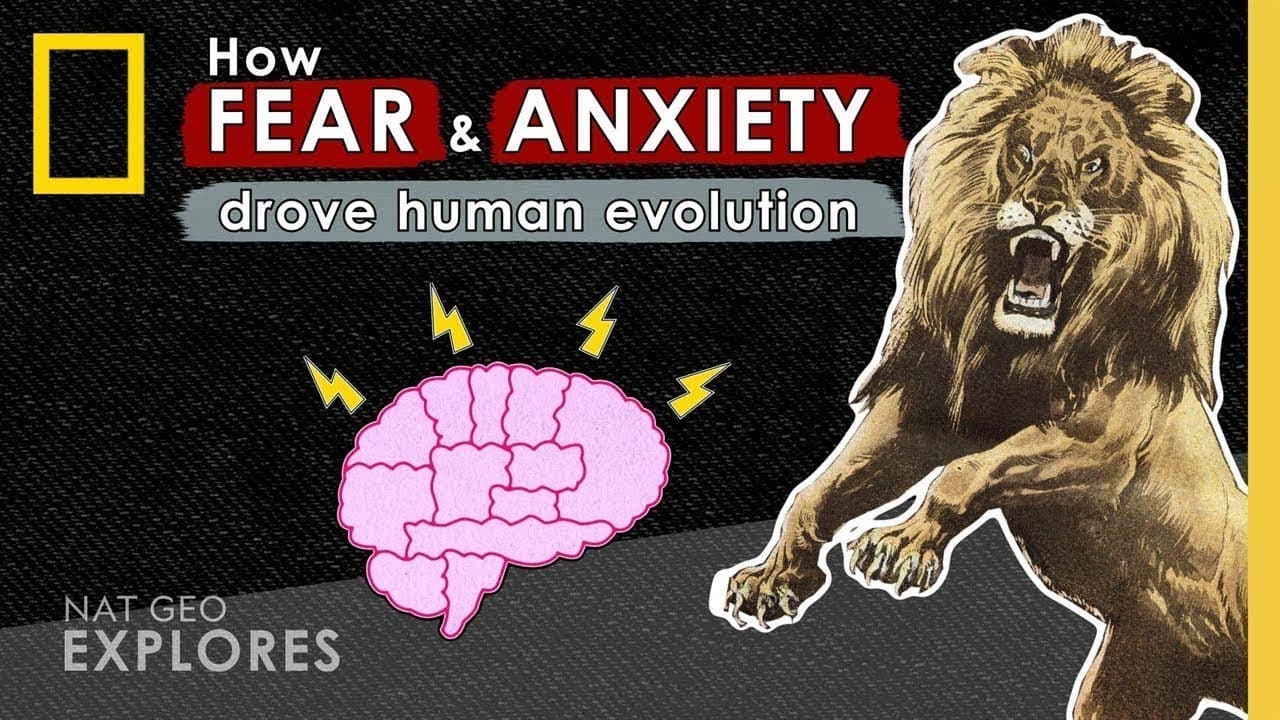
Fear and anxiety are responses to immediate and potential threats, with anxiety being the anticipation of danger. Our brains have evolved to be hyper-vigilant, but in uncertain situations, our biases can affect our decision-making processes.
Transcript
the heart races deep breaths are hard to find blood rushes through the body that's fear anxiety scientifically we tend to talk about fear as being a response to immediate threats which is right there in front first anxiety is where there's the possibility of danger but it's kind of looming on the horizon and we're trying to work out how probable is... Read More
Key Insights
- 😨 Fear is a response to immediate threats, while anxiety is the anticipation of potential danger.
- 😀 Our brains have evolved to be hyper-vigilant in the face of danger, redirecting blood flow to prepare for escape.
- 🥺 In uncertain situations, our biases can influence our decision-making, leading to panic buying or optimism bias.
- 🍉 The amygdala's overactivity can have negative consequences when threats persist for the long term.
- 🧑⚕️ Anxiety may be correlated with depression and trauma, but positive approaches to mental health can help reduce these effects over time.
Install to Summarize YouTube Videos and Get Transcripts
Explore YouTube Video Summarizer or Get YouTube Transcript Extractor
Questions & Answers
Q: What is the difference between fear and anxiety?
Fear is a response to immediate threats, whereas anxiety is the anticipation of potential danger. Fear focuses on the present, while anxiety is concerned with future possibilities.
Q: How does our brain respond to threats?
When our brain perceives a threat, the amygdala signals danger, releasing neurotransmitters and redirecting blood flow. This heightened state helps us pay attention and prepare for potential escape.
Q: Why do we have biases when faced with uncertain threats?
Our brains rely on simulation mechanisms to imagine different courses of action in uncertain situations. However, biases like the zero risk bias may influence our decision-making by seeking absolute certainty and eliminating perceived risks.
Q: How does anxiety affect our brain?
Chronic anxiety can lead to deregulation in the brain, with the prefrontal cortex, responsible for reasoning and decision-making, experiencing dendrite atrophy. This can result in stronger and less regulated responses to danger.
Summary & Key Takeaways
-
Fear is a response to immediate threats, while anxiety is the anticipation of danger.
-
Our brains release neurotransmitters and redirect blood flow when faced with a threat to prepare us for potential danger.
-
Uncertain threats lead to biases and the desire for absolute certainty, which can result in panic buying or optimism bias.
Read in Other Languages (beta)
Share This Summary 📚
Summarize YouTube Videos and Get Video Transcripts with 1-Click
Try YouTube Summary with ChatGPT & Claude or YouTube Transcript Generator
Explore More Summaries from National Geographic 📚



Summarize YouTube Videos and Get Video Transcripts with 1-Click
Try YouTube Summary with ChatGPT & Claude or YouTube Transcript Generator