Biohacking our way to health with robot cells | Michael Levin
TL;DR
Through stimuli and communication, researchers aim to harness the collective intelligence of cells to solve medical problems and achieve complex outcomes.
Transcript
- The modern assumption of regenerative medicine is that it's a clockwork. So if you have a gene regulatory network or a pathway, the only way you're gonna get it to do something different is through bottom-up rewiring. But if you're willing to entertain the idea that there are other competencies, you might find out that you're much better off givi... Read More
Key Insights
- 💊 Regenerative medicine can benefit from utilizing stimuli and communication to tap into the collective intelligence of cells rather than relying solely on genetic pathways.
- 👾 The diversity and latent possibilities within cells' option space highlight the complexity of regenerative processes.
- 🥺 Native cell competencies, when harnessed, can lead to successful outcomes that are beyond the scope of micromanagement.
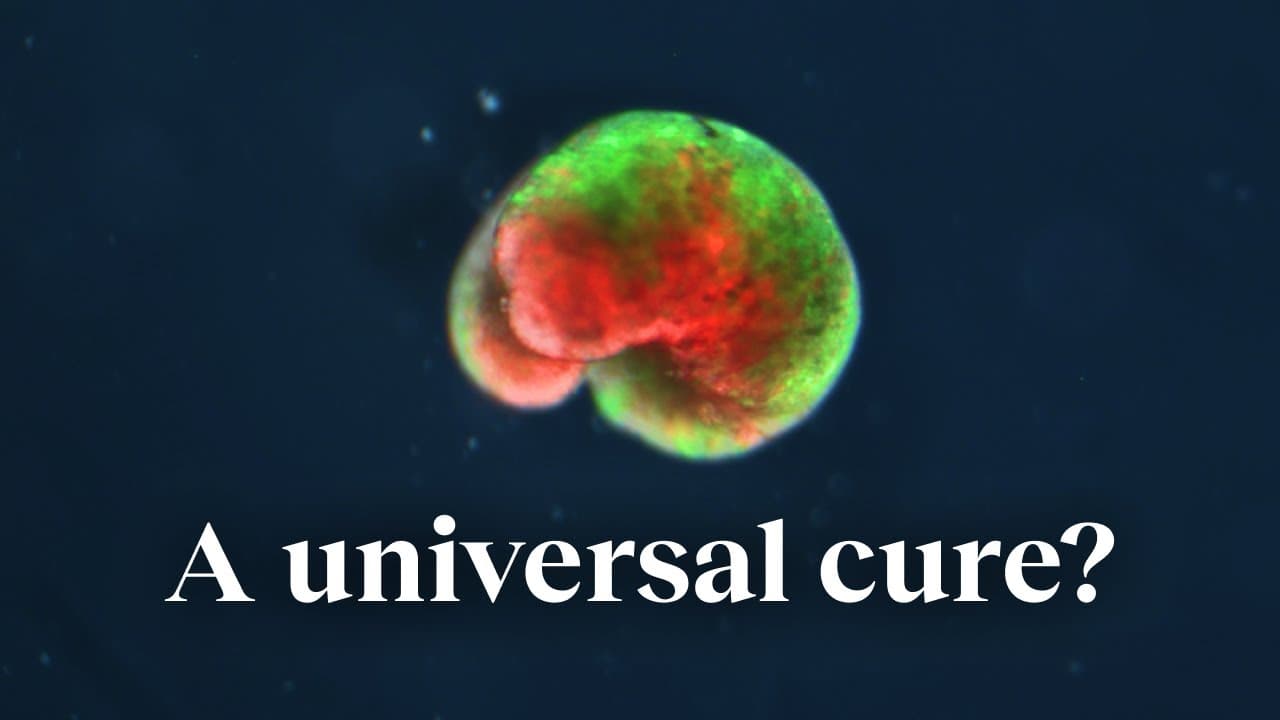
- 🤖 Xenobots serve as a biorobotics platform that showcases the self-assembling properties of frog skin cells, providing insights into morphogenesis and the creation of useful biological robots.
- 🤗 The development of diverse and intelligent bodies and minds through regenerative medicine opens up a world of possibilities for the future.
- 😷 Ethical considerations are crucial, but doing nothing is not an option when there are already significant medical needs that can benefit from regenerative medicine.
Install to Summarize YouTube Videos and Get Transcripts
Explore YouTube Video Summarizer or Get YouTube Transcript Extractor
Questions & Answers
Q: How does regenerative medicine differ from traditional approaches?
Regenerative medicine focuses on giving stimuli to tissues instead of solely rewiring genetic pathways, allowing for the harnessing of native cell competencies and achieving large-scale outcomes.
Q: Can cells be reprogrammed to regrow lost organs or limbs?
Yes, by communicating a trigger to cells, they can be prompted to move from an injured state to a regenerative state, leading to the potential for limb regeneration or the regrowth of organs.
Q: What are Xenobots and how are they created?
Xenobots are biological robots made from frog skin cells. They are created by taking skin from an early frog embryo and allowing the cells to self-assemble and exhibit unique properties like movement and kinematic self-replication.
Q: What can be learned from studying Xenobots?
By studying Xenobots, researchers can understand the rules of morphogenesis and learn more about the sensory abilities, memory capabilities, and learning capacities of these biological robots.
Summary & Key Takeaways
-
Regenerative medicine is not solely reliant on rewiring gene regulatory networks but can also involve giving stimuli to tissues to change their preferences and set points, leading to complex interactions and successful outcomes.
-
The native competencies of cells can be harnessed to achieve large-scale outcomes that are too complex to micromanage, such as regrowing limbs or normalizing tumors.
-
Recent research has resulted in the creation of Xenobots, self-assembling biological robots made from frog skin cells, which have exhibited unique abilities like movement and kinematic self-replication.
Read in Other Languages (beta)
Share This Summary 📚
Summarize YouTube Videos and Get Video Transcripts with 1-Click
Try YouTube Summary with ChatGPT & Claude or YouTube Transcript Generator
Explore More Summaries from Big Think 📚




Summarize YouTube Videos and Get Video Transcripts with 1-Click
Try YouTube Summary with ChatGPT & Claude or YouTube Transcript Generator