🎭 I'll wear my heart on my sleeve - Learn English vocabulary & idioms with 'Shakespeare Speaks'
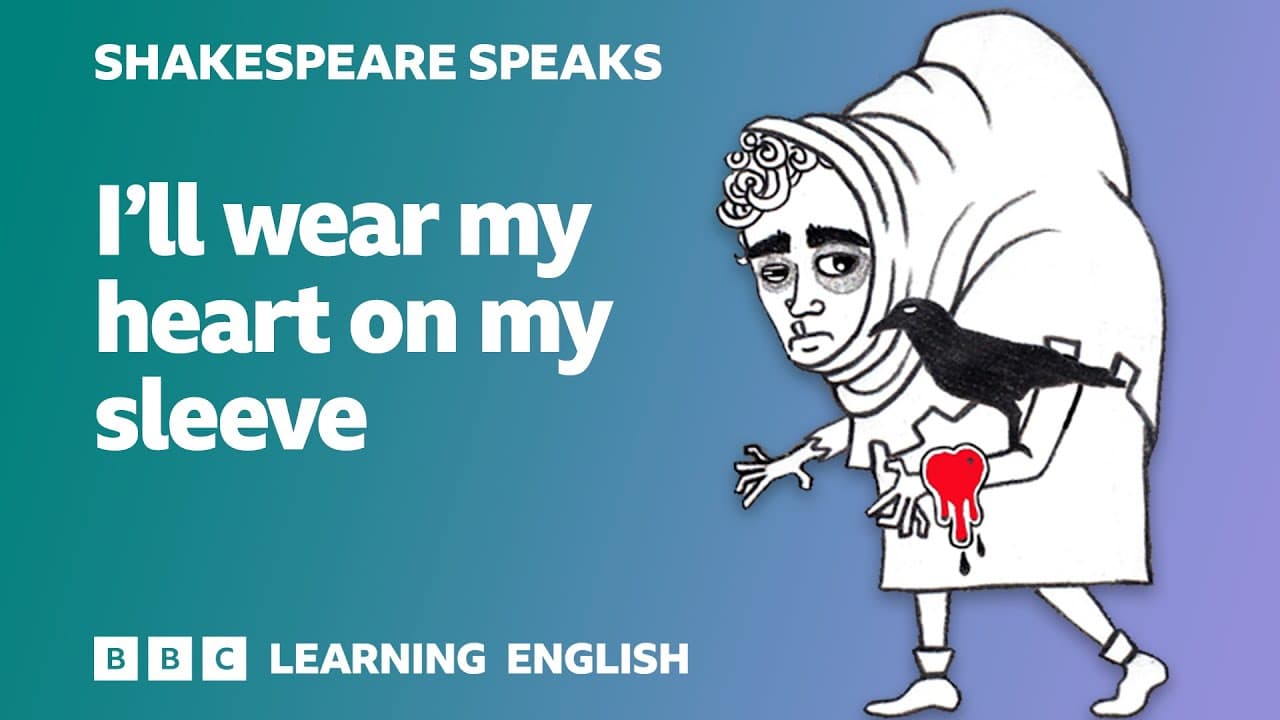
TL;DR
Explores 'wearing your heart on your sleeve' in Shakespeare's Othello.
Transcript
It was a sunny day. William Shakespeare's daughter and Bess the barmaid are at the fair. Lalalalala You're very happy today aren't you my duck? Oh Bess, I'm in love! You're not still after that Robert Harley are you? Nooooo! It's Henry Bull. He's wonderful: handsome and brave and he loves me too - but Bess, father mustn't find out. Henry hasn't got... Read More
Key Insights
- The phrase 'wearing your heart on your sleeve' originates from Shakespeare's play Othello, where Iago uses it to describe feigned emotions.
- Iago, a character in Othello, pretends to be loyal while secretly plotting to destroy Othello, showcasing the danger of hidden emotions.
- Shakespeare often used characters who conceal their true feelings, highlighting themes of deception and vulnerability.
- The idiom 'wearing your heart on your sleeve' means openly displaying one's emotions, making oneself vulnerable to others.
- In modern contexts, the phrase is often associated with love and romance, indicating openness and emotional transparency.
- The lesson encourages learners to reflect on their own emotional openness and how it affects their relationships.
- The video is part of a series that explores Shakespearean idioms, providing educational content for English learners.
- The content includes a free downloadable lesson plan for educators, enhancing the learning experience with structured activities.
Install to Summarize YouTube Videos and Get Transcripts
Explore YouTube Video Summarizer or Get YouTube Transcript Extractor
Questions & Answers
Q: What does the idiom 'wearing your heart on your sleeve' mean?
The idiom 'wearing your heart on your sleeve' means to openly display one's emotions, making them visible to others. It implies a level of vulnerability, as others can easily see how you feel, which can sometimes lead to emotional exposure or being taken advantage of.
Q: How does Iago use the phrase 'wearing your heart on your sleeve' in Othello?
In Othello, Iago uses the phrase 'wearing your heart on your sleeve' to describe his own deceitful nature. He pretends to be loyal to Othello while secretly plotting against him. The phrase signifies his intention to hide his true feelings and manipulate others, contrasting with its literal meaning.
Q: Why is the idiom 'wearing your heart on your sleeve' relevant today?
The idiom remains relevant today as it describes a common human experience of emotional transparency. In relationships, being open about one's feelings can lead to deeper connections but also makes one vulnerable to emotional hurt. It highlights the balance between authenticity and self-protection in personal interactions.
Q: What role does deception play in Shakespeare's Othello?
Deception is a central theme in Othello, with Iago's manipulative actions driving the plot. He deceives Othello and other characters by pretending loyalty while plotting their downfall. This deception leads to tragic consequences, illustrating the destructive power of hidden motives and the importance of trust.
Q: How does the video use Shakespeare to teach English idioms?
The video uses Shakespeare's plays, particularly Othello, to explain the origin and meaning of English idioms. By providing context through well-known literary works, learners can better understand idiomatic expressions and their applications, enhancing both language skills and cultural knowledge.
Q: What educational resources accompany the video?
The video is accompanied by a free downloadable lesson plan and worksheet, designed to help teachers integrate the content into their curriculum. These resources provide structured activities and discussion points, facilitating a deeper understanding of the idiom and its literary origins.
Q: Why is Iago considered Shakespeare's most hateful villain?
Iago is often regarded as Shakespeare's most hateful villain due to his manipulative and deceitful nature. His actions in Othello are driven by malice and jealousy, leading to the destruction of several characters. His lack of remorse and enjoyment in others' suffering make him particularly villainous.
Q: How does the idiom relate to modern expressions of love and emotion?
In modern contexts, 'wearing your heart on your sleeve' is often used in relation to love and emotional openness. It suggests being honest and transparent about one's feelings, which can foster intimacy and trust in relationships. However, it also involves the risk of emotional vulnerability and potential heartbreak.
Summary & Key Takeaways
-
The video explores the idiom 'wearing your heart on your sleeve' from Shakespeare's Othello, where Iago uses it to discuss feigned emotions. It highlights the theme of emotional vulnerability and deception, both in the play and in modern contexts.
-
Shakespeare's characters often conceal their true feelings, as seen with Iago in Othello. The idiom has evolved to mean openly displaying one's emotions, particularly in romantic contexts, making oneself vulnerable but also authentic.
-
The video is part of the 'Shakespeare Speaks' series, aimed at teaching English idioms through Shakespearean references. It includes additional resources like lesson plans for educators, making it a comprehensive learning tool.
Read in Other Languages (beta)
Share This Summary 📚
Summarize YouTube Videos and Get Video Transcripts with 1-Click
Try YouTube Summary with ChatGPT & Claude or YouTube Transcript Generator
Explore More Summaries from BBC Learning English 📚

Summarize YouTube Videos and Get Video Transcripts with 1-Click
Try YouTube Summary with ChatGPT & Claude or YouTube Transcript Generator