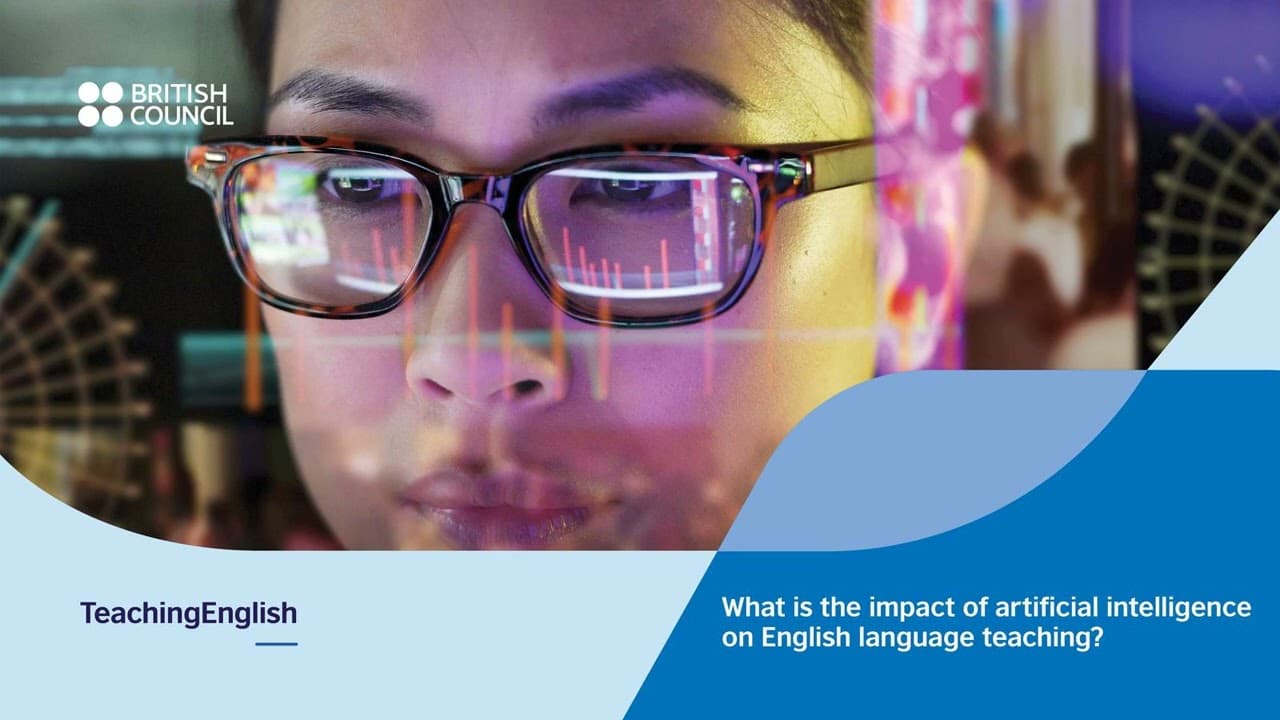
What is the impact of artificial intelligence on English language teaching?
TL;DR
AI can enhance English teaching but requires responsible integration.
Transcript
welcome to series three of teaching English with the British Council the podcast for English language teachers around the world in each episode we look at a critical contemporary issue in the world of elot teaching English with the British Cil it's like magic magic coming true right you just give a pron and then you get a wonderful... Read More
Key Insights
- AI in education is a double-edged sword, offering both opportunities for personalized learning and challenges like bias and cheating.
- Teachers play a crucial role in guiding AI's use, ensuring it supports learning rather than replacing human interaction.
- AI tools can assist in creating tailored educational materials, especially for marginalized groups lacking resources.
- Generative AI can aid in language learning by providing real-time feedback and aiding in content creation.
- Concerns about AI include potential biases and the risk of diminishing critical thinking and creativity in students.
- AI's integration into education should be gradual, with emphasis on research and adaptation to specific teaching contexts.
- Assessment methods need to evolve to address AI's capabilities, ensuring integrity and meaningful evaluation.
- AI can bridge educational gaps if made accessible and used to enhance rather than replace traditional teaching methods.
Install to Summarize YouTube Videos and Get Transcripts
Explore YouTube Video Summarizer or Get YouTube Transcript Extractor
Questions & Answers
Q: How can AI support teachers in English language teaching?
AI can support teachers by automating repetitive tasks, creating personalized learning materials, and offering real-time feedback. This allows teachers to focus on meaningful interactions and tailor content to individual student needs, ultimately enhancing the learning experience.
Q: What are the potential risks of using AI in education?
Potential risks include the introduction of biases from AI-generated content, the temptation for students to cheat, and the possibility of diminishing critical thinking and creativity. It is crucial to integrate AI responsibly, ensuring it complements rather than replaces human input.
Q: How can AI help bridge educational gaps?
AI can bridge educational gaps by providing access to personalized learning resources, especially in underserved areas. By making educational content more accessible and tailored to individual needs, AI can help level the playing field for students with limited access to traditional resources.
Q: What role do teachers play in the integration of AI in education?
Teachers are essential in integrating AI into education, as they guide its use to ensure it supports learning objectives. They provide the necessary human oversight, ensuring AI tools are used ethically and effectively to enhance the educational experience.
Q: How can AI be used to enhance language assessments?
AI can enhance language assessments by providing instant feedback and adapting to individual learner's progress. However, assessments must evolve to address AI's capabilities, ensuring they remain meaningful and avoid encouraging cheating.
Q: What are some practical applications of AI in language teaching?
Practical applications include using AI for grammar quizzes, creating customized learning materials, and developing scripts for real-life interactions. These applications can help students practice language skills in a controlled environment before applying them in real-world situations.
Q: How can AI be used to foster empathy in language learning?
AI can foster empathy by allowing students to explore different perspectives through exercises like rewriting stories from alternative viewpoints. This helps students develop a deeper understanding of diverse perspectives and enhances their emotional intelligence.
Q: What is the future of AI in education?
The future of AI in education involves its responsible integration to support personalized learning and resource creation. As technology evolves, it will be crucial to balance AI's capabilities with the need for human oversight and critical thinking in educational settings.
Summary & Key Takeaways
-
This episode explores AI's impact on English teaching, highlighting its potential to revolutionize education through personalized learning and resource creation.
-
Experts discuss the importance of maintaining human reasoning in AI integration, emphasizing the teacher's role in shaping effective learning experiences.
-
Concerns about AI include biases and the risk of reducing student creativity, prompting calls for responsible use and adaptation in assessments.
Read in Other Languages (beta)
Share This Summary 📚
Summarize YouTube Videos and Get Video Transcripts with 1-Click
Try YouTube Summary with ChatGPT & Claude or YouTube Transcript Generator
Explore More Summaries from British Council | TeachingEnglish 📚
Summarize YouTube Videos and Get Video Transcripts with 1-Click
Try YouTube Summary with ChatGPT & Claude or YouTube Transcript Generator