What Is Critical Thinking and Why Is It Important?
TL;DR
Critical thinking ensures beliefs are grounded in good reasons that make them likely true. It involves understanding the structure of arguments, where premises support conclusions. Distinguishing between deductive arguments, which guarantee the truth of the conclusion, and ampliative arguments, which only make it probable, is essential for evaluating their strength.
Transcript
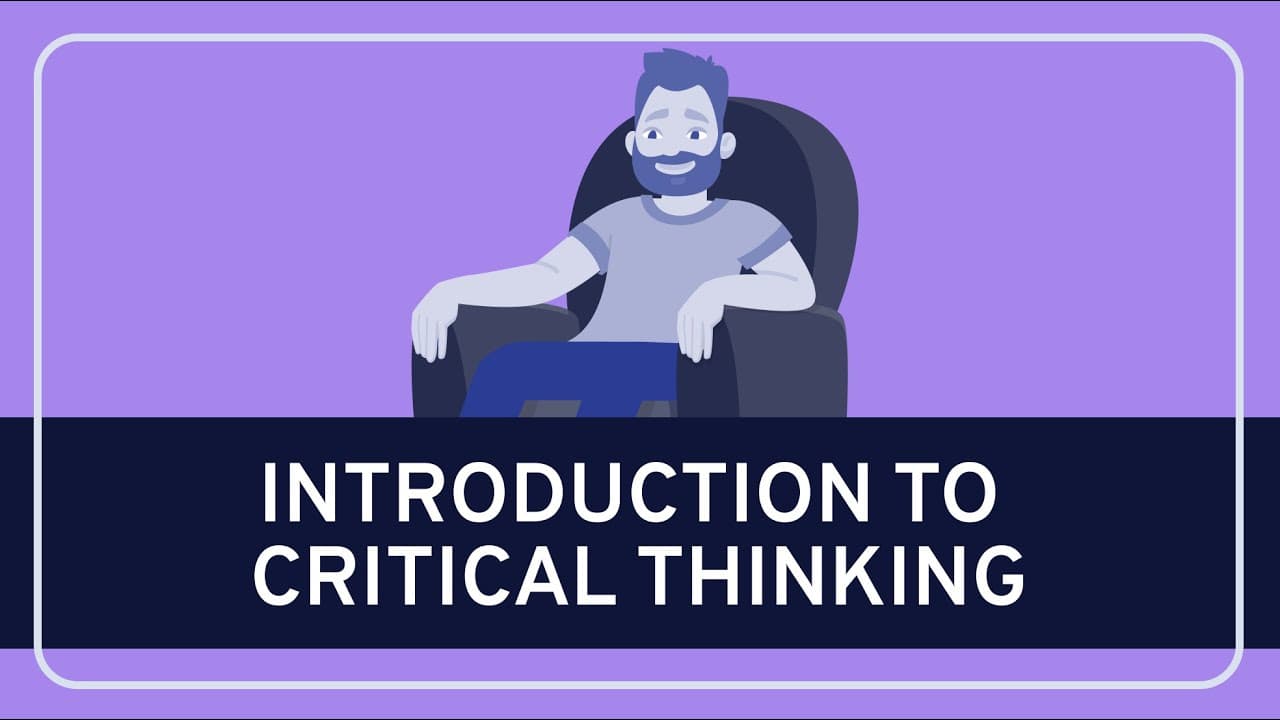
(intro music) I'm Geoff Pynn. I teach at Northern Illinois University, and this is an introduction[br]to critical thinking. In this lesson, we're gonna[br]talk about three things. First, what is critical thinking? Second, what is an argument? And third, what's the difference between deductive and ampliative arguments? Okay, so what is critical thin... Read More
Key Insights
- 👀 Critical thinking involves ensuring that beliefs are supported by good reasons, which make them likely to be true.
- 🧠 Good reasons for a belief focus on its probability or likelihood of being true, rather than moral or ethical considerations.
- ✍️ An argument consists of premises that provide a reason for the conclusion, and a good argument supports its conclusion.
- 🔍 Distinguishing between deductive and ampliative arguments is important for evaluating their strength.
- 🔒 In deductive arguments, the truth of the premises guarantees the truth of the conclusion, while ampliative arguments make the conclusion probable but not certain.
- 🗣️ Evaluating arguments requires understanding the type of argument and using appropriate tools to assess their goodness.
- 📚 Critical thinking skills help differentiate between good and bad reasons for belief, enabling individuals to form rational and true beliefs.
- 🧭 The goal of critical thinking is to have true beliefs and avoid false ones by forming beliefs based on good reasons.
Install to Summarize YouTube Videos and Get Transcripts
Explore YouTube Video Summarizer or Get YouTube Transcript Extractor
Questions & Answers
Q: Why is critical thinking important?
Critical thinking is important because as rational beings, we should strive to have true beliefs and avoid false ones. By carefully evaluating our reasons for beliefs, we can increase the likelihood of our beliefs being true.
Q: How do you determine if an argument is good or bad?
To determine if an argument is good or bad, you need to evaluate if the premises provide a good reason to believe the conclusion. If the premises make the conclusion likely to be true, then it is a good argument. If the premises do not support the conclusion, it is a bad argument.
Q: What is the difference between deductive and ampliative arguments?
Deductive arguments guarantee the truth of the conclusion based on the truth of the premises. Ampliative arguments make the conclusion probable but do not guarantee it. Deductive arguments are about logical necessity, while ampliative arguments are about probability and likelihood.
Q: Can an ampliative argument still be a good argument?
Yes, an ampliative argument can still be a good argument. Although the conclusion might not be guaranteed by the premises, if the premises make the conclusion highly probable, it can provide good reasons for believing the conclusion. The strength of an ampliative argument lies in its ability to make the conclusion likely.
Summary & Key Takeaways
-
Critical thinking is about ensuring that our beliefs are supported by good reasons, which make those beliefs likely to be true.
-
An argument is a set of statements (premises) that provide a reason for another statement (conclusion). Good arguments have premises that support their conclusions and make them probable.
-
Deductive arguments guarantee the truth of the conclusion based on true premises, while ampliative arguments make the conclusion probable but not certain.
Read in Other Languages (beta)
Share This Summary 📚
Summarize YouTube Videos and Get Video Transcripts with 1-Click
Try YouTube Summary with ChatGPT & Claude or YouTube Transcript Generator
Explore More Summaries from Wireless Philosophy 📚
Summarize YouTube Videos and Get Video Transcripts with 1-Click
Try YouTube Summary with ChatGPT & Claude or YouTube Transcript Generator