Castelion Hypersonic Missiles and Crunchbase’s AI Powered Predictions | E2088
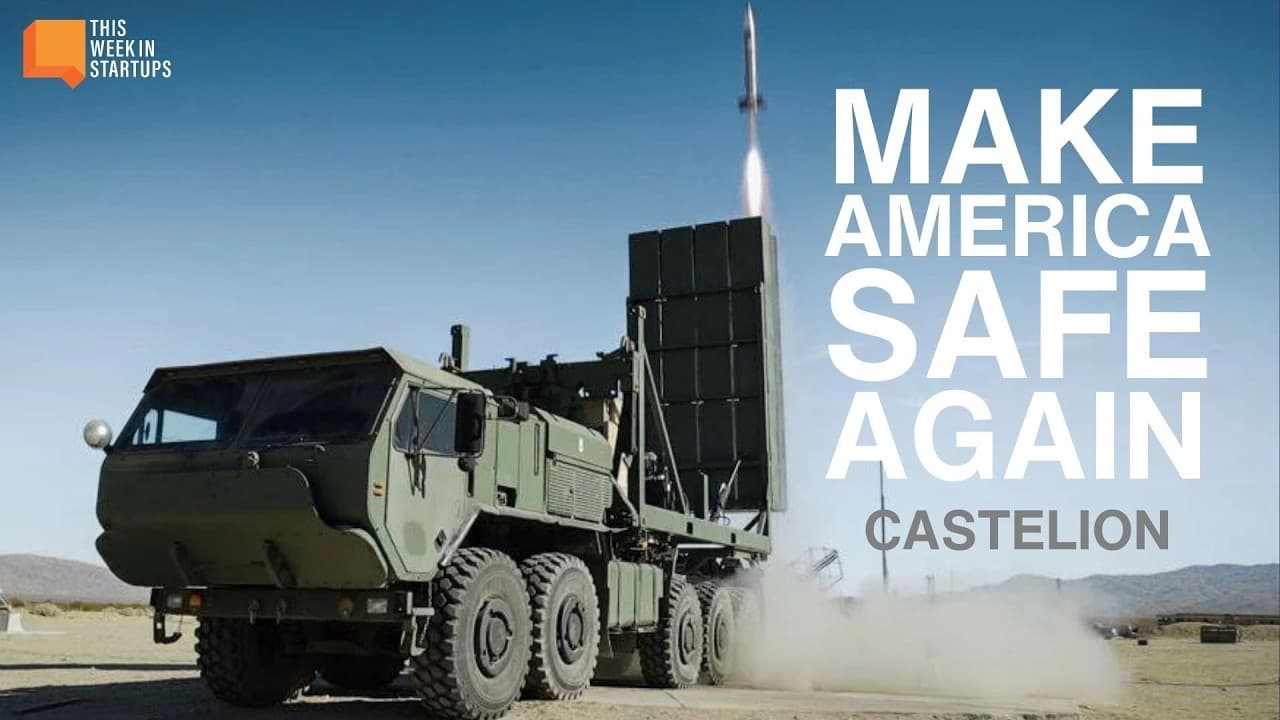
TL;DR
A deep dive into the hypersonic missile industry and defense technology startups.
Transcript
it's it's honestly sad what quantity do you think is a large quantity of missiles to order in a year right now and like in the US if you're talking about a reasonable size like long range missile what is a large quantity four to five figures thousands tens of thousands would be a large quantity of missiles way less hundreds way less way less dozens... Read More
Key Insights
- 💆 Hypersonic missiles are critical for modern defense against formidable adversaries like China, necessitating a shift toward affordable, mass-produced systems.
- 🇨🇷 The traditional military-industrial complex faces obstacles in innovation due to outdated cost-plus contracting practices that hinder cost reductions and efficiency.
- 👶 Startups in defense tech are leveraging new technologies to streamline production, similar to practices in consumer market industries, which could disrupt conventional manufacturing paradigms.
- 🔫 Understanding hypersonic systems requires in-depth knowledge, as they operate differently from traditional weapon systems, complicating defense against them.
- 😘 The U.S. defense manufacturing sector must enhance its production capabilities to compete effectively with lower-cost, higher-output manufacturing practices seen in global counterparts like China.
- 🚚 Innovation in defense is not solely about advanced technology but also encompasses the development of sustainable manufacturing processes that can deliver systems at scale.
- 🚨 The market dynamics for military technology are shifting, with emerging startups like Castellion poised to revolutionize the approach to missile production and strategic deterrent capabilities.
Install to Summarize YouTube Videos and Get Transcripts
Explore YouTube Video Summarizer or Get YouTube Transcript Extractor
Questions & Answers
Q: What is the significance of hypersonic missiles in modern defense?
Hypersonic missiles, which fly at speeds greater than Mach 5, represent a new front in military capabilities that traditional missile systems cannot adequately defend against. Their ability to maneuver and travel at low altitudes makes them harder to intercept, which underscores the need for the U.S. to develop a robust stock of such weapons.
Q: Why are defense contractors struggling to produce affordable weapons?
The traditional cost-plus contracting model has created an environment where defense primes have little incentive to reduce costs or innovate. This contrasts sharply with the rapid advancements and reduced costs seen in consumer technology, limiting the adaptability of defense systems to changing warfare needs.
Q: How is Castellion planning to change the landscape of missile manufacturing?
Castellion aims to produce affordable hypersonic munitions in larger quantities, challenging existing norms by developing low-cost alternatives that still meet strategic requirements. This approach is essential for deterring adversaries who are rapidly increasing their military capabilities.
Q: What challenges does the U.S. face compared to China's manufacturing capabilities?
China possesses significant advantages in terms of scale and cost efficiency in missile production. The U.S. needs to improve its manufacturing output while maintaining quality to ensure it can match or exceed the Chinese military's capabilities without resorting to lower labor standards.
Q: What innovations are leading to the potential reduction in missile costs?
New technologies and production techniques, including automation, are being explored to lower the costs of missile manufacturing. Startups like Castellion are looking at streamlined production processes and leveraging commercial techniques to enhance capacity and reduce expenses.
Q: How does the understanding of hypersonic technology differ among civilians and military professionals?
Many civilians assume hypersonic technology simply refers to speed. However, military professionals emphasize its unique flight patterns and low-altitude capabilities, which complicate interception efforts and challenge existing defense systems.
Q: Can you explain the distinctions between hypersonic and traditional ballistic missiles?
Unlike traditional ballistic missiles that follow a predictable trajectory into space, hypersonic missiles fly closer to the ground in a flatter trajectory, making them less visible and harder to intercept. This capability poses new challenges for existing missile defense systems.
Q: What role does companies like Castellion play in the evolving defense landscape?
Companies like Castellion represent a shift toward innovation in defense technology, focusing not only on advanced systems but also on cost efficiency and mass production. This approach is critical in responding effectively to contemporary global threats.
Summary & Key Takeaways
-
Byron Haras, CEO of Castellion, discusses the importance of affordable hypersonic missiles in maintaining defense against adversaries like China, emphasizing the need for mass production.
-
The conversation addresses the challenges faced by the U.S. military-industrial complex around cost and efficiency, contrasting it with competitive commercial tech markets.
-
A paradigm shift is emerging in defense contracting, where newer startups aim to bring innovative, cost-effective solutions without the long timelines typically associated with traditional defense contractors.
Read in Other Languages (beta)
Share This Summary 📚
Summarize YouTube Videos and Get Video Transcripts with 1-Click
Try YouTube Summary with ChatGPT & Claude or YouTube Transcript Generator
Explore More Summaries from This Week in Startups 📚






Summarize YouTube Videos and Get Video Transcripts with 1-Click
Try YouTube Summary with ChatGPT & Claude or YouTube Transcript Generator