How Can Mayors Replace Partisanship with Policy?
TL;DR
Mayors can replace partisanship with policy by focusing on data-driven results to address city challenges. This involves setting clear goals, measuring progress, and testing strategies to find effective solutions, fostering collaboration among diverse community members. G.T. Bynum successfully implemented this approach in Tulsa, emphasizing the importance of unifying aspirations over divisive politics.
Transcript
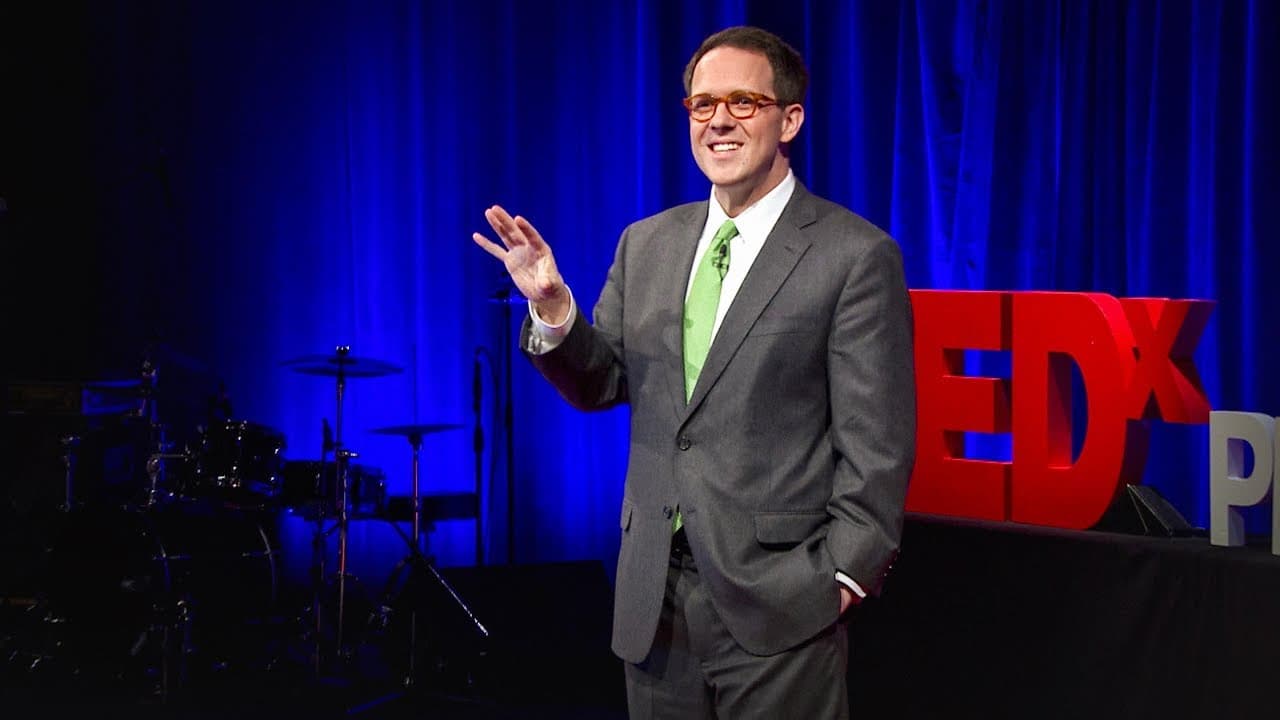
So last year, I ran for mayor of my hometown, Tulsa, Oklahoma. And I was the underdog. I was running against a two-term incumbent, and my opponent ran the classic partisan playbook. He publicized his endorsement of Donald Trump. He publicized a letter that he sent to President Obama protesting Syrian refugees, even though none of them were coming t... Read More
Key Insights
- 🎪 Running for mayor against a two-term incumbent, the speaker faced negative partisan tactics and decided to respond with a focus on results.
- 💡 By emphasizing data points such as increasing per capita income and city population, the speaker was able to attract support from Tulsa's vibrant young professional population and community leaders.
- 🏛️ Politicians often resort to divisive tactics and partisan politics to win elections, but this approach ultimately leads to division and a loss for the rest of society.
- 📊 Mitch Daniels, through his PART tool, demonstrated the value of evaluating federal programs based on results and success, which led to funding reductions for ineffective programs.
- 🏙️ Martin O'Malley used data-driven approaches to address crime in Baltimore, reducing violent crime by almost 50%.
- 💡 The overall approach to solving challenges is simple yet effective: identify goals, measure progress, test strategies, and invest in those that work.
- 🔧 Applying data and evaluation to various city initiatives not only improves traditional issues like public safety and street quality but also tackles non-traditional challenges like income inequality and life-expectancy disparities.
- 🌍 Building a city that uses evidence, data, and evaluation to solve challenges is possible, even in politically divided environments. Cities can be saved or squandered in one generation, so let's focus on creating better communities for all.
Install to Summarize YouTube Videos and Get Transcripts
Explore YouTube Video Summarizer or Get YouTube Transcript Extractor
Questions & Answers
Q: Who did the speaker run against in the mayoral race in Tulsa?
The speaker ran against a two-term incumbent in the mayoral race in Tulsa, Oklahoma.
Q: How did the opponent in the mayoral race try to portray the speaker?
The opponent in the mayoral race ran ads on TV that made the speaker look like Voldemort, a fictional villain from the Harry Potter series.
Q: How did the speaker respond to the negative ads in the campaign?
Instead of responding with partisanship, the speaker chose to respond with a focus on results. They emphasized things like increasing per capita income and the city's population throughout the campaign.
Q: How did the speaker's approach in the campaign resonate with the people of Tulsa?
The speaker's approach of focusing on results and bringing people together behind a common vision resonated with the vibrant young professional population of Tulsa, as well as business leaders and parents who wanted a better future for their kids. The speaker won the election with support from Republicans and Democrats.
Q: Who are some notable figures mentioned in the video who have applied the same approach to governance as the speaker?
Mitch Daniels, a former budget director for George W. Bush, applied a similar approach at the federal, state, and higher education levels. Martin O'Malley, a former mayor of Baltimore, applied this approach to combating crime in the city.
Summary & Key Takeaways
-
The speaker ran for mayor of Tulsa, Oklahoma as the underdog and used a focus on results rather than partisanship in his campaign.
-
He emphasizes the importance of using data and measurement to track progress towards goals in order to achieve success and solve city challenges.
-
He believes that partisanship should be replaced with policy, and encourages cities to set aside philosophical disagreements and work together towards common aspirations.
Read in Other Languages (beta)
Share This Summary 📚
Summarize YouTube Videos and Get Video Transcripts with 1-Click
Try YouTube Summary with ChatGPT & Claude or YouTube Transcript Generator
Explore More Summaries from TED 📚

Summarize YouTube Videos and Get Video Transcripts with 1-Click
Try YouTube Summary with ChatGPT & Claude or YouTube Transcript Generator