A Disease's Guide to World Domination
TL;DR
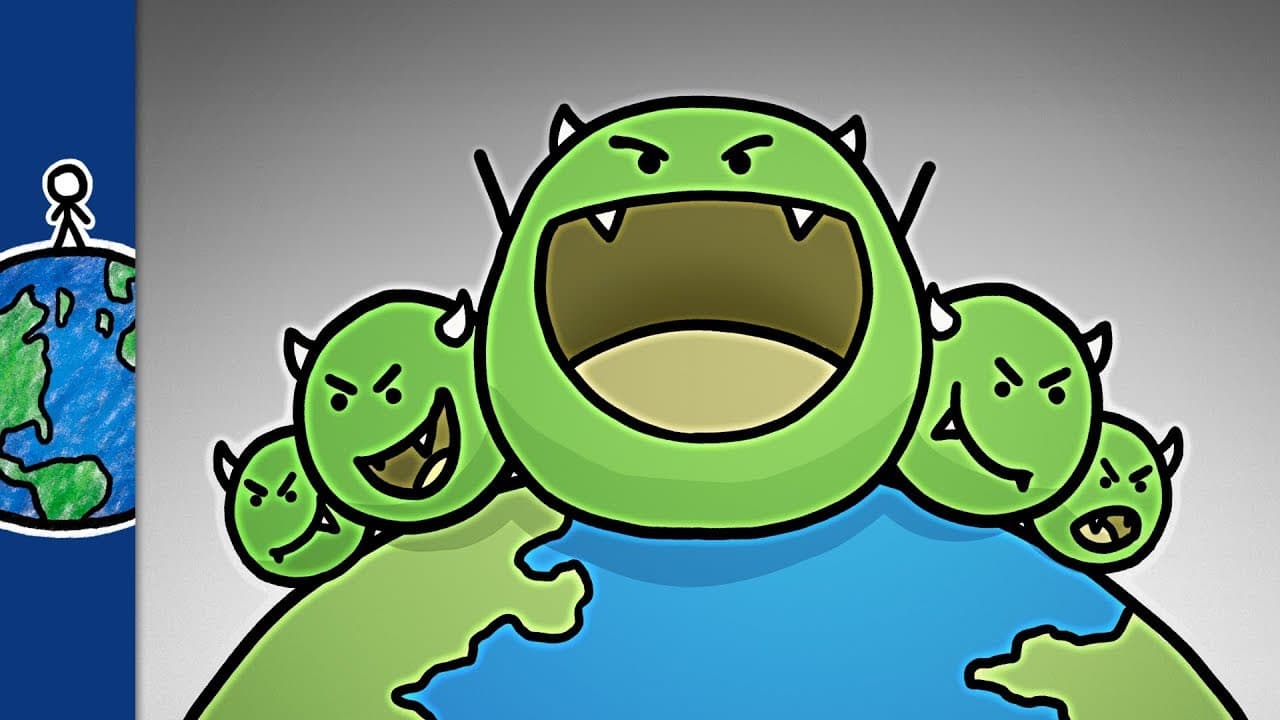
Pathogens that require close contact tend to cause limited harm, while those that can be transmitted at a distance or after long periods of time are more lethal.
Transcript
Hi, this is Kate from MinuteEarth. Let’s say you’re an infectious disease with dreams of spreading as far and wide as possible. Your logical starting point might be to invade a host and make as many mini-yous as fast as you can to spread to as many other hosts as you can. However, that would be probably be counterproductive, because the more of you... Read More
Key Insights
- 👻 Pathogens that require close contact with hosts usually cause limited harm to keep their hosts mobile and able to interact with potential hosts.
- 💦 Cholera is an example of a pathogen that can replicate freely and cause serious damage due to its ability to move through water.
- ⌛ Diseases transmitted by insects or those that can linger in the environment tend to be more lethal as they can be spread at a distance or after long periods of time.
- 🛌 Interventions like improving sanitation practices or using bed nets can reduce disease severity by limiting transmission.
- 🥺 The constraint of direct contact can help tame diseases and lead to the evolution of milder strains.
Install to Summarize YouTube Videos and Get Transcripts
Explore YouTube Video Summarizer or Get YouTube Transcript Extractor
Questions & Answers
Q: Why do most diseases only cause limited harm?
Most diseases have to limit the damage they inflict in order to keep their hosts feeling well enough to interact with potential hosts and continue spreading the pathogen.
Q: Why are some pathogens, like cholera, more lethal?
Cholera can replicate freely and cause serious damage because it can move through water, allowing it to infect even immobile hosts and spread rapidly through contaminated water sources.
Q: How do diseases transmitted by insects differ from those transmitted through close contact?
Diseases transmitted by insects, such as flies and mosquitoes, can access super-sick hosts and easily spread the pathogen around without the need for close contact, making them more lethal.
Q: How can interventions impact disease severity?
Interventions such as cleaning up water supplies or using bed nets regularly can limit the transmission of pathogens and turn deadly diseases into milder strains that only cause moderate sickness.
Summary & Key Takeaways
-
Pathogens that rely on close contact with hosts have to limit the damage they inflict in order to keep their hosts feeling well enough to interact with other potential hosts.
-
However, some pathogens such as cholera can replicate freely and cause serious damage because they can move through water and do not require host mobility for transmission.
-
Diseases transmitted by flies, mosquitoes, and other insects, as well as those that can linger in the environment, tend to be more lethal due to their ability to spread at a distance or after long periods of time.
Read in Other Languages (beta)
Share This Summary 📚
Summarize YouTube Videos and Get Video Transcripts with 1-Click
Try YouTube Summary with ChatGPT & Claude or YouTube Transcript Generator
Explore More Summaries from MinuteEarth 📚



Summarize YouTube Videos and Get Video Transcripts with 1-Click
Try YouTube Summary with ChatGPT & Claude or YouTube Transcript Generator