Foreign Direct Investment and Foreign Policy
TL;DR
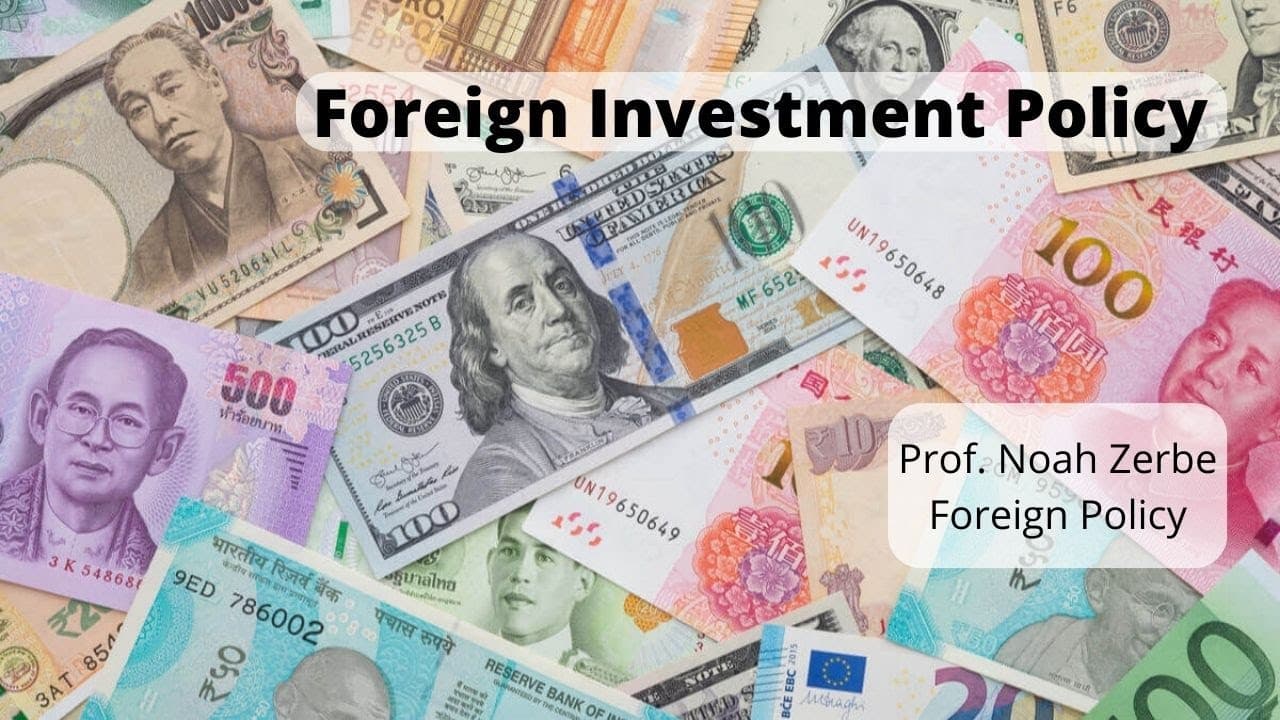
Foreign direct investment (FDI) plays a significant role in shaping international trade and investment patterns, with the U.S. receiving over $1.9 trillion in FDI. It has both benefits, such as sustainable investment and access to technology, and costs, such as political risks and competition among countries.
Transcript
hey everyone welcome back this is one of a series of short videos addressing questions in foreign economic policy in this video we're going to explore the role of foreign direct investment and investment policy in the context of U.S foreign policy investment policy refers to the set of rules regulations and guidelines that govern the inflow and out... Read More
Key Insights
- 🖐️ FDI has experienced significant growth over the years, playing a vital role in international trade and investment patterns.
- 🧑⚕️ Governments establish investment policies to attract FDI while ensuring protections for local workers and the environment.
- ♿ FDI benefits include sustainable investment, technology access, economic growth, and improved standards of living.
- 😀 However, FDI also presents risks for investors, such as political and economic instability, and recipient countries may face dependency, competition, and potential exploitation.
- 🌍 Finding a balance between attracting FDI and protecting national interests is a challenging task for governments.
- 🇺🇸 The United States and China have been engaged in disputes over forced technology transfers, undermining beneficial aspects of FDI.
- ⌛ Foreign direct investment is more than nine times the total amount of official development assistance provided by wealthy countries to poor countries.
Install to Summarize YouTube Videos and Get Transcripts
Explore YouTube Video Summarizer or Get YouTube Transcript Extractor
Questions & Answers
Q: What is foreign direct investment (FDI)?
FDI is when a company or individual invests in a business or entity located in another country, establishing lasting interests and significant control over its operations.
Q: How significant is foreign direct investment globally?
According to World Bank data, FDI totaled around $97 billion in 1970, peaked at $4.6 trillion in 2007, and is currently around $1.9 trillion. It plays a crucial role in shaping international trade and investment patterns.
Q: What principles do governments follow regarding FDI?
Governments establish openness to foreign investment by reducing barriers, develop regulatory policies outlining investor rights and obligations, and create clear procedures for establishing, operating, and exiting investments.
Q: What are the benefits and drawbacks of foreign direct investment?
Proponents argue that FDI provides sustainable investment and access to technology for developing countries, leading to economic growth and improved standards of living. However, risks for investors include political and economic changes, while recipient countries may face competition and risks associated with dependency on FDI.
Summary & Key Takeaways
-
Foreign direct investment refers to the investment made by a company or individual from one country into a business in another country, playing a critical role in economic integration.
-
FDI has grown significantly over time, peaking at $4.6 trillion in 2007 before decreasing to $1.9 trillion today.
-
Governments establish investment policies to attract foreign investment while protecting local workers and the environment, but finding a balance can be challenging.
Read in Other Languages (beta)
Share This Summary 📚
Summarize YouTube Videos and Get Video Transcripts with 1-Click
Try YouTube Summary with ChatGPT & Claude or YouTube Transcript Generator
Explore More Summaries from Noah Zerbe 📚




Summarize YouTube Videos and Get Video Transcripts with 1-Click
Try YouTube Summary with ChatGPT & Claude or YouTube Transcript Generator