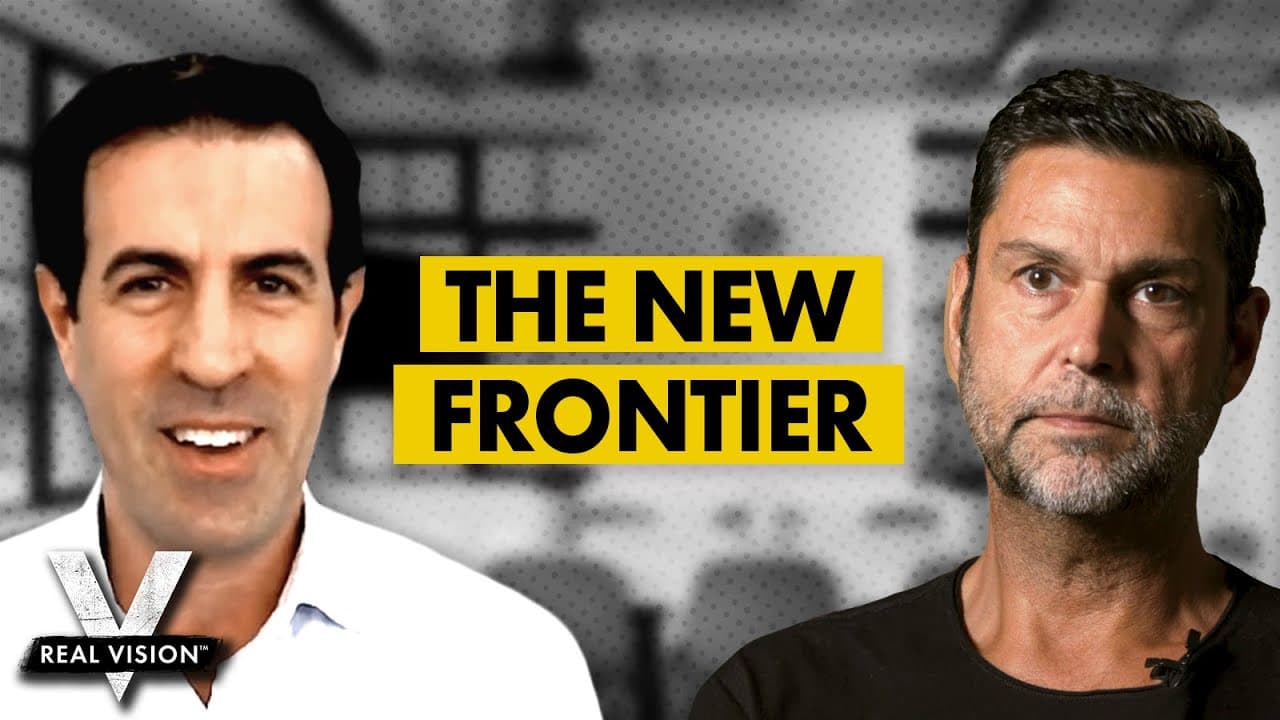
Artificial Intelligence: A Revolution of the Investment Landscape (w/ Raoul Pal and Trevor Mottl)
TL;DR
Trevor Mottl, the head of Lazard Labs in Palo Alto, discusses the use of AI and machine learning in investment processes.
Transcript
RAOUL PAL: Trevor, great to have you with us on Real Vision. You were recommended by a mutual friend of both of ours, Mike Green, who said, listen, you've got to sit and talk to Trevor. And once I started looking into your background, I realized we share almost an identical background, slightly different timings. So talk to us a bit about your care... Read More
Key Insights
- 🌥️ AI can be used to analyze large amounts of textual data, such as earnings reports or news sentiment, providing valuable insights that were previously challenging for fundamental investors.
- 🤗 The availability of open-source tools, cloud computing, and user-friendly programming languages, such as Python, has made AI more accessible and affordable.
- 😘 AI strategies can have lower volatility and diversification, but their long-term performance is still being assessed.
- ✳️ Crowding is a potential risk in AI strategies, but the early adoption and the ability to ask different questions can mitigate this risk.
Install to Summarize YouTube Videos and Get Transcripts
Explore YouTube Video Summarizer or Get YouTube Transcript Extractor
Questions & Answers
Q: What is the difference between AI and machine learning?
Machine learning refers to models and algorithms that go beyond traditional linear, multi-factor models. On the other hand, AI encompasses more advanced techniques such as deep learning using neural networks.
Q: How do AI-based strategies compare to other investment strategies in terms of return profiles?
AI-based strategies can have lower volatility and more diversification compared to traditional strategies. However, the long-term performance of AI strategies is still being studied.
Q: How do AI portfolios deal with implicit short-vol bets?
AI portfolios are designed to have different risk profiles and can be less exposed to the short-vol risks that other strategies may face. Risk-adjusted returns are a critical factor in AI-based portfolio construction.
Q: How do AI strategies compete against each other and avoid crowding?
While there is a risk of crowding, the early adoption of AI in investment processes means that the risk is currently limited. AI strategies can find their edge by asking different questions and using unique data sets.
Q: Where do you see AI in finance heading in the next five years?
Trevor Mottl predicts a convergence of quantitative and fundamental approaches, with more integration of AI tools into the fundamental investment process. The understanding of investing and markets is expected to increase as AI tools are used to answer questions that were previously unanswered.
Summary & Key Takeaways
-
Trevor Mottl shares his career background in finance, including his experiences at Credit Suisse, Goldman Sachs, and GLG Partners.
-
He explains how he moved into AI and data science, and how he now leads a group focused on bringing cutting-edge AI and data science into the investment process at Lazard.
-
Mottl provides insights into the different applications of AI in finance, including universe selection, stock selection, portfolio construction, and transaction cost analysis.
Read in Other Languages (beta)
Share This Summary 📚
Summarize YouTube Videos and Get Video Transcripts with 1-Click
Try YouTube Summary with ChatGPT & Claude or YouTube Transcript Generator
Explore More Summaries from Raoul Pal on Real Vision 📚

Summarize YouTube Videos and Get Video Transcripts with 1-Click
Try YouTube Summary with ChatGPT & Claude or YouTube Transcript Generator