How AI Transforms Cancer Research

TL;DR
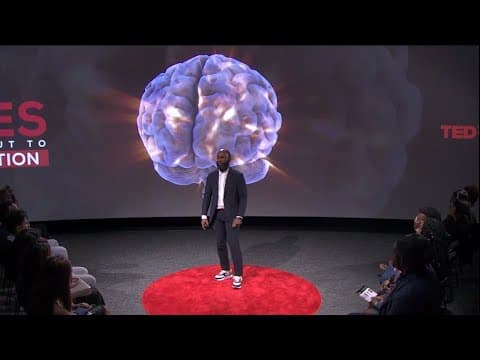
AI is revolutionizing cancer research by significantly reducing the time needed to develop new treatments. By using computational simulations, scientists can predict protein structures much faster than traditional lab work. However, the challenge remains in translating these predictions into real-world applications, requiring human intuition and creativity.
Transcript
[music] [music] [applause] >> I want to pry AI away from frivolity, doom, and profiteering. I want to use it to cure cancer instead. And I want to do it before one of these Messiah complex people actually manages to end civilization. >> [laughter] >> I'm actually really optimistic about this next phase in science and work life on this earth in gene... Read More
Key Insights
- AI is being used to accelerate the development of cancer treatments by simulating protein structures.
- Traditional methods of developing antibodies were labor-intensive and time-consuming.
- AI allows for the prediction of millions of protein folds, drastically reducing research time.
- Despite rapid simulations, human intuition is crucial to apply findings in real-world scenarios.
- AI is not magic; it's based on linear algebra and computational power.
- The role of biologists remains pivotal in interpreting AI-generated data.
- AI serves as a catalytic technology, enhancing the speed of scientific discovery.
- The integration of AI in research emphasizes the need for adaptability and human creativity.
Install to Summarize YouTube Videos and Get Transcripts
Explore YouTube Video Summarizer or Get YouTube Transcript Extractor
Questions & Answers
Q: How is AI changing cancer research?
AI is revolutionizing cancer research by enabling the simulation of protein structures, which significantly speeds up the drug development process. Traditional methods involved labor-intensive lab work to create antibodies, but AI can predict millions of protein folds in a fraction of the time. This allows researchers to focus on discovery rather than computation, although translating AI predictions into real-world applications still requires human intuition.
Q: What is the role of biologists in AI-driven research?
In AI-driven research, the role of biologists remains essential as they interpret AI-generated data and decide which predictions to pursue. While AI can simulate vast amounts of data, understanding the context of the human body, such as disease and immunology, requires human expertise. Biologists use their scientific knowledge and intuition to translate computational predictions into practical treatments.
Q: Why is human intuition still important in AI research?
Human intuition is crucial in AI research because AI can generate predictions but lacks the ability to understand the complex context of the human body. Translating AI's computational outputs into real-world applications requires human creativity and insight. Biologists use their expertise to navigate the vast amount of data AI produces, ensuring that only the most promising predictions are pursued in practical research.
Q: What are the challenges of using AI in cancer research?
The challenges of using AI in cancer research include translating computational predictions into effective treatments and managing the vast amounts of simulated data. While AI can rapidly simulate protein structures, it does not equate to knowledge or understanding, requiring human expertise to determine which predictions are viable. Additionally, researchers must adapt to the new role of AI as a tool in the discovery process.
Q: How does AI reduce the time needed for drug development?
AI reduces the time needed for drug development by simulating protein structures quickly and efficiently. Traditional methods required extensive lab work and time to create antibodies, but AI can predict millions of protein folds in a short period. This shift allows researchers to focus more on discovery and less on computation, accelerating the development of new treatments and reducing the overall timeline.
Q: What is the significance of AI as a catalytic technology?
AI as a catalytic technology is significant because it accelerates scientific discovery by enabling rapid hypothesis testing and data simulation. In cancer research, AI's ability to simulate protein structures quickly transforms the traditional, time-consuming lab processes. This catalytic role allows scientists to test and validate hypotheses faster, ultimately leading to quicker advancements in treatment development and a new era of scientific exploration.
Q: How does AI simulate protein structures?
AI simulates protein structures by predicting millions of different protein folds through computational simulations. This process involves using algorithms and linear algebra to explore the vast parameter space of possible protein configurations. By simulating these structures quickly, AI reduces the need for labor-intensive lab work, allowing researchers to focus on interpreting results and applying them to real-world scenarios.
Q: Why is adaptability important in AI-driven research?
Adaptability is important in AI-driven research because the integration of AI represents a transformational shift in how scientific discovery is conducted. Researchers must adjust to AI's role as a tool for generating predictions and data, requiring new approaches to interpreting and applying findings. Embracing AI's capabilities while maintaining human creativity and decision-making ensures that the technology is used effectively and ethically in advancing scientific knowledge.
Summary & Key Takeaways
-
AI is transforming cancer research by enabling rapid simulations of protein structures, thus reducing the time required for drug development. Traditional antibody creation was laborious, but AI now predicts millions of protein folds, allowing researchers to focus more on discovery than computation. However, translating these predictions into practical treatments still relies on human intuition and creativity.
-
The shift from physical lab work to computational simulations is a significant change in biology, with AI facilitating faster hypothesis testing. While AI generates vast amounts of data, the role of biologists is crucial in selecting which predictions to pursue, as understanding the human body's context is beyond AI's capabilities.
-
AI's role as a catalytic technology in cancer research highlights its potential to accelerate scientific discovery. Despite fears of AI as a metaphysical threat, it is a tool that, when directed correctly, can aid in the creation and dissemination of knowledge, emphasizing the importance of human decision-making and creativity in scientific advancements.
Read in Other Languages (beta)
Share This Summary 📚
Summarize YouTube Videos and Get Video Transcripts with 1-Click
Try YouTube Summary with ChatGPT & Claude or YouTube Transcript Generator
Explore More Summaries from TEDx Talks 📚



Summarize YouTube Videos and Get Video Transcripts with 1-Click
Try YouTube Summary with ChatGPT & Claude or YouTube Transcript Generator