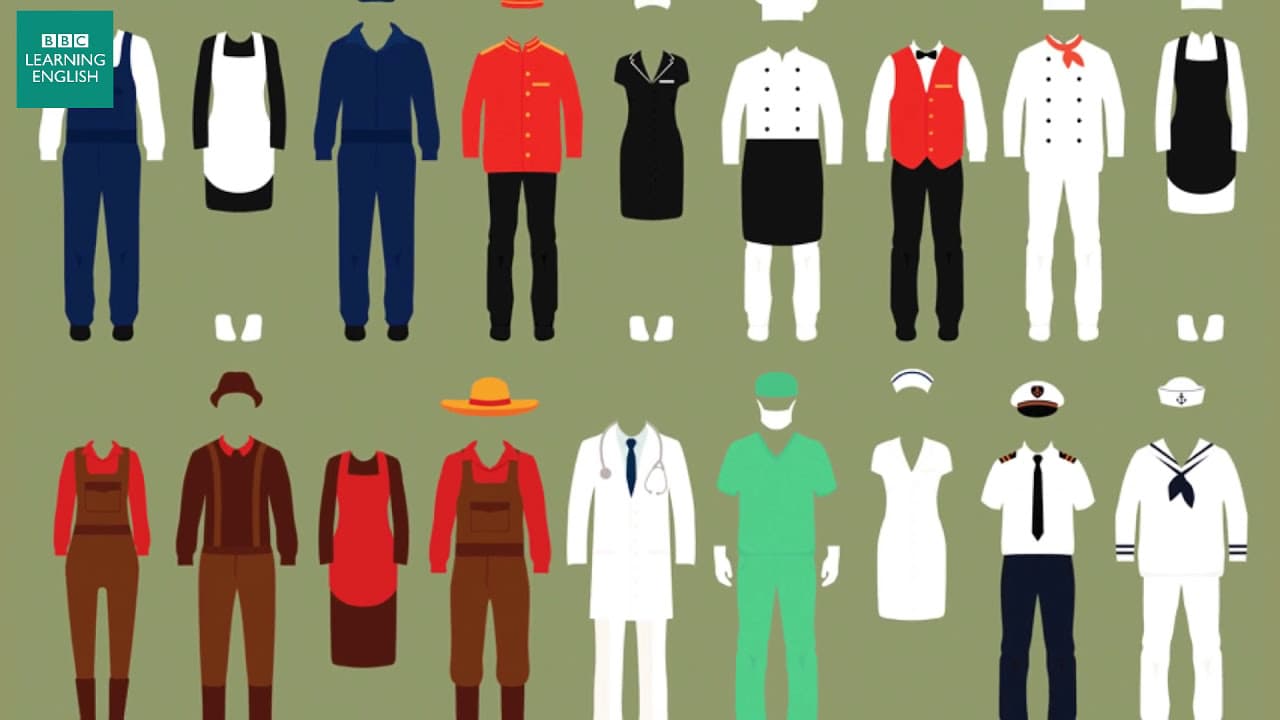
Does wearing a uniform change our behaviour? 6 Minute English
TL;DR
Uniforms can change behavior by adopting a new persona.
Transcript
Welcome to 6 Minute English, where we introduce a colourful topic and six suitable items of vocabulary I’m Tim… And I’m Neil. Why are you wearing a policeman’s hat, Tim? To get me in the mood for our topic today uniforms! Well, the hat certainly suits you! And if something suits you it looks good on you! Well, thanks, Neil. And funnily enough, I ha... Read More
Key Insights
- Uniforms serve practical purposes in jobs like police and emergency services, making personnel easily recognizable and aiding in their tasks.
- Wearing a uniform can create a sense of belonging to a group or community, which many individuals find enjoyable and fulfilling.
- A uniform allows individuals to adopt a role or persona, which can be liberating by providing freedom from one's usual self.
- The concept of 'maskenfreiheit' in Germany refers to the freedom and liberation experienced when adopting a new persona through uniforms.
- Uniforms can boost confidence, especially for shy individuals, by allowing them to step into a more confident role.
- The idea of trying on a new role or persona can be appealing, as it allows individuals to explore different aspects of themselves.
- Historical police uniforms, like the cane-reinforced top hat, served multiple purposes, such as being used as a step to overcome obstacles.
- The discussion includes various vocabulary items related to uniforms, providing listeners with tools to improve their English language skills.
Install to Summarize YouTube Videos and Get Transcripts
Explore YouTube Video Summarizer or Get YouTube Transcript Extractor
Questions & Answers
Q: What is the main purpose of uniforms in certain professions?
Uniforms in professions like police and emergency services serve practical purposes, such as making personnel easily recognizable and aiding them in performing their duties effectively. They ensure that individuals are identifiable as part of a specific group, which is crucial in emergency situations where quick recognition is necessary.
Q: How can wearing a uniform affect an individual's behavior?
Wearing a uniform can significantly impact an individual's behavior by allowing them to adopt a new role or persona. This can be liberating, as it provides a sense of freedom from one's usual self, enabling individuals to act more confidently and in ways they might not otherwise feel comfortable.
Q: What is 'maskenfreiheit' and how does it relate to uniforms?
'Maskenfreiheit' is a German term that refers to the freedom and liberation experienced when adopting a new persona, akin to wearing a mask. In the context of uniforms, it suggests that putting on a uniform can allow individuals to step into a different identity, freeing them from their usual constraints and enabling them to explore new behaviors.
Q: Why might shy individuals find uniforms liberating?
Shy individuals might find uniforms liberating because they can provide a sense of confidence and empowerment. By adopting a new persona through a uniform, shy individuals can act more assertively and engage with others in ways they might not usually feel comfortable, thus expanding their social interactions and experiences.
Q: What historical use of police uniforms was mentioned in the podcast?
The podcast mentioned that in the 19th century, Metropolitan Police officers wore cane-reinforced top hats that could be used as a step to climb or see over walls. This historical use of police uniforms highlights the practical and multifunctional nature of uniforms in aiding officers in their duties.
Q: What vocabulary items are discussed in the episode?
The episode discusses several vocabulary items related to uniforms and behavior, including 'suits you,' 'stand out,' 'to fit in,' 'persona,' 'liberating,' and 'to try something on for size.' These terms are explored in the context of how uniforms influence behavior and identity, providing listeners with tools to improve their English skills.
Q: How does the podcast aim to enhance listeners' English proficiency?
The podcast aims to enhance listeners' English proficiency by introducing and explaining vocabulary items related to the topic of uniforms. Through engaging discussions and examples, listeners can learn new words and phrases, understand their meanings, and apply them in different contexts, thereby improving their language skills.
Q: What roles do the hosts express interest in trying through uniforms?
The hosts express interest in trying roles such as an airline pilot and a chef through uniforms. Tim imagines himself as a pilot, complete with a blazer and cap, while Neil considers donning a chef's apron and hat. These imagined roles highlight the appeal of exploring different identities and the transformative power of uniforms.
Summary & Key Takeaways
-
The podcast discusses the impact of uniforms on behavior, highlighting how they can create a sense of community and allow individuals to adopt new personas. The hosts explore various roles they would like to try through uniforms, emphasizing the liberating effect of adopting different identities.
-
Tim and Neil discuss the practical and psychological aspects of wearing uniforms, including the sense of belonging and confidence they can provide. The episode also introduces vocabulary related to uniforms, aiming to enhance listeners' English proficiency.
-
The concept of 'maskenfreiheit' is introduced, explaining how uniforms can liberate individuals by allowing them to step into different roles. The episode covers historical uses of uniforms and engages listeners with a quiz about police hats in the 19th century.
Read in Other Languages (beta)
Share This Summary 📚
Summarize YouTube Videos and Get Video Transcripts with 1-Click
Try YouTube Summary with ChatGPT & Claude or YouTube Transcript Generator
Explore More Summaries from BBC Learning English 📚
Summarize YouTube Videos and Get Video Transcripts with 1-Click
Try YouTube Summary with ChatGPT & Claude or YouTube Transcript Generator