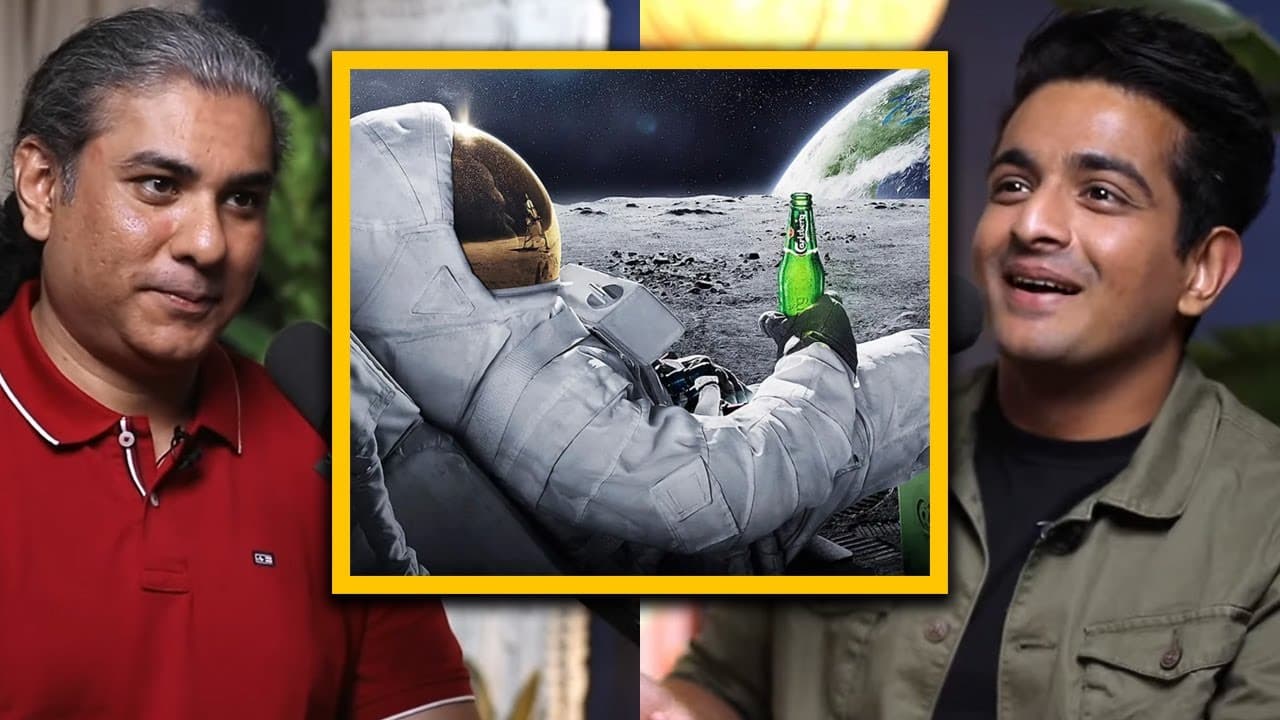
Moon Vacations By 2050 - Astrophysicist Explains Exciting Space Tourism Truths
TL;DR
Space exploration is rapidly evolving with new technologies and international competition for resources and lunar settlements.
Transcript
your friends are scrolling through short content but you my friend you're here to learn welcome to the honest clips let's begin talking about space exploration how it happens why don't you give people a bit of a 101 and then talk about what's happening in 2023 and why is it exciting you so much right so space we have known some things out there but... Read More
Key Insights
- 👾 The Space Race started with the US and USSR competing for dominance in space technology, a rivalry that shaped much of modern space exploration.
- 🌍 The Moon has recently garnered interest not only for exploration but also for its valuable resources, motivating nations to pursue lunar missions eagerly.
- 🧘 Helium-3 could provide a clean energy solution through fusion, positioning the Moon as an essential player in future energy strategies.
- 👾 Permanent bases on the Moon are projected for the late 2020s, which could mark a new chapter in human space habitation and exploration.
- 🙂 Light sail technology could revolutionize interstellar travel, enabling humanity to explore beyond our solar system within just a few decades.
- 🥶 The Far Side of the Moon offers a serene environment for scientific investigation, free from Earth's electromagnetic noise, presenting a unique observational perspective.
- 👯 By 2050, lunar tourism may become reality as infrastructure and technology evolve, enabling people to visit the Moon for leisure.
Install to Summarize YouTube Videos and Get Transcripts
Explore YouTube Video Summarizer or Get YouTube Transcript Extractor
Questions & Answers
Q: How did space exploration begin?
Space exploration officially began post-World War II when the US acquired German V2 rockets. These rockets enabled early photographs of Earth from space and laid the groundwork for future space programs. The Soviet Union then launched Sputnik, the world's first satellite, prompting a fierce competition in the Space Race.
Q: What are the primary motivations for current space pursuits?
Today's space exploration efforts are driven by economic factors, particularly the desire for resources. Countries are keen to extract valuable materials, such as water and Helium-3, from the Moon to support future missions and augment energy production, essentially turning space into a resource frontier.
Q: What significant advancements in energy does Helium-3 offer?
Helium-3, available in lunar soil, is considered a potential fuel for future fusion reactors. Fusion is deemed the "holy grail" of energy production due to its efficiency and lack of radioactive waste, making Helium-3 extraction a significant incentive for lunar exploration efforts.
Q: When can we expect to see human bases on the Moon?
Human bases on the Moon are anticipated by the late 2020s, with plans for micro settlements initially supporting a small number of people. As the technology and infrastructure develop, these bases could evolve into larger communities, with multiple nations establishing their presence on the lunar surface.
Q: How do light sails facilitate interstellar exploration?
Light sails work by harnessing the momentum of light particles to propel a spacecraft. Utilizing powerful laser beams, these sails could achieve speeds up to a significant fraction of light speed, enabling probes to reach neighboring star systems within a few decades rather than millennia.
Q: What discoveries might we find on the Moon?
Aside from extracting resources like water and Helium-3, the Moon presents a unique opportunity for scientific exploration. It may harbor undiscovered minerals and potentially artifacts or evidence left by previous alien civilizations, raising intriguing prospects for future research and discovery.
Q: Why is lunar tourism anticipated by 2050?
The establishment of permanent settlements on the Moon, coupled with advancements from commercial space companies, is expected to pave the way for lunar tourism. By the mid-century mark, tourists could journey to these settlements, enjoying an unprecedented travel experience.
Q: How do current space missions aim to explore Mars?
Current missions focus on establishing a human presence on the Moon as a stepping stone to Mars. The Moon serves as a testbed for life-support systems and technology necessary for longer missions, with the potential to send astronauts to Mars within the next couple of decades.
Summary & Key Takeaways
-
Space exploration began after World War II, ignited by technological advancements, and has since seen nations like the US and USSR compete to achieve significant milestones in space travel.
-
Currently, the Moon is the focus of a new rush for resources, including water and Helium-3, which could revolutionize energy production with fusion technology and fuel future missions to Mars.
-
By the 2030s, we may see permanent lunar settlements and the beginning of space tourism, signaling a new era of human presence in space.
Read in Other Languages (beta)
Share This Summary 📚
Summarize YouTube Videos and Get Video Transcripts with 1-Click
Try YouTube Summary with ChatGPT & Claude or YouTube Transcript Generator
Explore More Summaries from TRS Clips 📚




Summarize YouTube Videos and Get Video Transcripts with 1-Click
Try YouTube Summary with ChatGPT & Claude or YouTube Transcript Generator