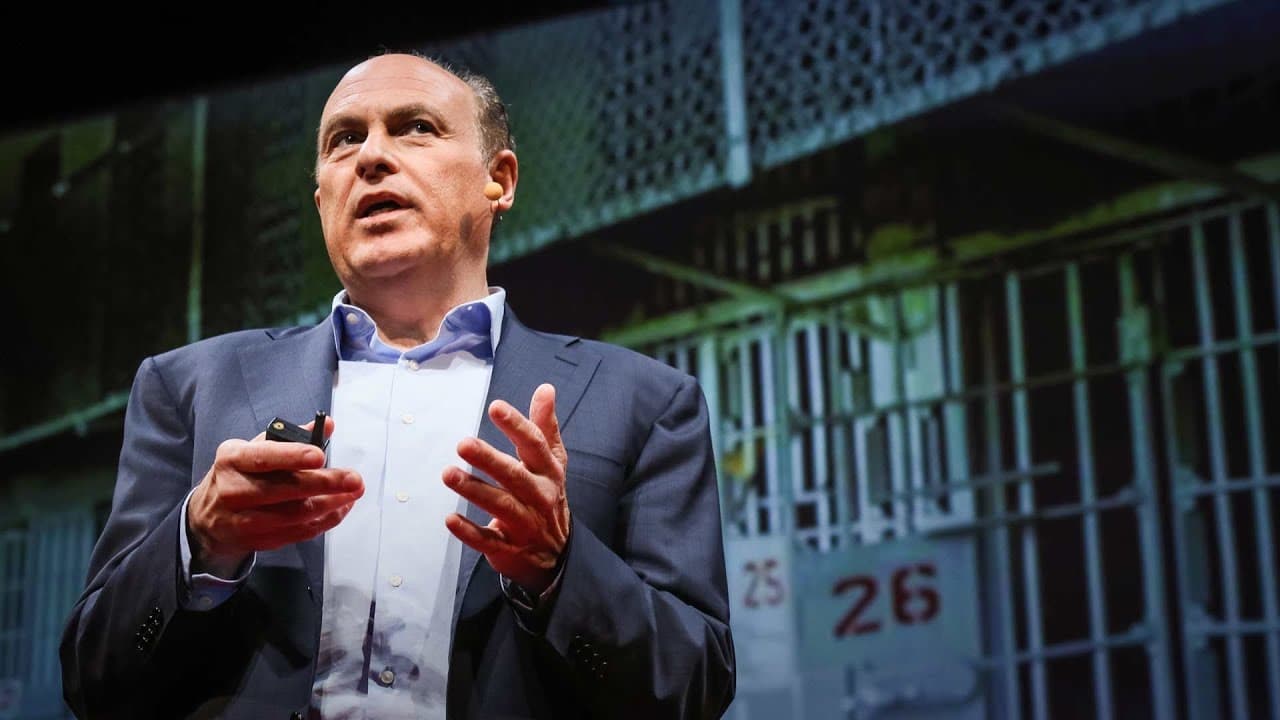
Gary Slutkin: Let's treat violence like a contagious disease
TL;DR
This content presents a physician's experience working in infectious diseases in Somalia and his subsequent efforts to address violence as a contagious disease in the United States.
Transcript
I'm a physician trained in infectious diseases, and following my training, I moved to Somalia from San Francisco. And my goodbye greeting from the chief of infectious diseases at San Francisco General was, "Gary, this is the biggest mistake you'll ever make." But I landed in a refugee situation that had a million refugees in 40 camps, and there wer... Read More
Key Insights
- 🏥 The speaker has experience working in various countries on epidemics such as tuberculosis, cholera, and AIDS.
- 🌍 The speaker noticed a gap in addressing violence as an epidemic in the United States, similar to infectious diseases.
- 🗺️ Maps of violence in US cities showed patterns similar to clustering in infectious epidemics.
- 💡 Violence is behaving like a contagious disease, with the greatest predictor being a preceding case of violence.
- 🔁 Reversing epidemics involves interrupting transmission, preventing further spread, and shifting norms through community activities and public education.
- 📈 The speaker's approach resulted in significant reductions in shootings and killings in neighborhoods in Chicago and has been replicated in other areas.
- 🌎 The movement to address violence as a public health issue is growing, with major cities and international environments embracing the approach.
- ⚙️ Applying science and evidence-based methods to address violence can replace punitive approaches and lead to more effective solutions.
Install to Summarize YouTube Videos and Get Transcripts
Explore YouTube Video Summarizer or Get YouTube Transcript Extractor
Questions & Answers
Q: What were the main responsibilities of the speaker in Somalia?
The speaker's main responsibilities in Somalia were related to inhibiting the spread of tuberculosis and cholera epidemics. He also had to recruit refugees to become specialized health workers due to the limited number of health workers available.
Q: Where did the speaker get assigned to work after Somalia?
After three years in Somalia, the speaker was picked up by the World Health Organization and got assigned to work on epidemics of AIDS. His primary responsibility was in Uganda, but he also worked in Rwanda, Burundi, Zaire (now Congo), Tanzania, Malawi, and several other countries.
Q: Why did the speaker want to come back to America after working overseas?
The speaker wanted to come back to America because he was exhausted after ten years of working overseas. He had seen a lot of death, especially epidemic death, which was full of panic and fear. He also felt emotionally isolated and wanted to take a break and possibly start over.
Q: What did the speaker realize about violence in America?
The speaker realized that violence in America behaved like a contagious disease. He observed clustering of violence in U.S. cities, similar to the clustering seen in infectious epidemics. He also found that the greatest predictor of a case of violence was a preceding case of violence. This led him to believe that violence could be reversed using similar strategies employed in epidemic control.
Q: What was the result of the speaker's first experiment in implementing his new method to reduce violence?
The speaker's first experiment in implementing his new method resulted in a 67% drop in shootings and killings in the West Garfield neighborhood of Chicago. This was a significant reduction and brought positive changes to the community, such as increased use of parks and happier residents.
Q: How has the speaker's method for reducing violence been received by others?
The speaker's method initially faced criticism and opposition, with some people not agreeing with the idea of treating violence as an epidemic and not focusing on punishment or fixing all underlying issues. However, the movement has grown, and many major cities in the U.S. are now implementing this method through their health departments. It has also gained traction internationally, with positive results seen in Puerto Rico, Honduras, Kenya, and Iraq.
Q: What does the speaker believe is the key to solving the problem of violence?
The speaker believes that science should play a more important role in solving the problem of violence. He suggests moving away from emotions and embracing a new set of methods, workers, and strategies. By using a scientific approach and replacing prisons with parks, neighborhoods can be transformed, and violence can be effectively addressed.
Summary & Key Takeaways
-
The speaker, a physician trained in infectious diseases, moved to Somalia and worked to inhibit the spread of tuberculosis and cholera through recruiting and training refugees as health workers.
-
Following work in Somalia, the speaker was assigned to work on AIDS epidemics in Uganda, Rwanda, Burundi, and other countries, eventually running a unit responsible for designing interventions.
-
Feeling exhausted and wanting a break, the speaker returned to the U.S. and became aware of the problem of violence in America, which they compared to an epidemic, leading them to develop a new approach involving violence interruptors and behavior change.
Read in Other Languages (beta)
Share This Summary 📚
Summarize YouTube Videos and Get Video Transcripts with 1-Click
Try YouTube Summary with ChatGPT & Claude or YouTube Transcript Generator
Explore More Summaries from TED 📚


Summarize YouTube Videos and Get Video Transcripts with 1-Click
Try YouTube Summary with ChatGPT & Claude or YouTube Transcript Generator