New Consumption Frontiers
TL;DR
Accenture's research indicates a $4.5 trillion reward for achieving sustainable businesses by 2030.
Transcript
well good morning ladies and gentlemen thank you very much for joining us here for what promises to be an interactive engaging a provocative and an interesting session we hope to make this a conversation about the potential that that we see as far as the circular economy is concerned what the challenges are and what we need to do on several fronts ... Read More
Key Insights
- 🖐️ Technology, including blockchain and digital platforms, can play a crucial role in increasing transparency, traceability, and accountability in supply chains, aiding the transition to a circular economy.
- 🗑️ Governments should introduce regulations, subsidies, and incentives to support circularity and discourage waste generation.
- ⚖️ Collaboration and sharing of knowledge and solutions are essential in scaling up circular economy initiatives.
- 🏪 Consumers need to change their mindset and prioritize sustainability over convenience and disposability.
- 👨💼 Disruptive business models and innovations are necessary to shift from a linear to a circular economy.
- 👨💼 The circular economy offers significant opportunities for both businesses and governments to create value and address resource scarcity and waste issues.
- 🤩 Education and awareness are key in driving the transition to a circular economy, particularly in growing economies where consumption patterns are changing rapidly.
Install to Summarize YouTube Videos and Get Transcripts
Explore YouTube Video Summarizer or Get YouTube Transcript Extractor
Questions & Answers
Q: How can governments ensure the gains of a circular economy and create policies to support it?
Governments should provide subsidies for circular economy initiatives and introduce regulations that drive change. They should encourage companies to take responsibility for their own commitment to sustainability.
Q: What has IKEA done to promote circularity and reduce waste?
IKEA has focused on designing products that can be easily separated and recycled. They have also started testing rental solutions to encourage reusing furniture.
Q: How can disruptive digital technologies aid the circular economy?
Technologies such as blockchain can increase transparency and traceability in supply chains, ensuring accountability and facilitating the circularity of resources. Additionally, digital platforms can enable sharing and renting economy models, reducing waste and promoting sustainable consumption.
Q: How can we learn from the mistakes of developed countries and avoid repeating them in growing economies?
Growing economies should leapfrog over traditional linear models and adopt sustainable practices from the start. They should focus on disruptive technologies, information sharing, and conscious consumption to prevent excessive waste generation.
Summary & Key Takeaways
-
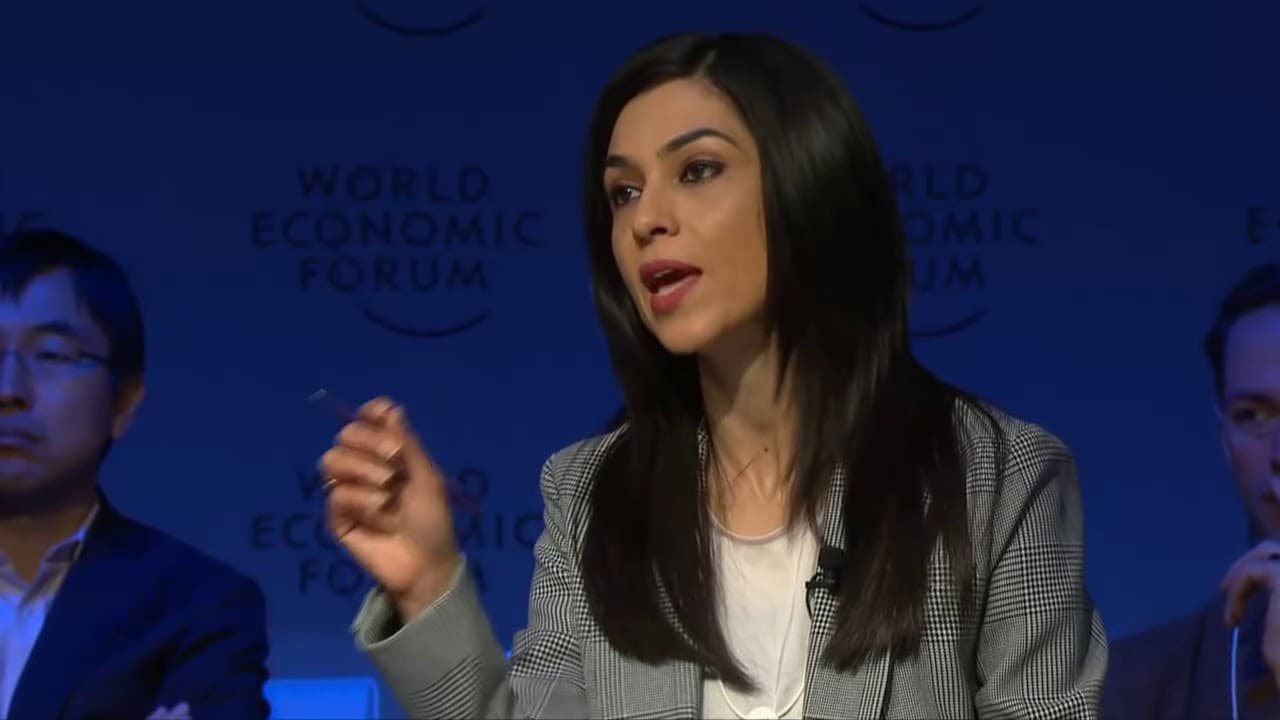
The panel discussed the potential and challenges of the circular economy, including the underutilization of natural resources and the need to eliminate waste.
-
Technology, business models, finance and investment, policy, and consumer behavior were identified as key pillars that require innovation and disruption for the circular economy to thrive.
-
The panelists emphasized the importance of transparency, accountability, and shared platforms in achieving circularity and creating new business opportunities.
Read in Other Languages (beta)
Share This Summary 📚
Summarize YouTube Videos and Get Video Transcripts with 1-Click
Try YouTube Summary with ChatGPT & Claude or YouTube Transcript Generator
Explore More Summaries from World Economic Forum 📚
Summarize YouTube Videos and Get Video Transcripts with 1-Click
Try YouTube Summary with ChatGPT & Claude or YouTube Transcript Generator