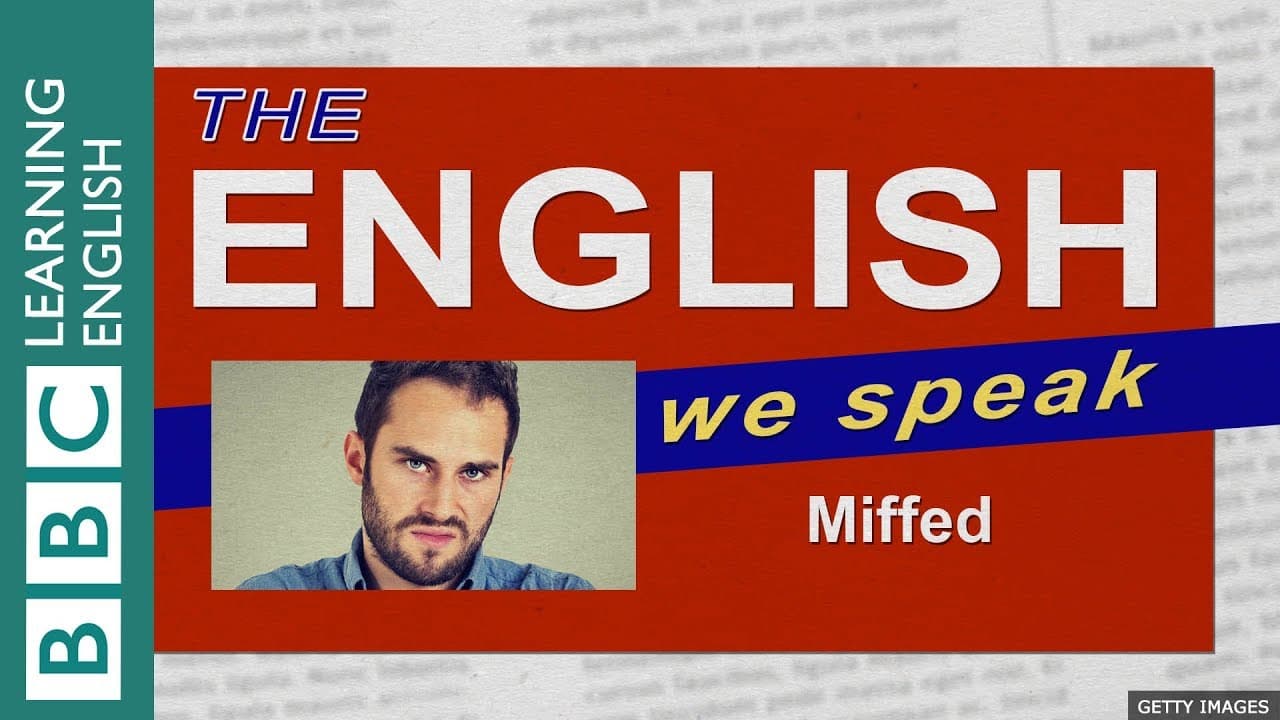
Miffed: The English We Speak
TL;DR
Learn the meaning of 'miffed' through a humorous scenario.
Transcript
Feifei: Hello and welcome to The English We Speak. I’m Feifei. Rob: And I’m Rob. Feifei: So, Rob, you don’t look so happy! Rob: I’m… ok. Feifei: I thought you were off to a rock concert for your birthday this weekend. Rob: Yeah, I was. I love rock music. Feifei: Oh. What happened? Rob: Well, I booked my ticket a month ago. It wasn’t cheap. Three of... Read More
Key Insights
- The term 'miffed' is used to describe a feeling of annoyance or frustration, typically caused by someone else's actions.
- Rob was upset because his friends pretended they forgot to book concert tickets, making him feel 'miffed'.
- Feifei used Rob's situation as a teaching moment to explain the meaning of 'miffed' to the audience.
- Examples of being 'miffed' include working hard without receiving thanks, being stood up by someone special, and receiving the wrong food order.
- The situation was a prank orchestrated by Feifei to create an opportunity to discuss the term 'miffed'.
- Rob's friends were only joking about not booking the tickets, which was revealed later in the conversation.
- Feifei surprises Rob by revealing she has a ticket for the concert, resolving the situation.
- The program emphasizes learning English through real-life situations and humor, engaging the audience effectively.
Install to Summarize YouTube Videos and Get Transcripts
Explore YouTube Video Summarizer or Get YouTube Transcript Extractor
Questions & Answers
Q: What does 'miffed' mean?
'Miffed' is an informal term used to describe a feeling of annoyance or frustration, usually caused by someone else's behavior. It represents a mild level of irritation, often due to unmet expectations or disappointing actions by others, as illustrated in Rob's situation with his friends.
Q: Why was Rob feeling 'miffed'?
Rob was feeling 'miffed' because his friends told him they forgot to book tickets for the rock concert he was excited about attending. This left him frustrated and annoyed, as he had planned the outing with them and was looking forward to celebrating his birthday at the concert.
Q: How did Feifei use Rob's situation as a teaching moment?
Feifei used Rob's situation as a practical example to explain the meaning of 'miffed' to the audience. By discussing Rob's feelings and actions, she was able to illustrate how the term is used in real-life scenarios, making it easier for listeners to understand and remember the word.
Q: What examples were given to illustrate being 'miffed'?
Examples given to illustrate being 'miffed' included working late without receiving thanks from a boss, being ignored by a romantic interest after a promising holiday encounter, and receiving a vegetarian pizza with meat on it. These scenarios demonstrate common situations where people might feel annoyed or frustrated.
Q: What was the twist in the story about Rob's concert tickets?
The twist in the story was that Rob's friends were joking about not booking the concert tickets. Feifei had orchestrated the prank to create a teaching moment for the term 'miffed'. This revelation turned Rob's frustration into relief and amusement, showcasing the playful nature of the episode.
Q: How did Feifei resolve the situation with Rob?
Feifei resolved the situation by revealing that she had also booked a ticket for the concert, ensuring Rob wouldn't miss out on celebrating his birthday. This surprise not only lifted Rob's spirits but also reinforced the friendly and supportive dynamic between the hosts, adding a positive conclusion to the episode.
Q: What is the educational approach of 'The English We Speak'?
The educational approach of 'The English We Speak' involves using relatable, real-life scenarios and humor to teach English vocabulary and phrases. By integrating language learning with entertaining and engaging content, the program helps listeners understand and remember new terms more effectively, enhancing their overall language proficiency.
Q: What is the significance of humor in the episode?
Humor plays a significant role in the episode by making the learning experience enjoyable and memorable. The playful interaction between Feifei and Rob, along with the prank about the concert tickets, keeps the audience engaged and entertained while effectively conveying the meaning of 'miffed'. This approach helps reinforce language learning in a fun and accessible way.
Summary & Key Takeaways
-
In this episode, Rob feels 'miffed' when his friends pretend they forgot to book concert tickets. Feifei uses this opportunity to explain the meaning of 'miffed' as feeling annoyed or frustrated due to others' actions. The situation resolves when it's revealed to be a prank.
-
Examples of being 'miffed' include not being thanked for hard work, being ignored by a romantic interest, and receiving the wrong food order. Feifei's prank on Rob serves as a humorous teaching moment for the audience to understand the term 'miffed'.
-
The program aims to teach English through relatable scenarios and humor. Feifei surprises Rob by having a concert ticket, restoring his mood. The episode demonstrates how learning English can be engaging and fun through real-life examples.
Read in Other Languages (beta)
Share This Summary 📚
Summarize YouTube Videos and Get Video Transcripts with 1-Click
Try YouTube Summary with ChatGPT & Claude or YouTube Transcript Generator
Explore More Summaries from BBC Learning English 📚
Summarize YouTube Videos and Get Video Transcripts with 1-Click
Try YouTube Summary with ChatGPT & Claude or YouTube Transcript Generator