What Is Marx's Labour Theory of Value?
TL;DR
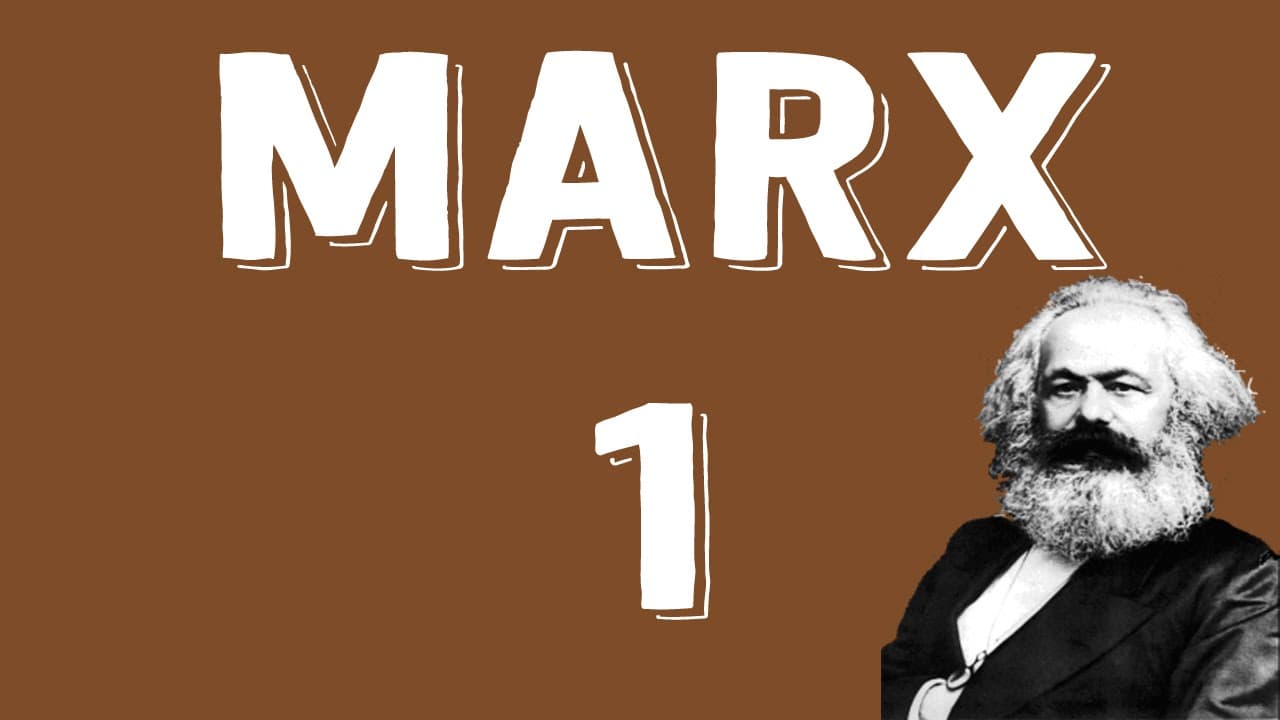
Marx's Labour Theory of Value asserts that the value of a product is derived from the labour required to produce it, making it central to understanding capitalism's exploitative nature. He argues that workers are paid less than the value they generate, leading to inherent class conflict and the accumulation of surplus value by capitalists.
Transcript
March is my month of marks and in this part one will be looking at labor and class so we're talking about production making products and in order to make any product you first need two things you'll need the means of production this video is like a product which I made and I can show you some of my means of production right now it's my camera my mi... Read More
Key Insights
- 🔬 Labor is the source of value according to Marx's labor theory of value.
- 🙃 Capitalism is based on privately owned means of production and the pursuit of profit.
- 🥺 Workers are paid less than the value they produce, leading to exploitation under capitalism.
- ❓ Capitalism's origins can often be traced back to violence, such as confiscation of property or inheritance from feudalistic practices.
- 🏛️ Marx believed that society is divided into classes and characterized by class struggle.
- 🔬 The labor theory of value is debated in mainstream economics, with marginalism being preferred by many economists.
- ❓ Value and price can be separate concepts, with price being influenced by supply and demand.
Install to Summarize YouTube Videos and Get Transcripts
Explore YouTube Video Summarizer or Get YouTube Transcript Extractor
Questions & Answers
Q: What is the labor theory of value?
The labor theory of value states that the value of a product is determined by the amount of labor required to produce it. Marx believed that the more labor it takes to make something, the more valuable it is.
Q: Why is capitalism considered exploitative according to Marx?
Marx believed that capitalism is exploitative because workers are paid less than the value of their labor. The surplus value created by the labor of workers goes to the owners of the means of production, leading to exploitation.
Q: How does capitalism affect different social classes?
Marx argued that capitalism creates class divisions. The working class is exploited by the capitalist class, who own the means of production. Marx believed that society is characterized by class struggle and predicted a progression towards communism.
Q: How does the labor theory of value differ from marginalism?
The labor theory of value, favored by Marx, states that the value of a product is determined by the amount of labor required to produce it. Marginalism, on the other hand, focuses on the utility or demand for a product in determining its value.
Summary & Key Takeaways
-
Labor theory of value: Marx believed that the value of a product is determined by the amount of labor required to produce it.
-
Capitalistic production: Marx argued that capitalism is based on privately owned means of production and the products are sold for profit.
-
Exploitation of labor: Marx believed that capitalism is inherently exploitative, as workers are paid less than the value they produce.
Read in Other Languages (beta)
Share This Summary 📚
Summarize YouTube Videos and Get Video Transcripts with 1-Click
Try YouTube Summary with ChatGPT & Claude or YouTube Transcript Generator
Explore More Summaries from Philosophy Tube 📚



Summarize YouTube Videos and Get Video Transcripts with 1-Click
Try YouTube Summary with ChatGPT & Claude or YouTube Transcript Generator