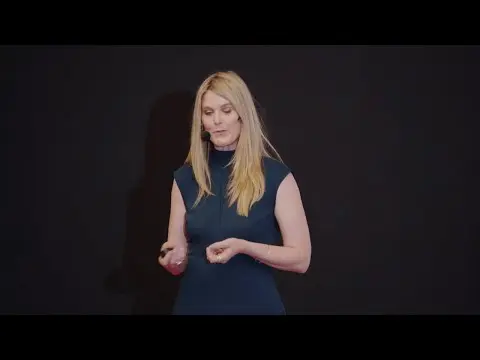
How To Optimise Your Breathing Habits | Jane Tarrant | TEDxNewcastle

TL;DR
Retraining breathing habits can lead to a happier and healthier life by improving sleep, energy levels, and overall well-being.
Transcript
he was 16 when he had an accident that meant it cut through his trachea and he's very lucky to be alive but even though he had life-saving surgery and Rehabilitation there was something that was missed when I was when when I first met him he was 41 and he'd been struggling for 25 years and he had a restricted Airway at this time he was sleeping on ... Read More
Key Insights
- 😪 Retraining breathing habits can significantly improve sleep quality, energy levels, and physical performance.
- 🥺 Physical factors like a broken nose or narrow face can lead to restricted airways and breathing issues.
- 🚚 Over-breathing, influenced by stress and anxiety, can hinder the delivery of oxygen to cells.
- 👯 Proper perception of deep breathing is essential, as many people often mistake shallow breathing for deep breaths.
- 😤 Nose breathing offers numerous benefits, including filtering out harmful particles, warming and moistening the air, and widening airways.
- 😋 Retraining the tongue position can help retrain breathing through the nose.
- ☺️ Awareness and control of the diaphragm and ribs can lead to more efficient and relaxed breathing patterns.
Install to Summarize YouTube Videos and Get Transcripts
Explore YouTube Video Summarizer or Get YouTube Transcript Extractor
Questions & Answers
Q: How did retraining his breathing habits help the man in the speaker's story?
Retraining his breathing habits allowed him to sleep better, have more energy, and engage in physical activities that were previously impossible. It improved his overall quality of life.
Q: What are some examples of breathing habits that indicate over-breathing?
Breathing through the mouth instead of the nose, shallow and fast chest breathing, and loud snoring can all be signs of over-breathing.
Q: Why is it important to breathe through the nose instead of the mouth?
Breathing through the nose filters out viruses, bacteria, particles, and allergens. It also helps warm and moisten the air before it reaches the lungs, widens the airways and blood vessels, and even produces nitric oxide which has beneficial effects on the body.
Q: How can retraining breathing habits improve carbon dioxide tolerance?
By slowing down the breath and retaining carbon dioxide, one can increase their tolerance to it. This allows for more comfortable and controlled breathing without triggering panic attacks.
Summary & Key Takeaways
-
The speaker shares a personal story of a man who struggled with breathing and sleep issues for 25 years but found relief after retraining his breathing habits.
-
The three key issues with breathing habits are restriction, over-breathing, and perception.
-
Restriction can be caused by physical factors such as a broken nose or narrow face, and over-breathing can be influenced by stress and anxiety. Proper perception of deep breathing is also important.
Read in Other Languages (beta)
Share This Summary 📚
Summarize YouTube Videos and Get Video Transcripts with 1-Click
Try YouTube Summary with ChatGPT & Claude or YouTube Transcript Generator
Explore More Summaries from TEDx Talks 📚





Summarize YouTube Videos and Get Video Transcripts with 1-Click
Try YouTube Summary with ChatGPT & Claude or YouTube Transcript Generator