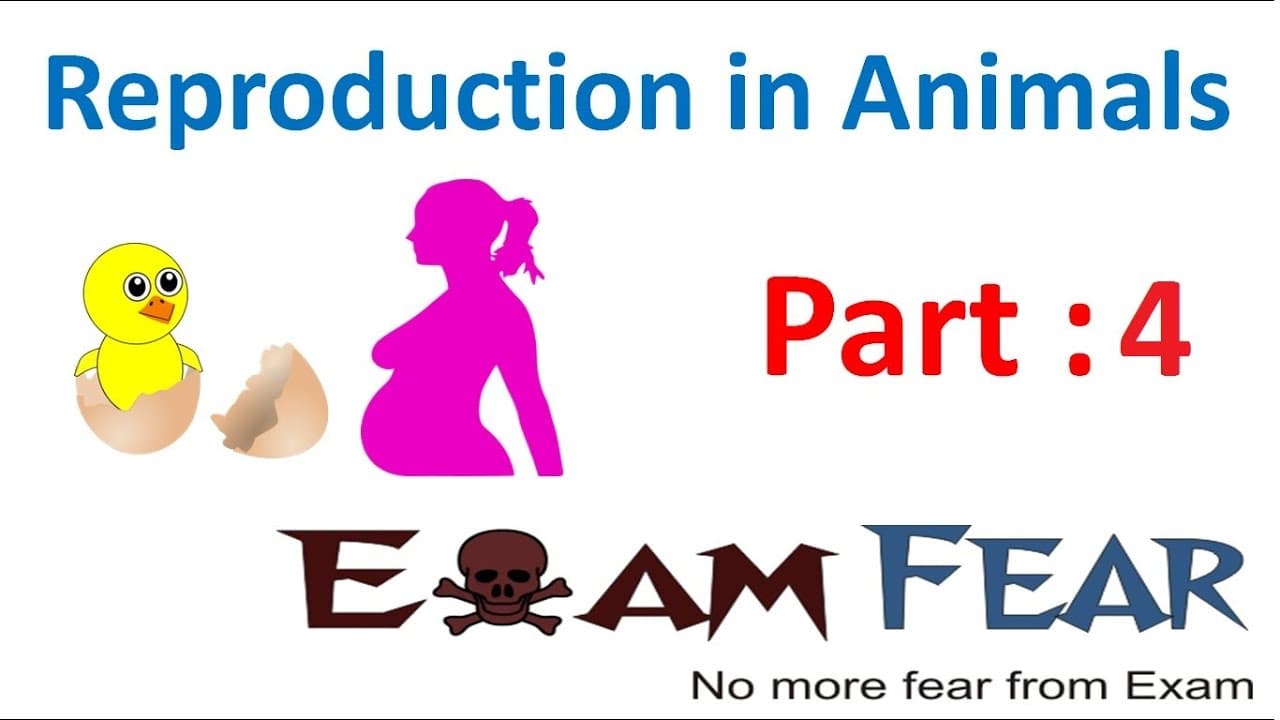
Biology Reproduction in Animals Part 4 (Budding, Fragmentation, Regeneration) Class 8 VIII
TL;DR
Asexual reproduction in animals includes processes like budding, fragmentation, and regeneration, each with its unique characteristics.
Transcript
hello friends this video on reproduction in animals part 4 is brought to you by exam feel calm no more fear from exam the next type of asexual in production is buttoning so what is buddy so the binding word is derived from the word burden let us see what it is a new individual is formed as an outgrowth of parent now on the parents body we can see a... Read More
Key Insights
- 🇦🇬 Asexual reproduction in animals includes budding, fragmentation, and regeneration.
- 👶 Budding involves the formation of a new individual as an outgrowth on the parent's body.
- 👶 Fragmentation occurs when an organism breaks into multiple pieces, each capable of developing into a new individual.
- 👶 Regeneration is an accidental process where an organism can generate new individuals if it is cut or broken into pieces.
- ❓ Asexual reproduction processes vary in complexity and are more common in simple multicellular organisms.
- 🙈 Budding is commonly seen in organisms like Hydra and yeast.
- ⛔ Fragmentation and regeneration are limited to certain organisms and depend on the presence of specialized cells.
Install to Summarize YouTube Videos and Get Transcripts
Explore YouTube Video Summarizer or Get YouTube Transcript Extractor
Questions & Answers
Q: What is budding in asexual reproduction?
Budding is a process where a new individual is formed as an outgrowth on the parent's body. The outgrowth gradually grows to become a separate organism.
Q: Which organisms commonly exhibit budding?
Budding is commonly seen in organisms like Hydra and yeast. In Hydra, a small outgrowth forms on the parent's body and grows to become a new Hydra.
Q: How does fragmentation work in asexual reproduction?
Fragmentation involves an organism breaking into multiple pieces, and each piece has the potential to develop into a new individual. This process is more common in simple multicellular animals.
Q: What is the difference between regeneration and fragmentation?
Fragmentation is a process that happens naturally as an organism matures, while regeneration is an accidental process that occurs when an organism is cut into pieces. Regeneration requires specialized cells for the development of different body parts.
Summary & Key Takeaways
-
Asexual reproduction processes in animals include budding, where a new individual grows as an outgrowth on the parent's body and eventually separates.
-
Fragmentation involves an organism breaking into multiple pieces, with each piece giving rise to a new individual.
-
Regeneration occurs when a parent is cut or broken into multiple pieces, and each piece has the ability to develop into a new organism.
Read in Other Languages (beta)
Share This Summary 📚
Summarize YouTube Videos and Get Video Transcripts with 1-Click
Try YouTube Summary with ChatGPT & Claude or YouTube Transcript Generator
Explore More Summaries from LearnoHub - Class 11, 12 📚

Summarize YouTube Videos and Get Video Transcripts with 1-Click
Try YouTube Summary with ChatGPT & Claude or YouTube Transcript Generator