Miguel Nicolelis: A monkey that controls a robot with its thoughts. No, really.
TL;DR
This content discusses the advancements in neuroscience and brain-machine interfaces to understand and enhance human nature.
Transcript
Translator: Timothy Covell Reviewer: Morton Bast The kind of neuroscience that I do and my colleagues do is almost like the weatherman. We are always chasing storms. We want to see and measure storms -- brainstorms, that is. And we all talk about brainstorms in our daily lives, but we rarely see or listen to one. So I always like to start these tal... Read More
Key Insights
- 🧠 Neuroscience is like studying storms in the brain, and the speaker introduced a recording of brain activity to demonstrate this.
- 🌌 The number of neurons in the brain is comparable to the number of galaxies in the universe, and researchers are working to understand its fundamental nature.
- 🎧 Brain-machine interfaces allow researchers to extract motor messages from brain activity and translate them into commands to control artificial devices.
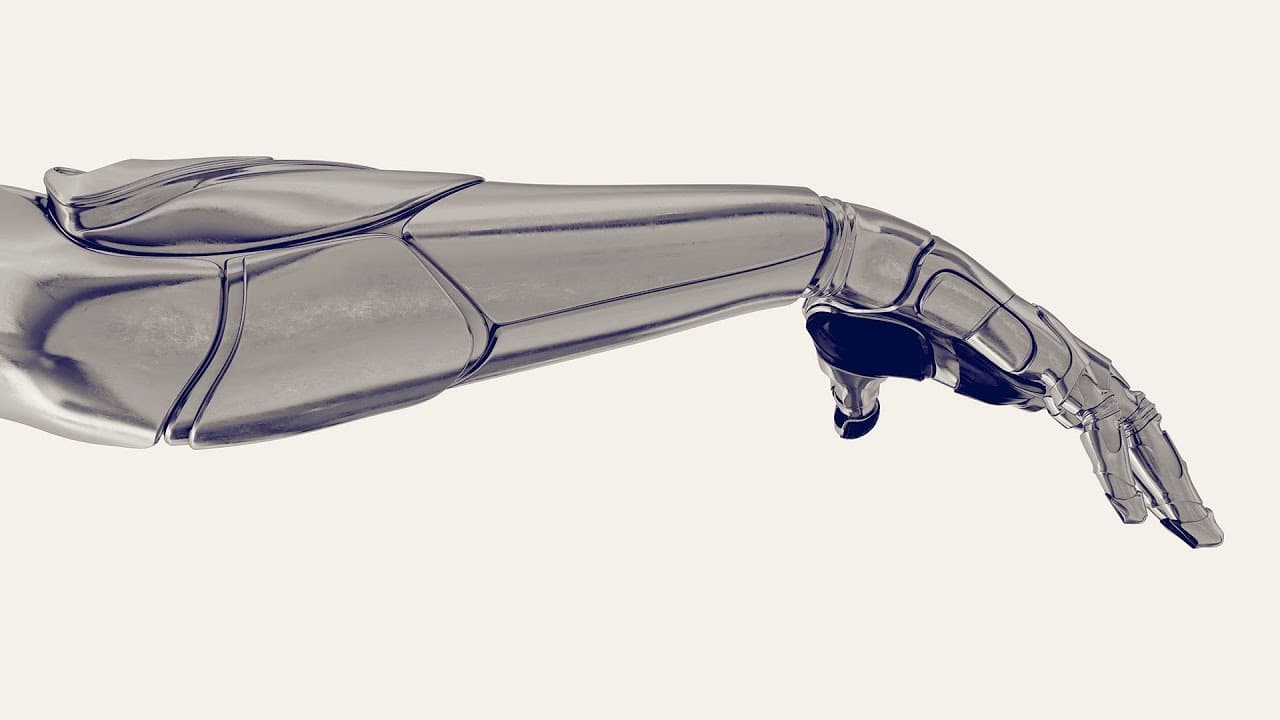
- 🐒 The speaker described how a monkey named Aurora could control a robotic arm to play a video game without using her body.
- 💻 Researchers have also developed computational avatars that monkeys can control using their brain activity, allowing them to interact with virtual objects.
- 🌟 The brain incorporates artificial devices as extensions of the body, suggesting that our sense of self can expand beyond physical boundaries.
- 🎹 Brain activity can be translated into movements in remote locations, as demonstrated by a monkey's brain controlling a robot in another country.
- 🏥 The knowledge and technology gained from this research could potentially help restore movement to patients with severe neurological problems through a brain-machine interface and exoskeleton.
Install to Summarize YouTube Videos and Get Transcripts
Explore YouTube Video Summarizer or Get YouTube Transcript Extractor
Questions & Answers
Q: What kind of neuroscience do Timothy Covell and his colleagues focus on?
Timothy Covell and his colleagues focus on neuroscience that involves studying and measuring brainstorms, which are the electrical storms produced by brain cells.
Q: How many brain cells were recorded simultaneously in the first image obtained by Timothy Covell and his team?
In the first image recorded by Timothy Covell's team, they were able to measure the electrical sparks of a hundred brain cells simultaneously.
Q: What does Timothy Covell compare neuroscientists to?
Timothy Covell compares neuroscientists to astronomers because they work with a system that has a comparable number of cells to the number of galaxies in the universe.
Q: What are the intentions behind creating brain-machine interfaces, according to Timothy Covell?
The intentions behind creating brain-machine interfaces, according to Timothy Covell, are to be able to extract and understand the messages carried by brainstorms, to translate them into digital commands, and to reproduce voluntary movements using artificial devices controlled by the brain.
Q: How did Timothy Covell's team demonstrate the incorporation of an artificial device into the brain's self-perception?
Timothy Covell's team demonstrated the incorporation of an artificial device into the brain's self-perception by training a monkey named Aurora to play a video game using a joystick, then connecting her brainstorms to a robotic arm. Aurora was able to control the arm and play the game without using her physical body.
Q: What did Timothy Covell's team achieve by training monkeys to control avatars in a virtual world?
By training monkeys to control avatars in a virtual world, Timothy Covell's team achieved the monkeys' ability to sense and process new sensations through electrical messages directly sent to their brains. The monkeys were able to control the avatars' movements and make tactile discriminations in a task without relying on their physical bodies.
Q: How far did Timothy Covell's team push the limits of brain-machine interfaces?
Timothy Covell's team pushed the limits of brain-machine interfaces by connecting the brain activity of a monkey running on a treadmill in the United States to a humanoid robot in Japan, allowing the robot to walk based on the monkey's brain activity. The round trip between the monkey's brain and the robot took less time than it took for the brain's signals to reach the monkey's own muscles.
Q: What is the ultimate goal behind the research on brain-machine interfaces, according to Timothy Covell?
The ultimate goal behind the research on brain-machine interfaces, according to Timothy Covell, is to restore the ability of individuals who have lost the ability to move due to spinal cord lesions. The aim is to create a bypass using computational microengineering and robotic exoskeletons, allowing the brain to control a new body and regain movement.
Summary & Key Takeaways
-
Neuroscientists study brainstorms, or electrical activity in the brain, in order to understand human nature and how it shapes memories, beliefs, feelings, and plans.
-
Brain-machine interfaces allow scientists to translate electrical signals from the brain into digital commands that can control artificial devices, such as robotic arms.
-
Research in this field has shown that the brain can incorporate these artificial devices as part of the body, expanding its concept of self and potentially offering new possibilities for patients with neurological disorders.
Read in Other Languages (beta)
Share This Summary 📚
Summarize YouTube Videos and Get Video Transcripts with 1-Click
Try YouTube Summary with ChatGPT & Claude or YouTube Transcript Generator
Explore More Summaries from TED 📚

Summarize YouTube Videos and Get Video Transcripts with 1-Click
Try YouTube Summary with ChatGPT & Claude or YouTube Transcript Generator