The Oldest Plant-Like Fossils Ever
TL;DR
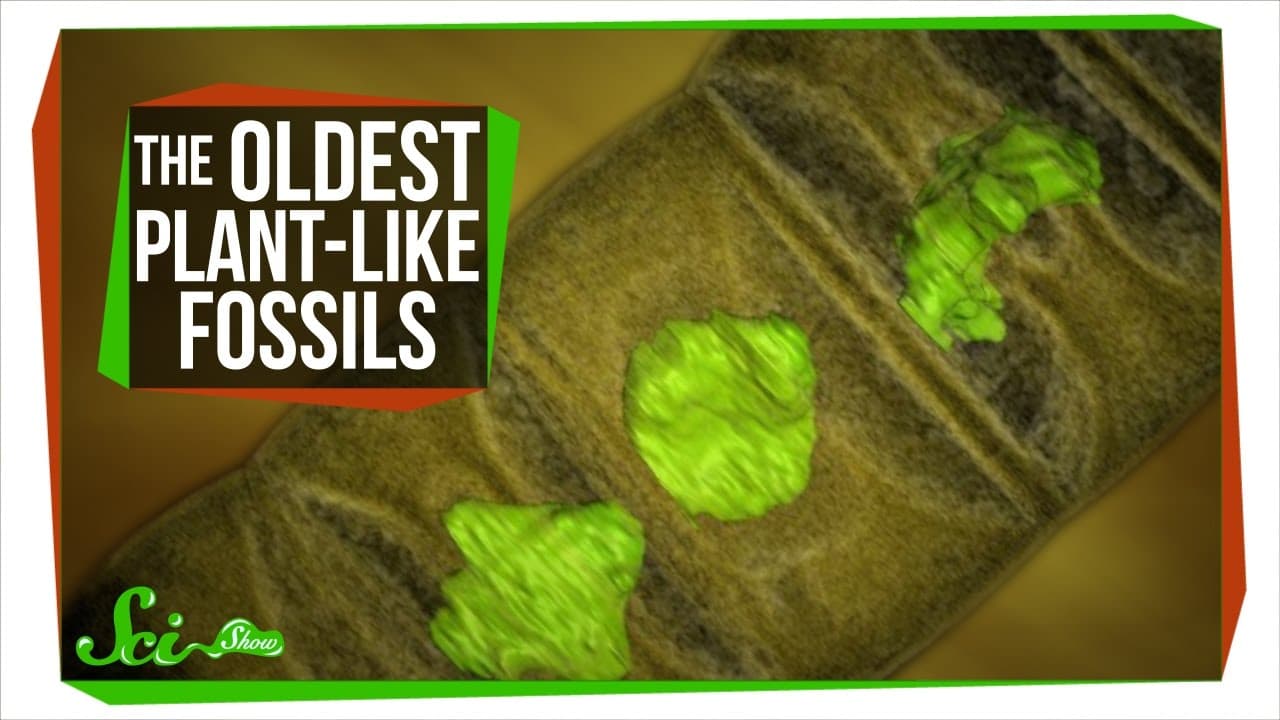
Researchers have found 1.6 billion year old red algae fossils, suggesting complex multicellular life existed much earlier than previously thought. Additionally, scientists have discovered tardigrades use unique proteins to protect their cells when dried out.
Transcript
Figuring out the origins of life on Earth is like putting together a huge puzzle, where all the pieces are buried in a bunch of rock and spread across the entire planet. Scientists have to rely on tiny structural clues and some good old fashioned guesswork, even just to decide if a fossilized cell is a bacterium or part of a plant. And even then, i... Read More
Key Insights
- 🤔 Researchers have found 1.6 billion year old red algae fossils, suggesting complex multicellular life existed much earlier than previously thought.
- ❓ The presence of eukaryotic cells in these fossils provides evidence for the early evolution of complex organisms.
- 🤙 Tardigrades possess unique proteins called TDPs that protect their cells when dried out, potentially offering insights into improving drought resistance in crops.
- 🛟 The discovery of ancient algae and tardigrade survival secrets highlights the ongoing quest to unravel the origins of life on Earth.
- 🥺 Further understanding of early life on Earth may lead to revisions in the timeline of the appearance of complex organisms.
- 💁 The study of fossils and extremophiles like tardigrades provides valuable information for scientific research and potential applications in various fields.
- 🫒 Fossil analysis relies on identifying structures and comparing them to living organisms, but definitive identification can be challenging.
Install to Summarize YouTube Videos and Get Transcripts
Explore YouTube Video Summarizer or Get YouTube Transcript Extractor
Questions & Answers
Q: What did researchers from the Swedish Museum of Natural History discover?
The researchers discovered 1.6 billion year old red algae fossils, providing evidence for the existence of complex multicellular life much earlier than previously believed.
Q: How can scientists identify eukaryotic cells in fossils?
In the red algae fossils, scientists identified thin filaments and cell compartments, which are characteristic of eukaryotic cells. The presence of structures resembling pyrenoids also suggests the fossils are likely red algae.
Q: How do tardigrades protect their cells from desiccation?
Tardigrades possess tardigrade-specific intrinsically disordered proteins (TDPs) that form a glassy structure when water is removed from their cells. This structure prevents proteins from bunching up, membrane fusion, and other cellular damage.
Q: How can the discovery of tardigrade survival secrets be useful?
Understanding how tardigrades survive desiccation could have practical applications such as creating drought-resistant crops and improving the preservation and transportation of moisture-sensitive medicines.
Summary & Key Takeaways
-
Scientists from the Swedish Museum of Natural History have identified 1.6 billion year old red algae fossils, providing evidence for the existence of complex multicellular life much earlier than previously believed.
-
Red algae fossils consist of thin filaments and cell compartments, indicating eukaryotic cells. Some structures within the fossils resemble pyrenoids, which are found in algae chloroplasts and aid in starch production.
-
Researchers have also discovered tardigrades possess tardigrade-specific intrinsically disordered proteins (TDPs) that protect their cells from desiccation. TDPs form a glassy structure when water is removed, preventing cellular damage.
Read in Other Languages (beta)
Share This Summary 📚
Summarize YouTube Videos and Get Video Transcripts with 1-Click
Try YouTube Summary with ChatGPT & Claude or YouTube Transcript Generator
Explore More Summaries from SciShow 📚

Summarize YouTube Videos and Get Video Transcripts with 1-Click
Try YouTube Summary with ChatGPT & Claude or YouTube Transcript Generator