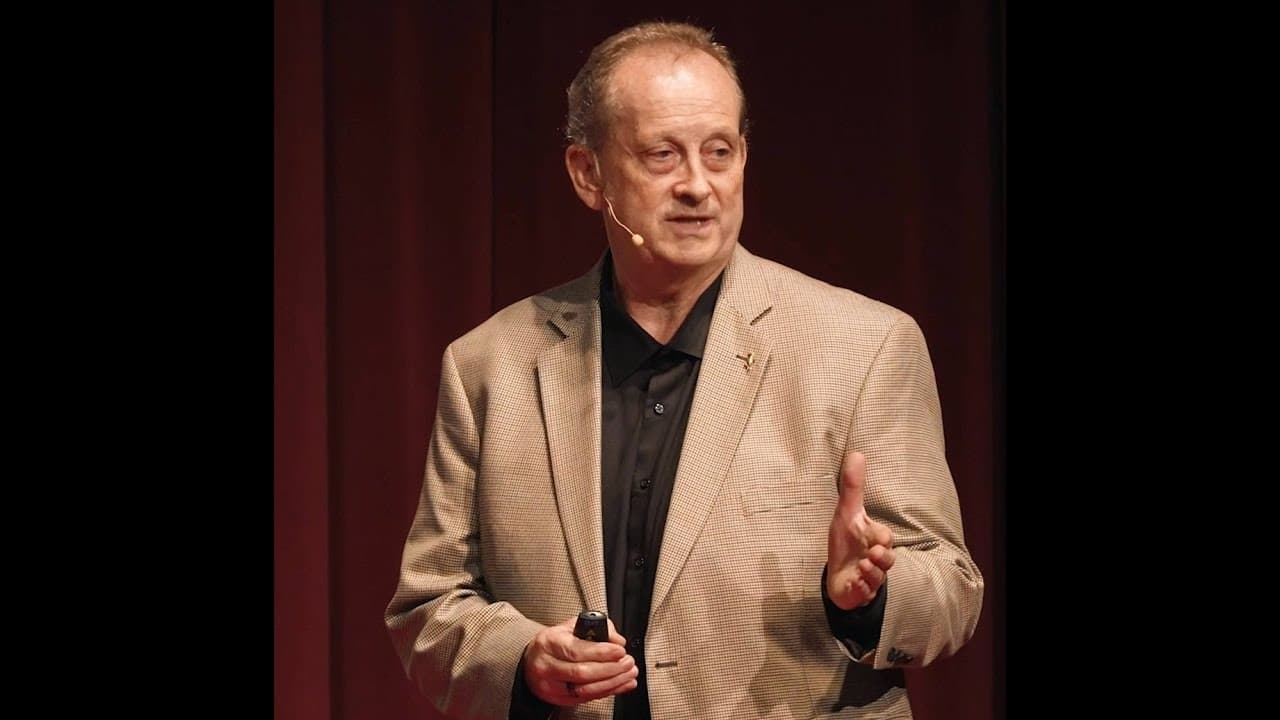
Why extraterrestrial life is more likely than we may think. | Michael Doyle | TEDxTaftAvenue
TL;DR
Scientists are actively searching for signs of life beyond Earth through various experiments, observations, and missions.
Transcript
Transcriber: Aline Bilharinho Reviewer: Walaa Mohammed I'm going to try and take you through a journey about life, curiosity and science. To start with, everyone in this audience is a member of a curious species. It's our defining characteristic. It's what has led us from hunter to gatherer to farmer to urban dweller, to people who come to Ted talk... Read More
Key Insights
- 🥺 Curiosity is a defining trait of humans that has led to significant advancements throughout history, including scientific discoveries.
- 🏛️ The discovery of amino acids in experiments and on asteroids suggests that the building blocks of life may be common throughout the universe.
- 🌊 Enceladus and its geysers provide favorable conditions for potential life, with mineral-laden water and similarities to Earth's deep-sea thermal vents.
- 👨🔬 Public engagement and participation in scientific research are essential for increasing our understanding and accelerating the search for extraterrestrial life.
Install to Summarize YouTube Videos and Get Transcripts
Explore YouTube Video Summarizer or Get YouTube Transcript Extractor
Questions & Answers
Q: Why is curiosity an important trait of humans?
Curiosity has propelled us to explore and discover, enabling us to advance as a society and seek answers to fundamental questions about our existence.
Q: How do experiments demonstrate the possibility of life forming in our own solar system?
Experiments like Stanley Miller and Harold Urey's showed that amino acids, the building blocks of life, can arise from early Earth-like conditions. The discovery of amino acids on an asteroid further supports the likelihood of life's potential.
Q: What evidence suggests that Enceladus may harbor life?
Enceladus's geysers spewing mineral-laden water are similar to the thermal vents on Earth's Challenger Deep, known to support unique bacterial species. The presence of phosphorus, a key element for life, further strengthens this possibility.
Q: How can the public participate in the search for life beyond Earth?
NASA offers citizen science programs and educational resources, inviting people of all ages to contribute to data analysis and understanding of exoplanets, increasing the chances of identifying signs of life.
Summary & Key Takeaways
-
Curiosity is a defining characteristic of the human species, leading us to ask big questions like the existence of life beyond our planet.
-
Experiments have shown that basic building blocks of life, such as amino acids, can be formed under conditions similar to early Earth and in asteroids.
-
Enceladus, a moon of Saturn, shows promising signs of potential life with its geysers spewing mineral-laden water similar to the Challenger Deep.
Read in Other Languages (beta)
Share This Summary 📚
Summarize YouTube Videos and Get Video Transcripts with 1-Click
Try YouTube Summary with ChatGPT & Claude or YouTube Transcript Generator
Explore More Summaries from TEDx Talks 📚





Summarize YouTube Videos and Get Video Transcripts with 1-Click
Try YouTube Summary with ChatGPT & Claude or YouTube Transcript Generator