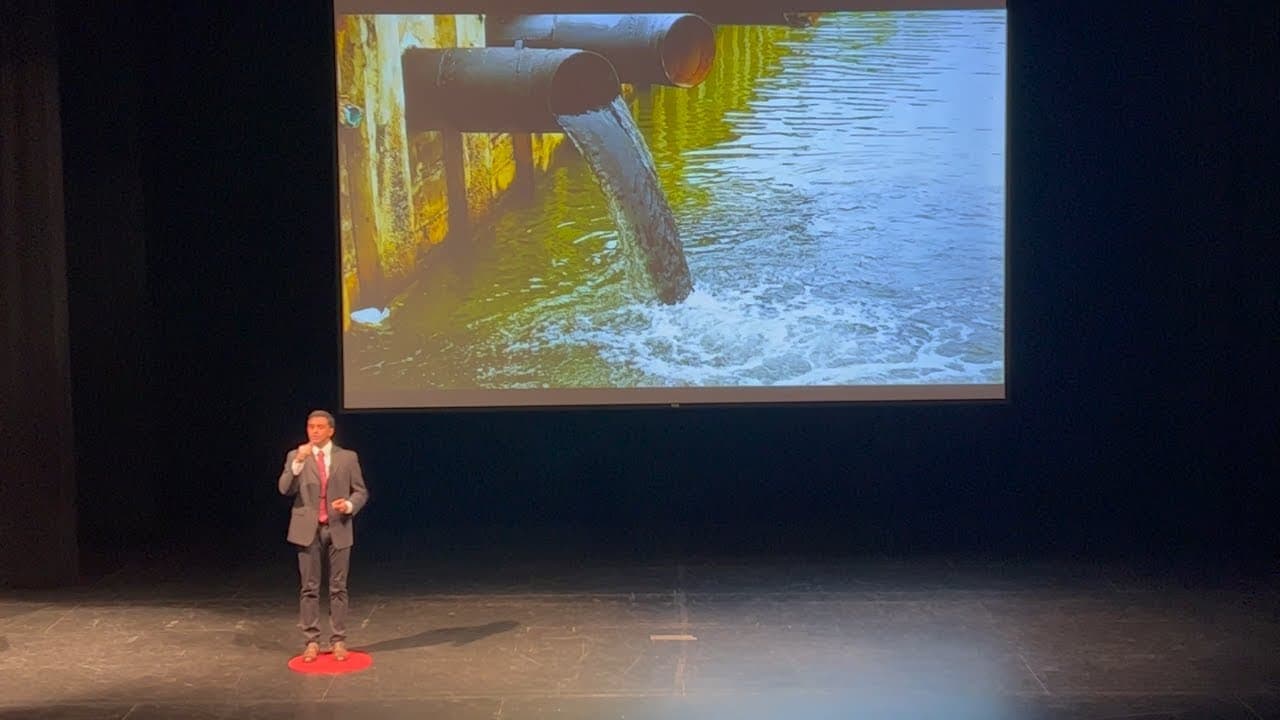
Nanobubbles: Miniature Marvels Altering Water Treatment | Abhinav Avvaru | TEDxNashuaHighSchoolSouth
TL;DR
Nano bubbles, incredibly tiny and stable bubbles, have the potential to reduce pathogens, chemicals, and organic pollutants in water, providing clean drinking water for the future.
Transcript
I want all of you to close your eyes and imagine a day from your childhood I want you to imagine a day where might have been sunny outside where you might have been blowing bubbles I want you to hold on to this image of blowing bubbles for a couple of seconds what if I were to tell you that these very bubbles can be the key to providing us clean dr... Read More
Key Insights
- 👁️🗨️ Nano bubbles are tiny, stable bubbles found in liquids that can significantly improve water quality.
- 💦 They have the potential to reduce pathogens, algae, organic pollutants, and certain chemicals in water.
- 🥺 The addition of nanobubbles to water can change the biotic and abiotic conditions, leading to the reduction of algae and pathogens.
- 💄 Nanobubbles can interact with and absorb organic pollutants, making them more easily removable from wastewater.
- 💦 They have shown promise in reducing chemicals like PFAS, which are challenging to eliminate using other water treatment methods.
- 💦 Nanobubbles are versatile, energy-efficient, and provide more time for absorption and reduction of contaminants in water.
- 🇨🇷 The main drawback of nanobubbles is currently their cost, but advancements in technology are expected to address this issue.
Install to Summarize YouTube Videos and Get Transcripts
Explore YouTube Video Summarizer or Get YouTube Transcript Extractor
Questions & Answers
Q: What are nanobubbles and why are they important?
Nanobubbles are incredibly tiny, stable bubbles found in liquids. They are important because they have the potential to significantly improve water quality by reducing pathogens, chemicals, and organic pollutants.
Q: How do nanobubbles reduce algae and pathogens in water?
Nanobubbles interact with and absorb algae and pathogens due to their high surface area. This forms aggregates that can be easily removed from the water's surface using standard wastewater removal methods.
Q: How do nanobubbles reduce organic pollutants in wastewater?
Nanobubbles have been shown to reduce organic pollutants like fats, oils, and grease in wastewater. They interact with the hydrophobic tails of these pollutants and absorb them, leading to their removal from the water.
Q: How do nanobubbles reduce chemicals in water?
Nanobubbles can reduce chemicals like per- and polyfluoroalkyl substances (PFAS), which are known to be long-lasting in water. The exact mechanism varies depending on the specific chemical, but nanobubbles can interact with the hydrophobic tails of chemicals and absorb them.
Summary & Key Takeaways
-
Nano bubbles are tiny vessels of gas found in liquids that are significantly smaller than micro bubbles.
-
Unlike typical bubbles, nanobubbles are stable and long-lasting in water due to their high internal pressure and hard surface.
-
The addition of nanobubbles to water has been shown to reduce the concentration of pathogens, algae, organic pollutants, and certain chemicals, improving water quality.
Read in Other Languages (beta)
Share This Summary 📚
Summarize YouTube Videos and Get Video Transcripts with 1-Click
Try YouTube Summary with ChatGPT & Claude or YouTube Transcript Generator
Explore More Summaries from TEDx Talks 📚




Summarize YouTube Videos and Get Video Transcripts with 1-Click
Try YouTube Summary with ChatGPT & Claude or YouTube Transcript Generator