Conventional tubes at microwave frequencies | Limitations & Losses | Microwave Engineering | Lec-80
TL;DR
Conventional tubes have significant limitations for amplification at micro frequencies, requiring special tubes for effective performance.
Transcript
hi everyone in this video I am going to explain about the limitations and losses of conventional tubes at micro frequencies that means in normal communication systems like a normal Electronics we are using various amplifiers like CE amplifier CC amplifier or fat amplifier other types of amplifiers we are using all these amplifiers will not work at ... Read More
Key Insights
- 🦠 Conventional amplifiers like triodes and tetrodes fail to operate well at micro frequencies, thus necessitating specialized amplifiers.
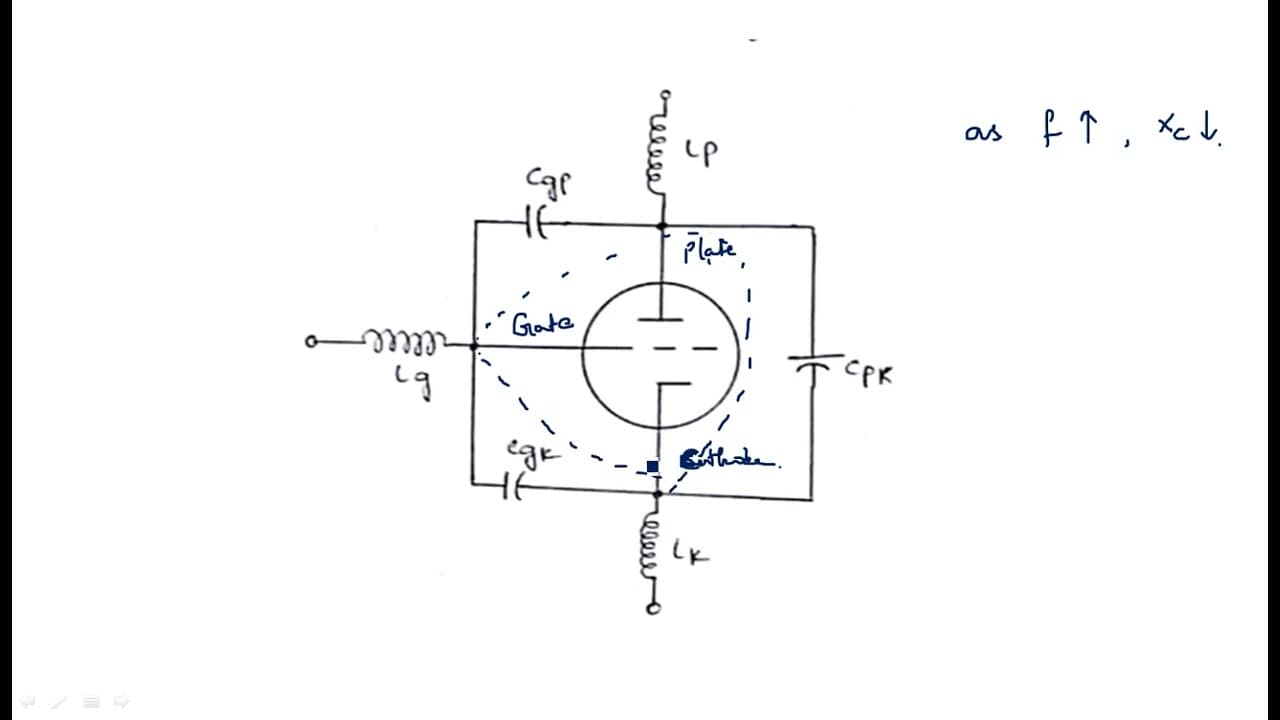
- 🥺 The limitations of these tubes include inter-electrode capacitance, which leads to unwanted short-circuit behaviors at higher frequencies.
- 🤗 High-frequency operation significantly influences inductance, causing tubes to act like open circuits, compromising their functionality.
- 😘 Power requirements at micro frequencies are lower, yet the increased noise levels present a significant concern for device performance.
- 🧪 Special tubes are essential for ultra-high frequency applications, beyond the capabilities of standard conventional tubes.
- 🦠 Understanding the reactive components of capacitance and inductance is vital for addressing amplifier limitations at micro frequencies.
- 😒 Radiation and RF losses are critical issues that further complicate the use of conventional tubes in micro frequency applications.
Install to Summarize YouTube Videos and Get Transcripts
Explore YouTube Video Summarizer or Get YouTube Transcript Extractor
Questions & Answers
Q: What are micro frequencies in the context of conventional tube amplifiers?
Micro frequencies typically refer to the frequency range from three gigahertz to 300 gigahertz. At this range, conventional amplifiers like triodes and tetrodes fail to perform effectively due to their inherent limitations. This necessitates the use of specialized amplifiers, such as klystrons, to handle the amplification processes required at these high frequencies.
Q: What limitations do conventional tubes face at microwave frequencies?
Conventional tubes face several limitations at microwave frequencies including inter-electrode capacitance, lead inductance, transit time effects, and gain-bandwidth product issues. These factors create challenges that compromise the amplification quality, necessitating special tubes for effective performance.
Q: How does capacitance affect tube operation at high frequencies?
At high frequencies, the capacitive reactance in conventional tubes tends to decrease, causing the capacitors to act like short circuits. This detrimental effect can hinder the proper functioning of tubes, as intended connection paths become compromised by unwanted short-circuit conditions.
Q: What role does inductance play in conventional tubes at high frequencies?
In high-frequency environments, inductance increases can result in components acting as open circuits. This behavior disrupts normal operation by preventing current flow to essential components, posing a critical challenge for effective amplification at these frequencies.
Q: What basic remedies can reduce capacitance and inductance effects in tube amplifiers?
To mitigate capacitance effects, one can reduce the area of the plates or increase the distance between them. For lead inductance, reducing the inductance value or increasing the area of the components involved can also help address these challenges and improve amplifier performance.
Summary & Key Takeaways
-
This video discusses the inadequacy of conventional tube amplifiers, such as triodes and tetrodes, when used at micro frequencies ranging from three to 300 gigahertz, necessitating specialized equipment like klystron amplifiers.
-
Key limitations in using conventional tubes at these frequencies include inter-electrode capacitance, lead inductance, transit time effects, gain-bandwidth product, radiation loss, and RF losses, all affecting overall performance.
-
The video also addresses how capacitance and inductance behave at higher frequencies, leading to short-circuiting effects in capacitance and open-circuiting effects in inductance, highlighting measures to mitigate these issues.
Read in Other Languages (beta)
Share This Summary 📚
Summarize YouTube Videos and Get Video Transcripts with 1-Click
Try YouTube Summary with ChatGPT & Claude or YouTube Transcript Generator