Vice President Pence Visits Langley for Artemis Update on This Week @NASA – February 21, 2020
TL;DR
Vice President Pence highlights work at Langley Research Center for the Artemis program, while NASA's Juno mission finds that water makes up about 0.25% of Jupiter's atmosphere.
Transcript
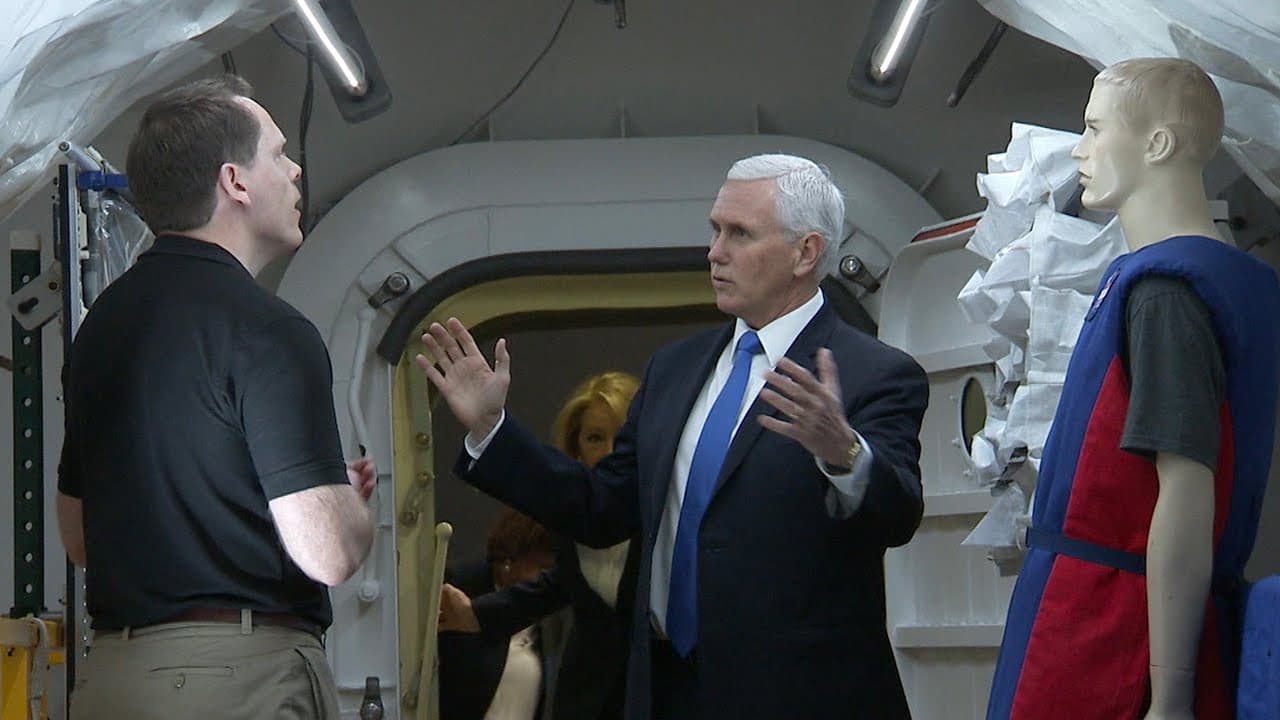
Vice President Pence visits our Langley Research Center… Science results related to water on Jupiter … And studying the darkest areas of the Moon … a few of the stories to tell you about – This Week at NASA! Vice President Mike Pence and our Administrator Jim Bridenstine, visited our Langley Research Center in Virginia on Feb. 19, to highlight work... Read More
Key Insights
- 🤙 Vice President Pence's visit to Langley Research Center highlights the importance of NASA's Artemis program and calls for innovation and exploration.
- 💦 The Juno mission's findings challenge previous beliefs about the amount of water on Jupiter and provide valuable insights into the planet's composition.
- 😤 The grants awarded to university teams demonstrate NASA's commitment to studying the darkest areas of the Moon and developing technologies for future lunar missions.
- 🧑🎓 The Human Exploration Rover Challenge promotes student participation and innovation in designing rovers for extraterrestrial exploration.
Install to Summarize YouTube Videos and Get Transcripts
Explore YouTube Video Summarizer or Get YouTube Transcript Extractor
Questions & Answers
Q: What was the purpose of Vice President Pence's visit to Langley Research Center?
Vice President Pence visited Langley Research Center to highlight its role in the Artemis program and encourage the team to find innovative ways to achieve the program's goals. His visit also included honoring the contributions of former mathematician Katherine Johnson and others.
Q: What are the first science results from NASA's Juno mission regarding water on Jupiter?
The Juno mission has found that water makes up about 0.25% of the molecules in Jupiter's atmosphere, which is almost three times the amount found in the Sun. This challenges the previous belief that Jupiter was dry compared to the Sun.
Q: How is NASA preparing to study the darkest areas of the Moon?
NASA has awarded grants to eight university teams to develop lunar payloads that can study the permanently-shadowed areas of the Moon. The technologies being developed include data collection, wireless power generation, and autonomous mobility, which will aid in the Artemis program's goal of landing astronauts on the Moon in 2024.
Q: What is the Human Exploration Rover Challenge?
The Human Exploration Rover Challenge is an annual event organized by NASA where student-built human-powered rovers navigate a course simulating various terrains found on celestial bodies like the Moon and Mars. Over 100 teams from around the world are expected to participate in this year's challenge.
Summary & Key Takeaways
-
Vice President Pence visited Langley Research Center to showcase its contributions to the Artemis program and challenge the team to explore all options for mission success.
-
NASA's Juno mission has revealed that water makes up about 0.25% of the molecules in Jupiter's atmosphere, significantly more than previously thought.
-
Eight university teams have been awarded grants by NASA to build lunar payloads that can study the darkest areas of the Moon in preparation for the Artemis program.
Read in Other Languages (beta)
Share This Summary 📚
Summarize YouTube Videos and Get Video Transcripts with 1-Click
Try YouTube Summary with ChatGPT & Claude or YouTube Transcript Generator
Explore More Summaries from NASA 📚

Summarize YouTube Videos and Get Video Transcripts with 1-Click
Try YouTube Summary with ChatGPT & Claude or YouTube Transcript Generator