6 Types of Odd Body Armor
TL;DR
Organisms in nature have developed various forms of armor to defend against predators, pathogens, and environmental threats.
Transcript
[♩INTRO] For a Medieval knight, armor was a vital body covering to block the tip of a sword. But armor is more than the unwieldy metal suit displayed in castle museums. Broadly, it’s any protective layer. So, we still use armor now. Like, a motorcycle jacket keeps pavement from your skin, and a face shield makes a barrier to pathogens. And other or... Read More
Key Insights
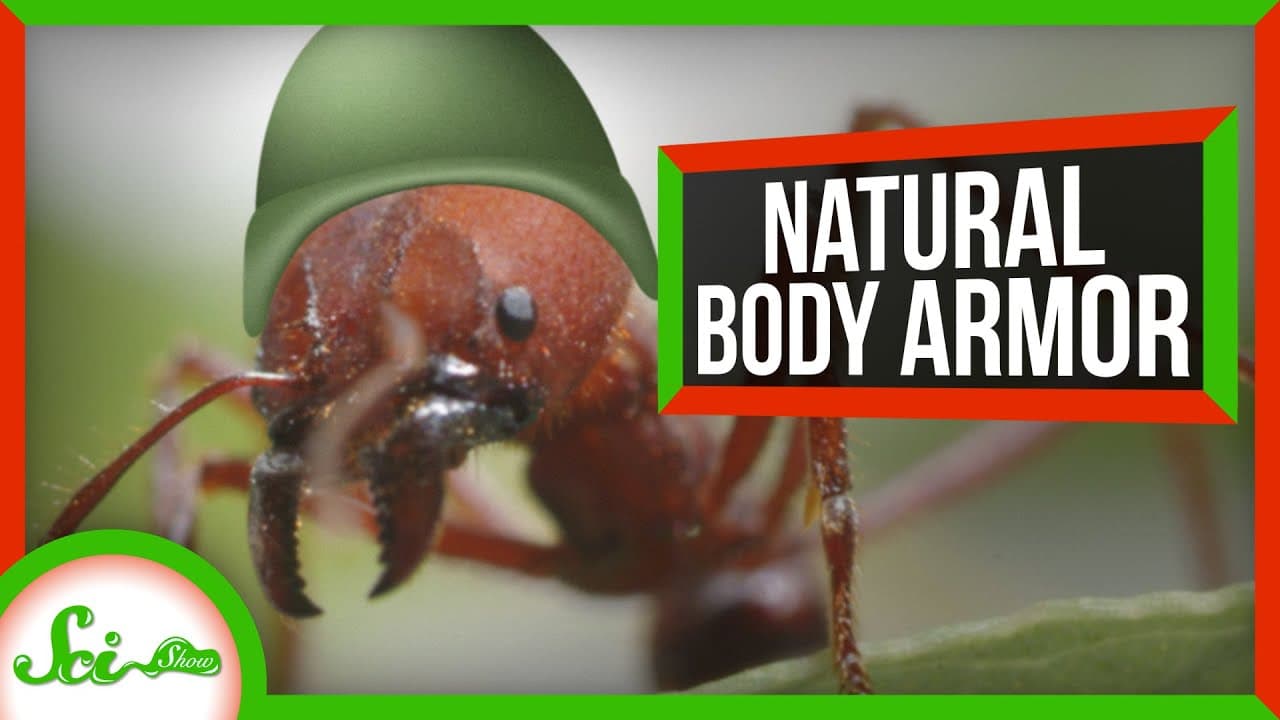
- 😒 Insects, such as ants, use their cuticles made of chitin as armor to protect their muscles and organs.
- 🤰 Leaf-cutter ants have a magnesium-calcite coating on their cuticles to provide extra toughness during ant wars.
- 🦷 The excessive armor of the Atlantic alligatorfish may be a defense against predators with dangerous tooth plates.
- 😃 Whale sharks have dermal denticles on their skin and eyes to prevent mechanical damage and streamline swimming.
- 🧑🚒 Mantis shrimps have armored telsons designed to absorb impacts during ritualized fights.
- ♻️ Daphnia demonstrate induced body armor development in response to specific predators in their environment.
- 💁 Filamentous bacteriophages form protective biofilms around bacteria, giving them resistance to antibiotics and environmental threats.
Install to Summarize YouTube Videos and Get Transcripts
Explore YouTube Video Summarizer or Get YouTube Transcript Extractor
Questions & Answers
Q: Why do ants have a hard body covering called the cuticle?
Ants have a cuticle made of chitin, which acts as armor and serves as the only rigid structure since they don't have bones. It helps anchor their muscles and hold their organs together.
Q: Why do leaf-cutter ants have a magnesium-calcite coating on their cuticles?
Leaf-cutter ants have this coating to make their cuticles harder and tougher, providing better protection during ant wars and battles with other ant species over food resources.
Q: What is the purpose of dermal denticles on whale sharks?
Dermal denticles on whale sharks help streamline swimming by facilitating smoother water flow along their bodies. They also protect the eyes from mechanical damage.
Q: How do mantis shrimps protect themselves during ritualized fights?
Mantis shrimps have armored telsons, the last segment of their bodies, which help absorb and dissipate the impact of punches during fights. The telson's center is reinforced with minerals, and curved ridges surrounding it cushion the blow.
Q: How do Daphnia develop different types of armor?
Depending on the predators present in their habitat, Daphnia emit chemicals that cue their development of specific armor features. This customized response interferes with each predator's ability to capture and process the prey.
Q: What is the purpose of the biofilm formed by filamentous bacteriophages?
The biofilm formed by filamentous bacteriophages protects bacteria from drying out and makes them stickier, aiding in attachment to surfaces. It also provides resistance to antibiotics, posing a challenge for the medical community.
Summary & Key Takeaways
-
Insects like ants have a hard body covering called the cuticle made of chitin, which acts as armor to protect their muscles and internal organs.
-
Leaf-cutter ants have a magnesium-calcite coating on their cuticles, making them harder and tougher to defend against predators during ant wars.
-
The Atlantic alligatorfish has an excessive amount of armor, possibly due to the presence of predators with dangerous tooth plates like crabs and ratfish.
-
Whale sharks have dermal denticles on their skin and eyes, providing protection and preventing mechanical damage.
-
Mantis shrimps have armored telsons to absorb and dissipate impact during ritualized fights.
-
Daphnia, or water fleas, develop different types of armor depending on the predators present in their habitat.
-
Filamentous bacteriophages form a protective biofilm around bacteria, providing resistance to antibiotics and making them stickier.
Read in Other Languages (beta)
Share This Summary 📚
Summarize YouTube Videos and Get Video Transcripts with 1-Click
Try YouTube Summary with ChatGPT & Claude or YouTube Transcript Generator
Explore More Summaries from SciShow 📚
Summarize YouTube Videos and Get Video Transcripts with 1-Click
Try YouTube Summary with ChatGPT & Claude or YouTube Transcript Generator