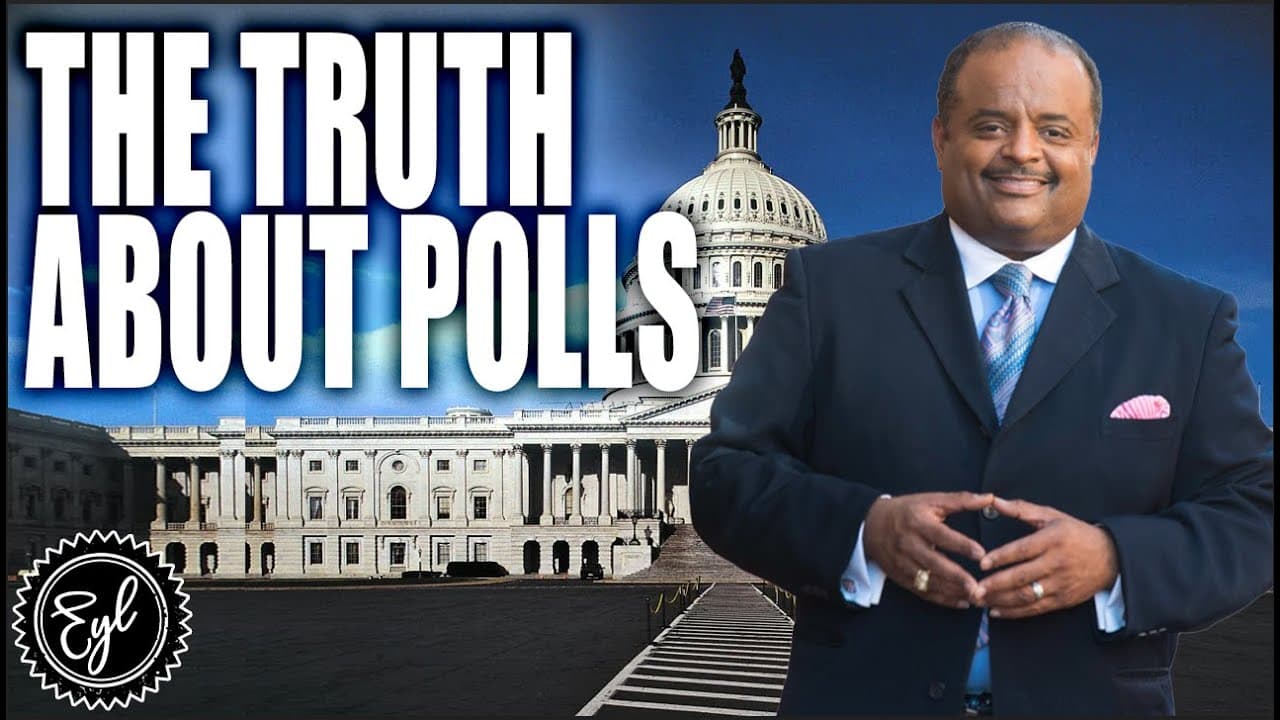
How Political Polls Can Be Manipulated and Misleading with Roland Martin
TL;DR
A respected poll usually requires a sample size of 1,000 to 1,500 respondents to achieve a 3% margin of error and 95% confidence level.
Transcript
all right so you know I'm on chat gbt all the time right so I was just curious to know what a respected poll um size is when they do like these presidential polls and all that according to chat gbt um a th to 1500 respondence is a size generally considered sufficient to achieve uh margin of error approximately 3% uh or 95% confidence standard socia... Read More
Key Insights
- 🧑🏭 Sample size alone does not guarantee accurate polling results; other factors like demographics and ideologies within the sample matter.
- ⌛ Polls are a snapshot in time and may not accurately reflect future outcomes.
- 🥺 The breakdown of demographics and the formulation of survey questions can lead to misleading results.
- 🖤 Black voting patterns, especially among younger generations, show a decrease in self-identification as Democrats but still lean towards Democratic candidates.
Install to Summarize YouTube Videos and Get Transcripts
Explore YouTube Video Summarizer or Get YouTube Transcript Extractor
Questions & Answers
Q: What is the recommended sample size for a respected poll?
According to respected polling methods, a sample size of 1,000 to 1,500 respondents is considered sufficient to achieve a 3% margin of error and 95% confidence level.
Q: Why is sample size not the only important factor in polling?
While sample size is crucial, the breakdown of demographics, ideologies, and other factors within the sample can greatly impact the results. For example, if a poll includes more white voters and conservative ideologies, it can skew the results in favor of certain candidates.
Q: Are polling results always accurate?
Polls are a snapshot in time and cannot predict future outcomes with certainty. Factors like market conditions, changing opinions, and the timing of the poll can influence the results.
Q: How can polls be misleading?
Polls may not always ask the right questions, leading to skewed results. In the case of the Affordable Care Act, polls showed opposition because some respondents wanted a broader single-payer system, which was not reflected in the options provided.
Summary & Key Takeaways
-
Sample size is only one element of polling; other factors like the breakdown of demographics and ideologies within the sample can greatly affect the results.
-
Polls can be a snapshot in time and may not accurately reflect future outcomes as market conditions and opinions can change.
-
Polls may not always ask the right questions, leading to skewed results. In the case of the Affordable Care Act, some respondents wanted a broader system, leading to misconceptions about public opinion.
Read in Other Languages (beta)
Share This Summary 📚
Summarize YouTube Videos and Get Video Transcripts with 1-Click
Try YouTube Summary with ChatGPT & Claude or YouTube Transcript Generator
Explore More Summaries from Earn Your Leisure 📚





Summarize YouTube Videos and Get Video Transcripts with 1-Click
Try YouTube Summary with ChatGPT & Claude or YouTube Transcript Generator