Binary to Octal conversion | Octal to Binary | Decimal Point | STLD | Lec-08
TL;DR
The video explains the octal number system, its conversions, and how to represent numbers in octal and binary.
Transcript
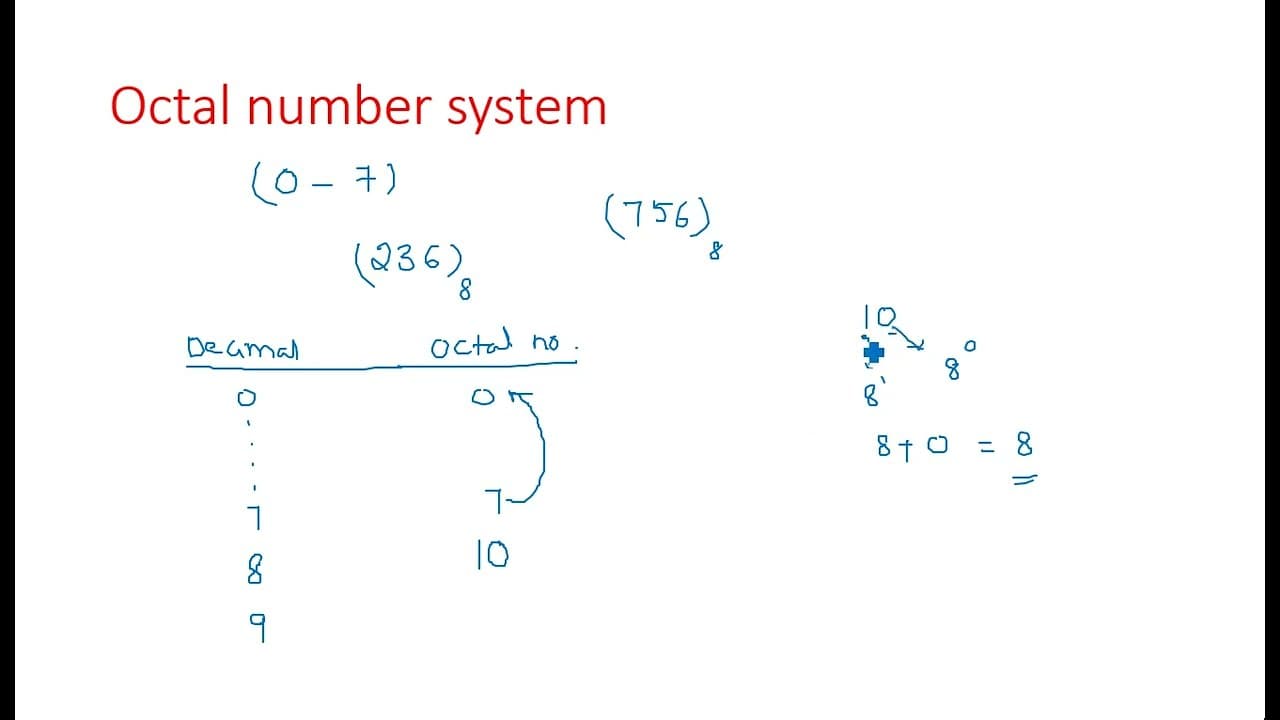
hi everyone in this video I'm going to introduce octal number system letter I will tell you how to convert an octal number into binary numbers and binary to octal conversions are very important in the beginning of this stld subject so first octal number system as the name tells that it is eight octal means eight so the total numbers that are coming... Read More
Key Insights
- #️⃣ The octal system simplifies number representation with only eight digits, enhancing efficiency in certain computational contexts.
- ❓ Conversions between octal and binary are easier than between decimal and binary due to a fixed relationship between the two systems.
- 🫦 Each octal digit can be distinctly represented using three binary bits, facilitating clear and unambiguous conversions.
- 🫦 Understanding the correct grouping of bits is crucial when converting binary numbers to octal and vice versa.
- 😒 The use of leading zeros is permitted during conversions, helping maintain the significance of positional value in octal and binary systems.
- 🤣 The rolling over mechanism in the octal system replaces the digit '8' in decimal with '10' in octal, illustrating how numeric bases operate in different systems.
- 🧑🎓 The educational material emphasizes a step-by-step approach to mastering conversions, which is essential for students in foundational computer science courses.
Install to Summarize YouTube Videos and Get Transcripts
Explore YouTube Video Summarizer or Get YouTube Transcript Extractor
Questions & Answers
Q: What is the range of digits used in the octal number system?
The octal number system utilizes eight digits ranging from 0 to 7. This means numbers represented in octal can only include these digits, unlike the decimal system, which goes from 0 to 9. For instance, an octal number like 236 is valid because all its digits are below 8.
Q: How do you convert an octal number to binary?
To convert an octal number to binary, each digit of the octal number is replaced with its corresponding three-bit binary equivalent. For example, in converting the octal number 257, 2 is represented as 010, 5 as 101, and 7 as 111, resulting in the binary number 010101111.
Q: Why do we use three bits for octal to binary conversion?
Three bits are used in octal to binary conversion because the maximum digit in the octal system is 7, which can be fully represented with three binary digits (111 in binary). This approach guarantees that all octal values from 0 to 7 are effectively represented without any loss of information.
Q: What is the process for converting binary to octal?
To convert binary to octal, you group the binary digits into sets of three, starting from the binary point (if applicable). Each group of three is then replaced by its equivalent octal digit. If there are less than three bits, you can add leading zeros to form a complete group.
Summary & Key Takeaways
-
The octal number system represents numbers using digits 0 to 7, and any number using digits greater than 7 is not in octal.
-
Conversions between octal and binary are straightforward, requiring each octal digit to be represented as a three-bit binary equivalent.
-
The video covers examples of converting octal numbers to binary and vice versa, emphasizing the importance of grouping bits from the correct side of the decimal point.
Read in Other Languages (beta)
Share This Summary 📚
Summarize YouTube Videos and Get Video Transcripts with 1-Click
Try YouTube Summary with ChatGPT & Claude or YouTube Transcript Generator