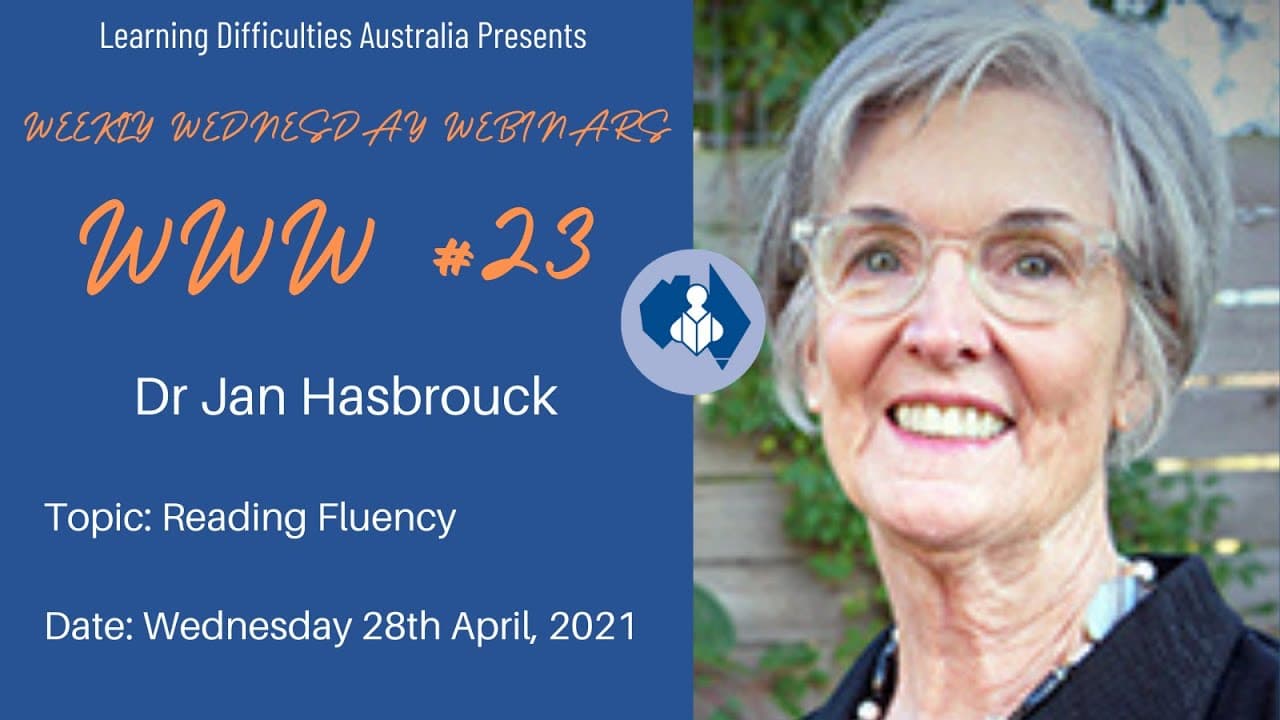
Dr. Jan Hasbrouck - Reading Fluency
TL;DR
This presentation discusses the definition, importance, and teaching methods of reading fluency in education.
Transcript
hello everyone this is jan hasbrook i'm presenting today this session on reading fluency so i'll get my screen share up so we can see these slides together i want to talk to you about reading fluency in terms of what we have learned about this important component of reading since the year 2000. part of what i'm going to share with you comes from th... Read More
Key Insights
- 🫠 Fluency is no longer defined as merely reading fast; accuracy now holds precedence as the foundation of fluency development.
- 😘 Comprehension relies significantly on fluency; low fluency leads to decreased motivation and engagement in reading.
- ❓ The teaching of fluency requires diverse instructional strategies that incorporate the development of background knowledge, vocabulary, and decoding skills.
- ✋ Research indicates that maintaining a reading accuracy of 95% or higher is crucial for effective comprehension.
- 🫠 Reading rate should align with natural speech patterns to enhance understanding, highlighting a balance between speed and comprehension.
- 😑 Fluency assessments should measure not just speed but also accuracy and expression to provide a holistic picture of a student's reading ability.
- 🔑 The concept of sight words is frequently misunderstood; a sight word is any word recognized instantly due to prior learning, rather than just irregularly spelled words.
Install to Summarize YouTube Videos and Get Transcripts
Explore YouTube Video Summarizer or Get YouTube Transcript Extractor
Questions & Answers
Q: What is the key definition of reading fluency presented in this session?
Reading fluency is defined as the ability to read text quickly, accurately, and with expression. It is seen as an essential element of reading comprehension, where stronger fluency can facilitate better understanding of text and enhance a reader's motivation to read.
Q: Why is accuracy emphasized as the most important component of fluency?
Accuracy is stressed because if reading accuracy falls below 95%, comprehension will significantly suffer. The foundation of fluency depends on accurately recognizing words, which is a prerequisite for understanding the text's meaning. Therefore, accuracy should be prioritized over speed or expression in reading instruction.
Q: How should reading rate be assessed according to the presentation?
The appropriate reading rate should ideally fall within the 50th to 75th percentile range for oral reading fluency. This range indicates that while a certain speed is necessary for comprehension, reading too quickly can impede understanding, and thus rates are best assessed using standardized measures.
Q: What role does expression play in reading fluency?
Expression facilitates comprehension by mirroring spoken language, including pitch, tone, and volume, which helps convey meaning. However, expression should not overshadow accuracy and rate since comprehension primarily relies on those components. Effective expression shows that a reader understands the text.
Q: What is the importance of silent reading in developing fluency?
Silent reading can enhance fluency for skilled readers who have established foundational skills; however, it may not be beneficial for those still acquiring fluency. It can lead to errors if not supervised, so silent reading should be used judiciously based on the student’s developmental stage.
Q: What are the three major components to focus on in fluency instruction?
The three major components are: accuracy, which emphasizes correct word recognition; automaticity, which focuses on the speed at which words are read; and accessing meaning, which connects reading fluency to understanding the text. All three elements must be integrated in effective fluency lessons.
Q: What research supports the understanding of fluency development?
Numerous studies underscore that fluency develops in progressions, including accuracy, rate, and automaticity. Frameworks proposed by researchers like Scarborough suggest that reading comprehension is achieved through the interplay of various skills, including language comprehension and decoding.
Summary & Key Takeaways
-
Reading fluency involves the ability to read quickly, accurately, and expressively, which is essential for comprehension. Accurate word recognition is foundational for developing fluency.
-
The presentation outlines a shift in how fluency is defined, emphasizing accuracy first, followed by rate and expression, with fluency viewed as a bridge to comprehension.
-
Teaching reading fluency requires a multifaceted approach, focusing on accuracy, automaticity, and comprehension, cultivated through deliberate practice and engaging instructional strategies.
Read in Other Languages (beta)
Share This Summary 📚
Summarize YouTube Videos and Get Video Transcripts with 1-Click
Try YouTube Summary with ChatGPT & Claude or YouTube Transcript Generator