Stimulating Private Sector Extension project - Trial 2
TL;DR
Private service providers enhanced their digital agriculture capabilities through collaborative trials and evaluation frameworks.
Transcript
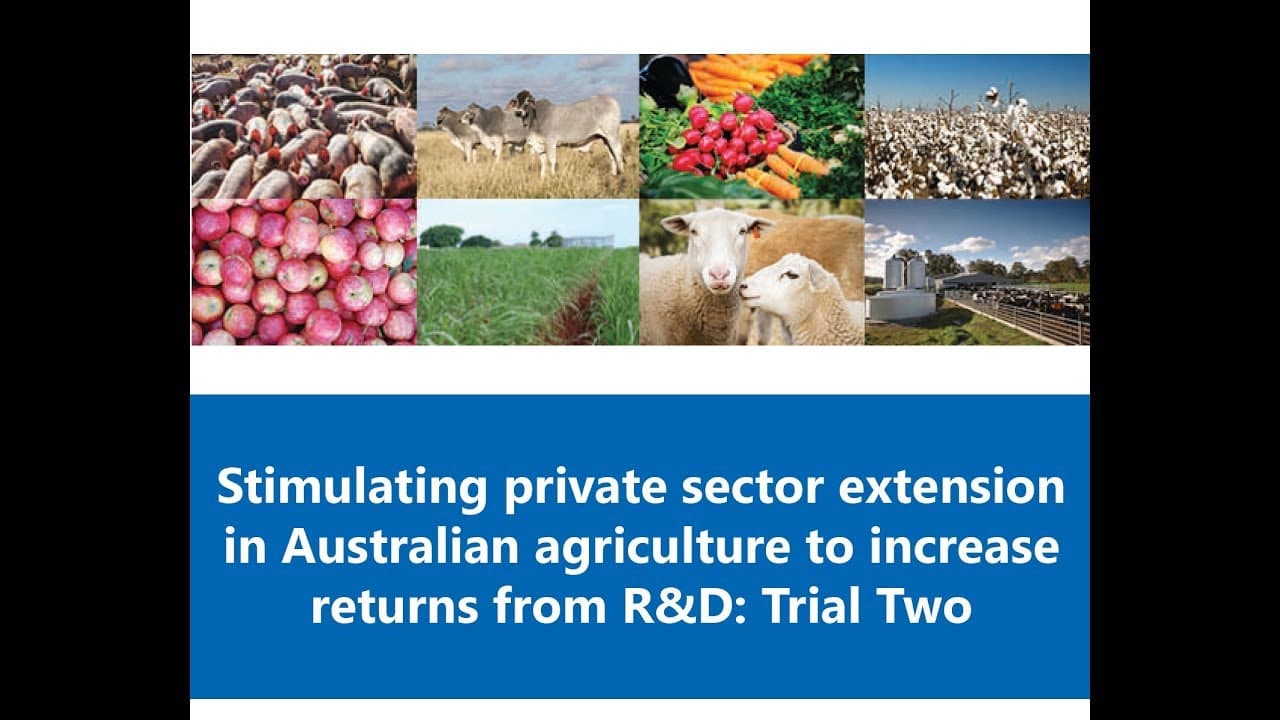
trial two looked at the capacity of private service providers to engage with digital agriculture it was a collaboration between sugar research Australia and the cotton Research and Development Corporation the trial came about because of the need for private service providers to be able to appraise what technology they should use what they should in... Read More
Key Insights
- 🛟 The DVA framework serves as a vital tool for assessing digital technologies in agriculture, providing clarity on project feasibility and value propositions.
- 🥶 Co-innovation between private sectors strengthens the understanding and incorporation of digital agriculture tools into customer services.
- 🥺 Collaborative focus groups can effectively unearth major challenges faced by service providers, leading to actionable insights.
- 💼 Practical case studies from trial participants illustrate the direct benefits of digital technologies, such as improved weed management through drones.
- ☠️ The trial outcomes emphasize the necessity of early-stage involvement of target audiences in technological development processes for better adoption rates.
- 👻 The simplified nature of the DVA framework allows for rapid evaluations without being hindered by emotional decision-making.
- 🦻 The integration of digital tools not only enhances decision-making but also aids in streamlining agricultural processes for efficiency.
Install to Summarize YouTube Videos and Get Transcripts
Explore YouTube Video Summarizer or Get YouTube Transcript Extractor
Questions & Answers
Q: What was the primary objective of the trial conducted by sugar research and cotton research organizations?
The primary objective was to enhance the capacity of private service providers to incorporate digital tools and services into their businesses. This involved understanding what technologies to invest in and how to effectively apply their outputs in practical farming contexts, ultimately improving their service delivery to customers.
Q: How did the trial team identify the key issues in delivering digital agricultural services?
The team organized a one-day facilitated scoping workshop with a representative group of private service providers. This focus group aimed to discuss and identify the major challenges faced in the delivery of digital agricultural services, generating insights that would inform the subsequent development of the DVA framework.
Q: Can you explain the Digital Value Assessment (DVA) framework?
The DVA framework is a tool created to help private sector service providers evaluate the potential value of digital technologies and services. It simplifies the assessment process by posing straightforward, primarily yes-or-no questions, allowing users to clarify their objectives and analyze the feasibility of proposed projects, thus facilitating informed decision-making.
Q: What were some of the case studies that participants conducted during the trial?
Participants engaged in various case studies, including the use of drones for weed inspections and the development of soil mapping systems. These studies aimed to explore practical applications of digital technologies within their operations, streamline processes, and improve data management, showcasing how digital tools could address specific agricultural challenges.
Q: How did collaboration contribute to the success of the trial?
Collaboration among participants fostered a supportive environment, allowing individuals with similar challenges to share insights and solutions. Diverse skill sets brought in from outside helped refine the evaluation framework, which ultimately made the trials more effective and outcome-oriented, underscoring the importance of teamwork in tackling complex digital agriculture issues.
Q: What were the major findings of the trial regarding digital technology in agriculture?
The trial highlighted that co-innovation and collaboration among industry players are critical in addressing the complex challenges of digital agriculture. They found that demonstrating the value proposition of digital technology is essential, which was achieved through the DVA tool, reinforcing the need for practical evaluation frameworks in technology adoption.
Summary & Key Takeaways
-
The trial, a collaboration between sugar and cotton research organizations, aimed to empower private service providers to effectively use digital agriculture technologies for improved decision-making and service delivery.
-
A focus group formed to identify major challenges in the delivery of digital agricultural services, ultimately leading to the development of a Digital Value Assessment (DVA) framework.
-
Participants shared individual case studies, discovering that the DVA tool significantly aided in assessing the value propositions of digital technologies for their specific agricultural contexts.
Read in Other Languages (beta)
Share This Summary 📚
Summarize YouTube Videos and Get Video Transcripts with 1-Click
Try YouTube Summary with ChatGPT & Claude or YouTube Transcript Generator
Explore More Summaries from Stimulating Private Sector Extension 📚

Summarize YouTube Videos and Get Video Transcripts with 1-Click
Try YouTube Summary with ChatGPT & Claude or YouTube Transcript Generator