Body temperature oscillates throughout the day | Andrew Huberman and Lex Fridman
TL;DR
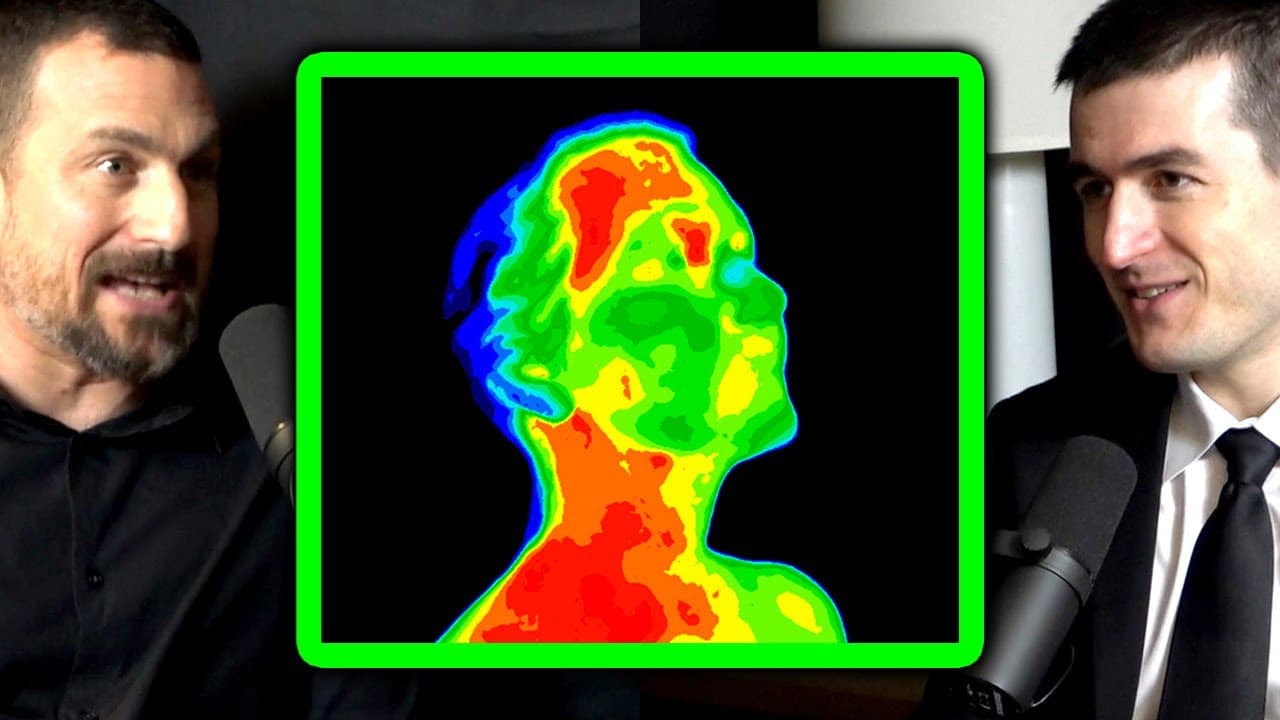
Temperature serves as a universal mechanism for coordinating different systems in the body, regulating various functions from metabolism to reproduction.
Transcript
so one fascinating thing you said is uh that blew my mind and we went right past it uh which is the temperature is a really powerful like if you were to think about the ways that different parts of the body different systems in the body would communicate with each other temperature would be a really good one and that just i mean maybe it's obvious ... Read More
Key Insights
- 🛟 Temperature serves as a powerful tool for communication and coordination between different systems in the body.
- 🖐️ The master circadian clock plays a crucial role in regulating tissue temperature and ensuring synchronized functioning.
- ❓ Oscillations in temperature are essential for various functions, including metabolism and reproduction.
- ⏰ Certain animals enter hibernation-like states due to peptides released by the circadian clock.
- 🧑⚕️ Temperature regulation is vital in maintaining the overall health and balance of the body.
- 🎮 Controlling temperature can provide a means to manipulate or regulate the behavior of different systems.
- ❓ Variability in cell stages and binding affinities necessitates a universal mechanism like temperature for coordination.
Install to Summarize YouTube Videos and Get Transcripts
Explore YouTube Video Summarizer or Get YouTube Transcript Extractor
Questions & Answers
Q: How does temperature serve as a communication tool between different body systems?
Temperature acts as a universal signal that allows various systems to coordinate their functions. By controlling the temperature, the behavior of different systems can be regulated.
Q: Are there other mechanisms besides temperature that can create similar oscillations?
While temperature is a crucial mechanism, it is possible that other factors may also contribute to oscillations. However, temperature has been shown to play a central role in coordinating the body's functions.
Q: What role does the circadian clock play in temperature regulation?
The circadian clock acts as the master regulator, ensuring that tissue temperature oscillates in a synchronized manner. It entrains organs like the gut and liver, which have their own independent oscillations, allowing for coordinated functioning.
Q: How do peptides released by the circadian clock impact hibernation in certain animals?
Peptides released by the circadian clock induce a state of torpor in animals like ground squirrels and bears. These animals undergo periodic arousals from hibernation, and the peptides help regulate their metabolism and reproductive processes.
Summary & Key Takeaways
-
Temperature plays a crucial role in facilitating communication and coordination between different systems in the body.
-
The master circadian clock controls the oscillation of tissue temperature, ensuring synchronized functioning of various organs.
-
In certain animals, peptides secreted from the circadian clock induce hibernation-like states and periodic arousals, impacting metabolism and reproductive functions.
Read in Other Languages (beta)
Share This Summary 📚
Summarize YouTube Videos and Get Video Transcripts with 1-Click
Try YouTube Summary with ChatGPT & Claude or YouTube Transcript Generator
Explore More Summaries from Lex Clips 📚




Summarize YouTube Videos and Get Video Transcripts with 1-Click
Try YouTube Summary with ChatGPT & Claude or YouTube Transcript Generator