How Fish Get Away With Being Colorful
TL;DR
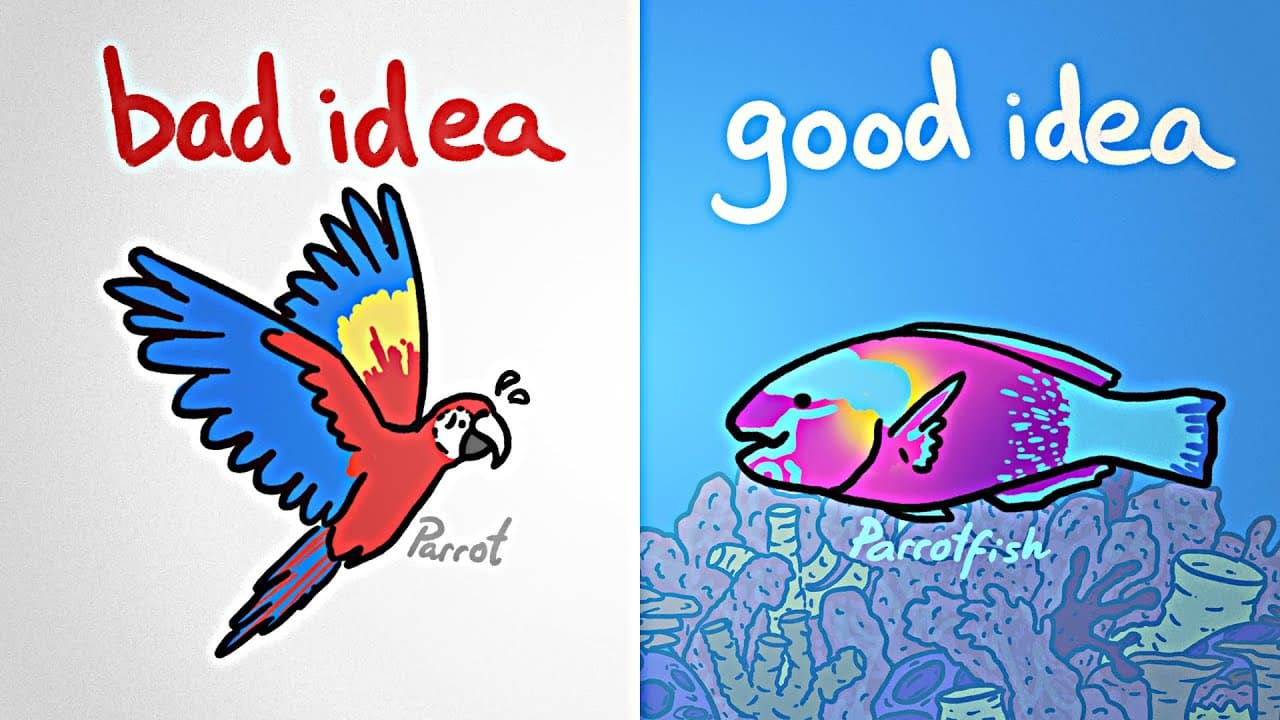
Coral reef animals use bright colors to communicate with each other, attract mates, deter rivals, and advertise their unpalatability to predators.
Transcript
In the animal world, being brightly-colored is basically like sporting a big neon “eat me” sign, so it’s no surprise that colorful animals are relatively rare in nature. But there’s one big exception: the animals that live on coral reefs. They sport more colors – and more different arrangements of those colors – than anywhere else on Eart... Read More
Key Insights
- 😒 Brightly-colored coral reef animals use their colors to communicate, attract mates, and deter rivals, as well as signal unpalatability to predators.
- 🙂 The risks of being conspicuous are lower in the water due to light absorption, scattering, and poor visual resolution of underwater predators.
- 🐟 Coral reefs are diverse ecosystems where bright colors and wild patterns help fish identify each other within and among species.
- 🙂 The close range of interaction between reef-dwelling animals minimizes the scattering and absorption of light, allowing bright colors to still appear vibrant.
- 🥺 Changes in reef conditions, such as warming temperatures or coral degradation, can disrupt the benefits of bright colors and lead to the evolution of less colorful forms in fish.
- 💁 Scientists have observed fish in areas with degrading corals already evolving into less colorful forms.
- 🪸 The vibrant colors of coral reefs make them some of the most colorful places in the animal kingdom.
Install to Summarize YouTube Videos and Get Transcripts
Explore YouTube Video Summarizer or Get YouTube Transcript Extractor
Questions & Answers
Q: Why are colorful animals relatively rare in nature?
Being brightly-colored makes animals easy to spot and more vulnerable to predators. Therefore, brightly-colored animals are rare in most environments where the risks are high.
Q: How do bright colors benefit animals living on coral reefs?
Bright colors allow coral reef animals to communicate with each other, attract mates, deter rivals, and indicate to predators that they are unpalatable. It helps them navigate the densely packed ecosystem.
Q: How does water affect the visibility of bright colors?
Water absorbs more light, especially at the ends of the visible light spectrum. The presence of particles in water also scatters light, resulting in a visual haze that dulls colors. However, at close range, the water between reef-dwelling animals does not scatter or absorb much light, making bright colors still appear vibrant.
Q: What happens if conditions on a reef change?
If warming temperatures force fish deeper or corals start dying off, the benefits of bright colors for communication in a densely packed ecosystem could disappear. In areas where corals are degrading quickly, scientists are already observing fish evolving into less colorful forms.
Summary & Key Takeaways
-
Bright colors in animals living on coral reefs are more common and diverse than anywhere else on Earth.
-
Bright colors are a way for animals to communicate, attract mates, deter rivals, and signal to predators that they are unpalatable.
-
Water absorbs and scatters light differently than air, making bright colors less risky for reef-dwelling animals, as predators have poor visual resolution underwater.
Read in Other Languages (beta)
Share This Summary 📚
Summarize YouTube Videos and Get Video Transcripts with 1-Click
Try YouTube Summary with ChatGPT & Claude or YouTube Transcript Generator
Explore More Summaries from MinuteEarth 📚






Summarize YouTube Videos and Get Video Transcripts with 1-Click
Try YouTube Summary with ChatGPT & Claude or YouTube Transcript Generator