Becoming a Predator Was Hard
TL;DR
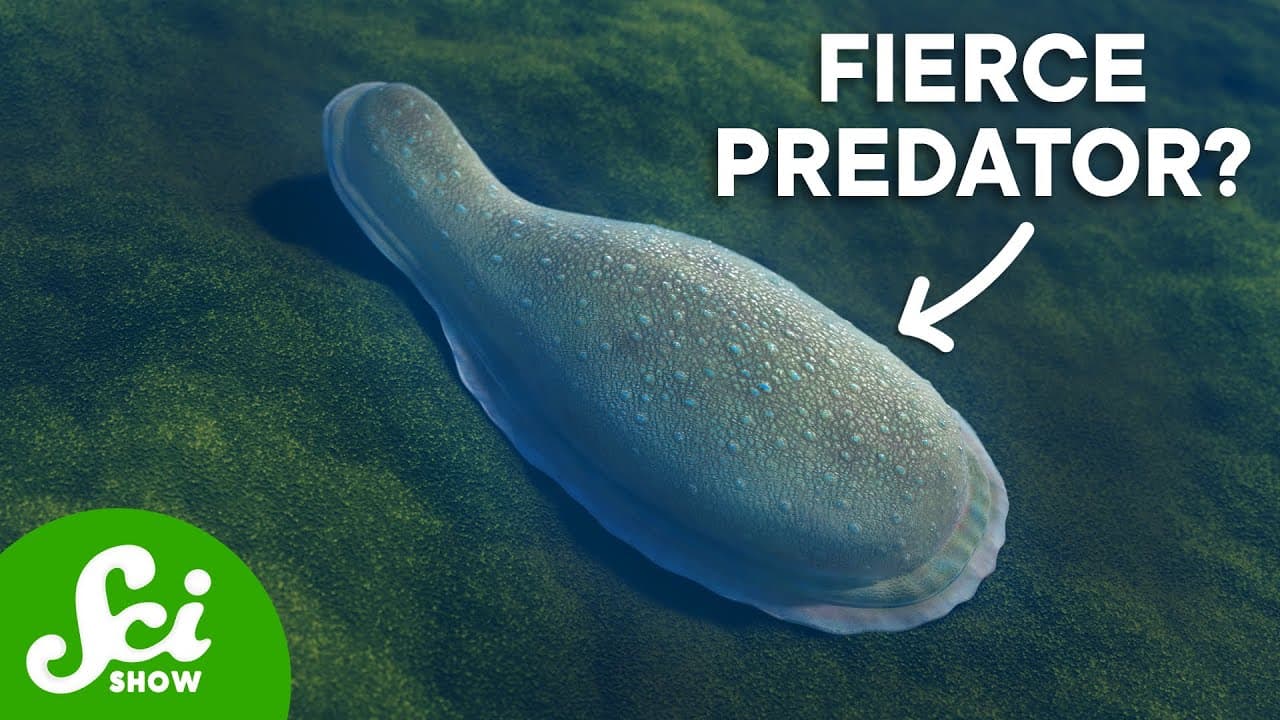
During the Ediacaran period, the emergence and diversification of animal predators was a challenging process that required specific adaptations and conditions.
Transcript
Roughly 600 million years ago, the world would have been a very peaceful place. This is the Ediacaran period. The land is barren and the ocean is dominated by a thick, rich, gooey mat of bacteria and other microbes growing on the ocean floor, occasionally broken up by some of the earliest known animals. These are simple, mostly soft-bodied and ofte... Read More
Key Insights
- ❣️ The Ediacaran period was characterized by simple, soft-bodied organisms that primarily obtained nutrients from the microbial mat.
- 🤱 The emergence of complex predators in the Ediacaran required specific adaptations, including movement, sensory systems, and specialized feeding mechanisms.
- 🐚 Fossil evidence reveals early examples of predatory behavior in animals like Kimberella, Ikaria, and an unnamed predator that drilled into the shells of Cloudina.
- 🥺 The development of active predators led to an ecological arms race and significant changes in the ecosystem.
Install to Summarize YouTube Videos and Get Transcripts
Explore YouTube Video Summarizer or Get YouTube Transcript Extractor
Questions & Answers
Q: Why were there no big, obvious predators in the Ediacaran period?
The absence of complex predators in the Ediacaran period can be attributed to the simplicity of the animals at that time, with some even lacking a mouth. The emergence of active predators required specific adaptations that took time to evolve.
Q: How did animals in the Ediacaran period start actively pursuing and capturing prey?
Animals like Kimberella developed the ability to move in search of food, while Ikaria displayed evidence of actively hunting or scavenging for nutrients. These behaviors indicate the emergence of sensory systems capable of detecting and tracking down prey.
Q: What is the significance of the holes drilled by the unnamed predator into the shells of Cloudina?
The presence of these holes suggests the existence of a specialized predator that targeted specific weak points in the shells of Cloudina, possibly to access the tastiest parts of its prey. This indicates the evolution of a more active and specialized form of predation.
Q: How did the emergence of predators impact the overall ecosystem of the Ediacaran period?
The rise of active predators triggered an ecological arms race, leading to changes in prey species, such as the development of anti-predator defenses. As predators became more common, the once-dominant microbial mats started to decline, and the ecosystem underwent significant transformations.
Summary & Key Takeaways
-
The Ediacaran period, approximately 600 million years ago, was characterized by a peaceful environment with simple, soft-bodied, and immobile creatures that obtained nutrients from the microbial mat on the ocean floor.
-
The transition from passive organisms to active predators was a complex process that involved the development of traits such as movement, sensory systems for tracking prey, and specialized feeding mechanisms.
-
Fossil evidence from the Ediacaran period reveals early examples of predators, such as Kimberella, Ikaria, and a yet-unnamed predator that specialized in drilling into the shells of Cloudina.
Read in Other Languages (beta)
Share This Summary 📚
Summarize YouTube Videos and Get Video Transcripts with 1-Click
Try YouTube Summary with ChatGPT & Claude or YouTube Transcript Generator
Explore More Summaries from SciShow 📚


Summarize YouTube Videos and Get Video Transcripts with 1-Click
Try YouTube Summary with ChatGPT & Claude or YouTube Transcript Generator