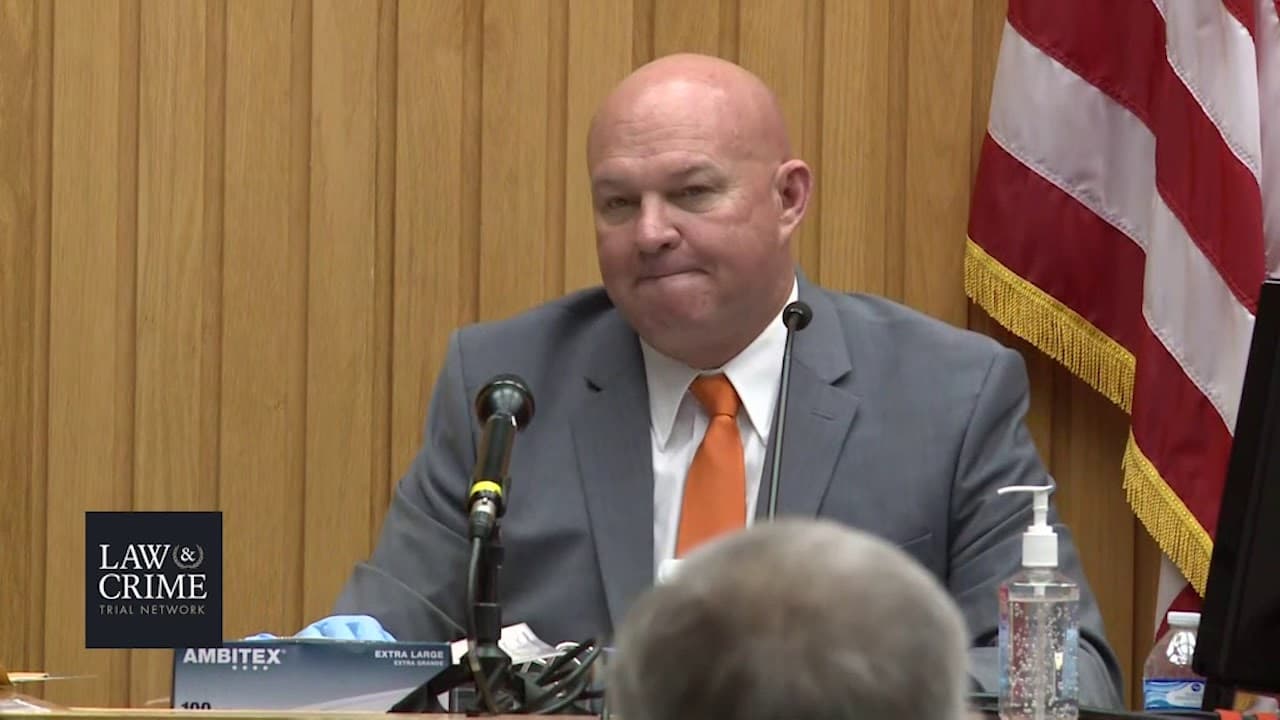
Eric Boyd Trial Day 3 Witnesses CSI Timothy Schade, Patricia Resig, Sp Agt Daniel Foster & Russell W
TL;DR
Forensic experts provide testimony on the collection, analysis, and interpretation of evidence in the court case, including fingerprints and arson-related materials.
Transcript
you see raise your I can do you solemnly swear or affirm the evidence you're about to give him here you this call it's Timothy shade nice names SCH ad I'm currently pointing with the University of Tennessee I work for the Institute of Public Service which is an umbrella under University Tennessee under that umbrella if the law enforcement Innovatio... Read More
Key Insights
- 🖐️ Forensic experts play a crucial role in the collection, analysis, and interpretation of evidence in court cases.
- ❓ Proper calibration and training of canines are essential for accurate detection of accelerants and other substances.
- 🏛️ Class and individual characteristics are examined in fingerprint and firearm analysis to determine identification.
- 🛟 The collection of evidence must be carefully documented and preserved to maintain its integrity in court proceedings.
Install to Summarize YouTube Videos and Get Transcripts
Explore YouTube Video Summarizer or Get YouTube Transcript Extractor
Questions & Answers
Q: What is the process of latent print development?
The process begins with examining the substrate and choosing the appropriate technique for development. Non-porous surfaces require different techniques than porous surfaces. Chemical processing, such as ninhydrin, is often used on porous surfaces to react with amino acids in sweat and produce visible prints.
Q: How are latent prints compared and verified?
Latent prints are compared to known prints to determine a match. An examiner analyzes the ridge characteristics, such as loops and whorls, and examines details like the size and location of pores on the ridges. The analysis is then verified by another examiner to ensure accuracy.
Q: Can prints be lifted from any surface?
Prints can be lifted from a variety of surfaces, but certain factors can make it more challenging. Non-porous surfaces with texture or surfaces that have been handled frequently may not yield clear prints. Certain chemical processing techniques, such as superglue fuming, are more effective on non-porous surfaces.
Q: What is the significance of the firearm examination?
In firearm examination, the examiner compares fired bullets and cartridge cases to known test fires from a specific firearm. Class characteristics, such as caliber and the number of lands and grooves, are compared, as well as individual characteristics caused by imperfections in the firearm's tooling. The examiner determines if there is sufficient agreement for an identification.
Summary & Key Takeaways
-
Timothy Shade, a forensic expert from the University of Tennessee, testifies about his role in the collection and analysis of forensic evidence, particularly in regards to latent fingerprints.
-
Patricia Embracing discusses her work as a fingerprint examiner and the process of comparing fingerprints for identification purposes.
-
Russell Whitfield describes his role in documenting and collecting evidence from the crime scene, including cloth items and a dog leash.
-
Daniel Foster explains his work as a special agent and canine handler, assisting in investigating crimes related to arson and explosives.
Read in Other Languages (beta)
Share This Summary 📚
Summarize YouTube Videos and Get Video Transcripts with 1-Click
Try YouTube Summary with ChatGPT & Claude or YouTube Transcript Generator
Explore More Summaries from Law&Crime Network 📚

Summarize YouTube Videos and Get Video Transcripts with 1-Click
Try YouTube Summary with ChatGPT & Claude or YouTube Transcript Generator