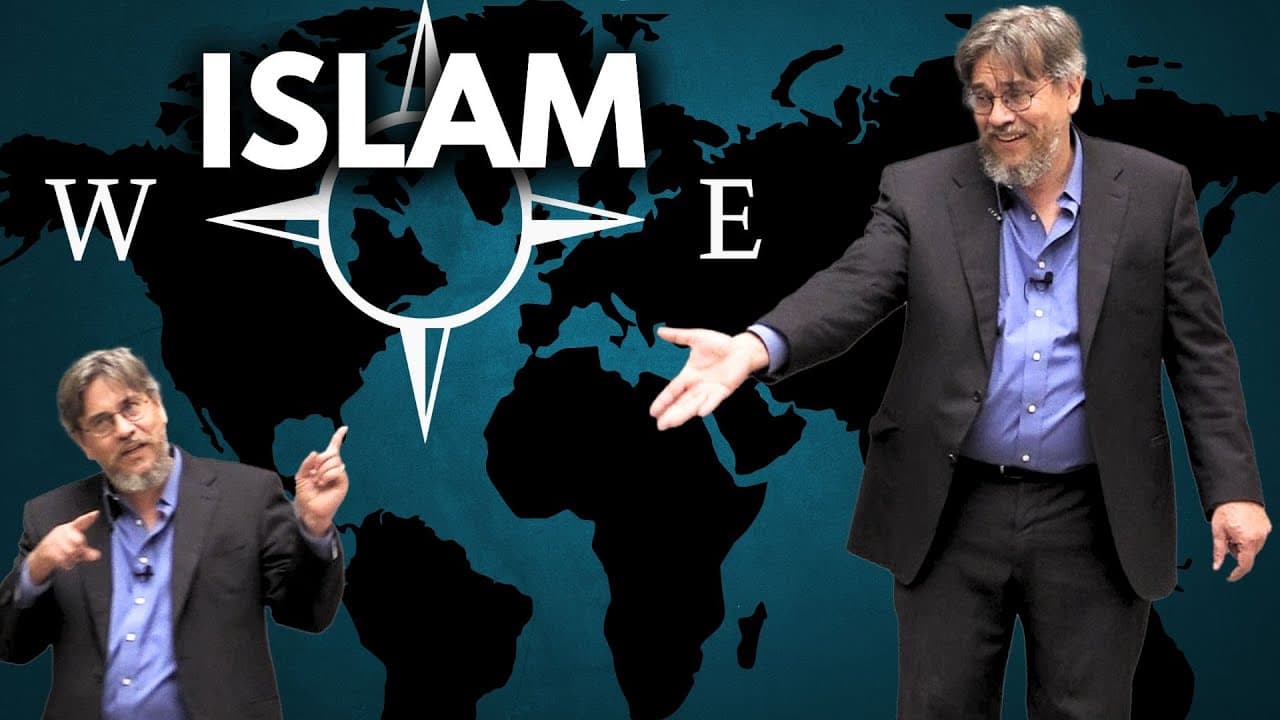
How Islam Saved Western Civilization
TL;DR
The concept of Western Civilization is complex, as it is influenced by geographical boundaries, religious beliefs, and cultural connectivity in the Mediterranean region. Identity is also intricately tied to this concept, as individuals and societies selectively assign identity markers based on their own perceptions and biases.
Transcript
to start I actually want to start by uh admitting something which is so the title of this talk is how Islam saved Western Civilization for the record I believe that that is a totally accurate statement there's nothing I didn't this isn't an attempt to back away from that title at all the thing I want to admit is the title of this talk is how Islam ... Read More
Key Insights
- 🌍 Western Civilization was saved by Islam according to the speaker, who admits the title of the talk is intentionally contradictory. The book "How the Irish Saved Civilization" is deemed flawed and inaccurate due to its contradictions about the fall of Rome and the conversion of Germanic tribes to Christianity.
- 💡 The Roman Empire did not collapse on September 4th, 476 AD, as implied in the book, but rather fell on May 29th, 1453. The conversion of Germanic tribes to Christianity by the Irish is also an inaccurate claim, as many of them were already Christian.
- 🎭 The talk highlights the contradictions and assumptions we make about historical events, such as the categorization of Germanic tribes as pagans and the assumption of a single type of Christianity during the conversion.
- 🔑 Western Civilization is often defined by a college-level intro to Western Civilization course, starting from 3400 BC to 1648 AD. However, this definition omits the contributions of ancient Egypt and Mesopotamia, where civilization began.
- ⚙️ The ancient Egyptians invented many musical instruments and the concept of writing, which played a significant role in the development of Western Civilization. They also had advanced knowledge in astronomy, evidenced by the discovery of the Antikythera Mechanism.
- 🤝 Identity plays a crucial role in our understanding of Western Civilization, with religion, nationality, and race often being defining factors. However, identities can be complex and fluid, making it difficult to categorize individuals and civilizations.
- 💥 The Mediterranean Sea acted as a connector rather than a divider for Western Civilization, enabling trade, cultural exchange, and the spread of ideas. This connectivity, combined with other elements like Paganism, Judaism, Christianity, and imperialism, contributes to the concept of Western Civilization.
- 💡 The invention of philosophy by Thales, the Persian Empire's Bill of Rights, and the construction of the Second Temple of Solomon fueled further development in Western Civilization, showcasing the diversity and interconnected nature of its components.
Install to Summarize YouTube Videos and Get Transcripts
Explore YouTube Video Summarizer or Get YouTube Transcript Extractor
Questions & Answers
Q: How did the geographical boundaries and cultural connectivity of the Mediterranean region influence the development of Western Civilization?
The Mediterranean region, with its interconnected waterways, facilitated the exchange of goods, ideas, and culture between various ancient civilizations. This connectivity played a crucial role in the development and diffusion of Western Civilization.
Q: How does the concept of identity impact the understanding of Western Civilization?
Identity is a complex construct that influences how individuals and societies perceive and assign meaning to Western Civilization. It can be influenced by nationality, religion, and cultural heritage, shaping how people view and interpret historical events and cultural achievements.
Q: What contributions did ancient civilizations, such as Egypt and Sumer, make to the development of Western Civilization?
Ancient civilizations like Egypt and Sumer introduced advancements in government, writing systems, and cultural practices that laid the foundation for Western Civilization. Their innovations in agriculture, law, and architecture shaped the development of later societies in the Mediterranean region.
Q: How did Christianity and Islam shape the identity and understanding of Western Civilization?
Christianity and Islam have played significant roles in shaping the religious and cultural fabric of Western Civilization. The spread and influence of these religions in the Mediterranean and beyond influenced societal norms, values, and systems of governance, contributing to the overall development of Western Civilization.
Q: How do historical narratives and biases impact the understanding of Western Civilization?
Historical narratives can often be shaped by biases and selective storytelling, leading to distortions or omissions in the understanding of Western Civilization. Biases based on religious, cultural, or national identities can influence how historical events and cultural achievements are portrayed and perceived.
Summary & Key Takeaways
-
The concept of Western Civilization is not easily defined, as it is influenced by geographical boundaries and cultural connectivity in the Mediterranean region.
-
Identity plays a crucial role in understanding Western Civilization, as individuals and societies selectively assign identity markers based on their own perceptions and biases.
-
Ancient civilizations, such as Egypt and Sumer, contributed to the development of Western Civilization through their advancements in government, writing, and culture.
-
The complexities of identity and Western Civilization are evident in the history of Egypt, the roles of Christianity and Islam, and the biases present in historical narratives.
Read in Other Languages (beta)
Share This Summary 📚
Summarize YouTube Videos and Get Video Transcripts with 1-Click
Try YouTube Summary with ChatGPT & Claude or YouTube Transcript Generator
Explore More Summaries from The Austin School 📚



Summarize YouTube Videos and Get Video Transcripts with 1-Click
Try YouTube Summary with ChatGPT & Claude or YouTube Transcript Generator