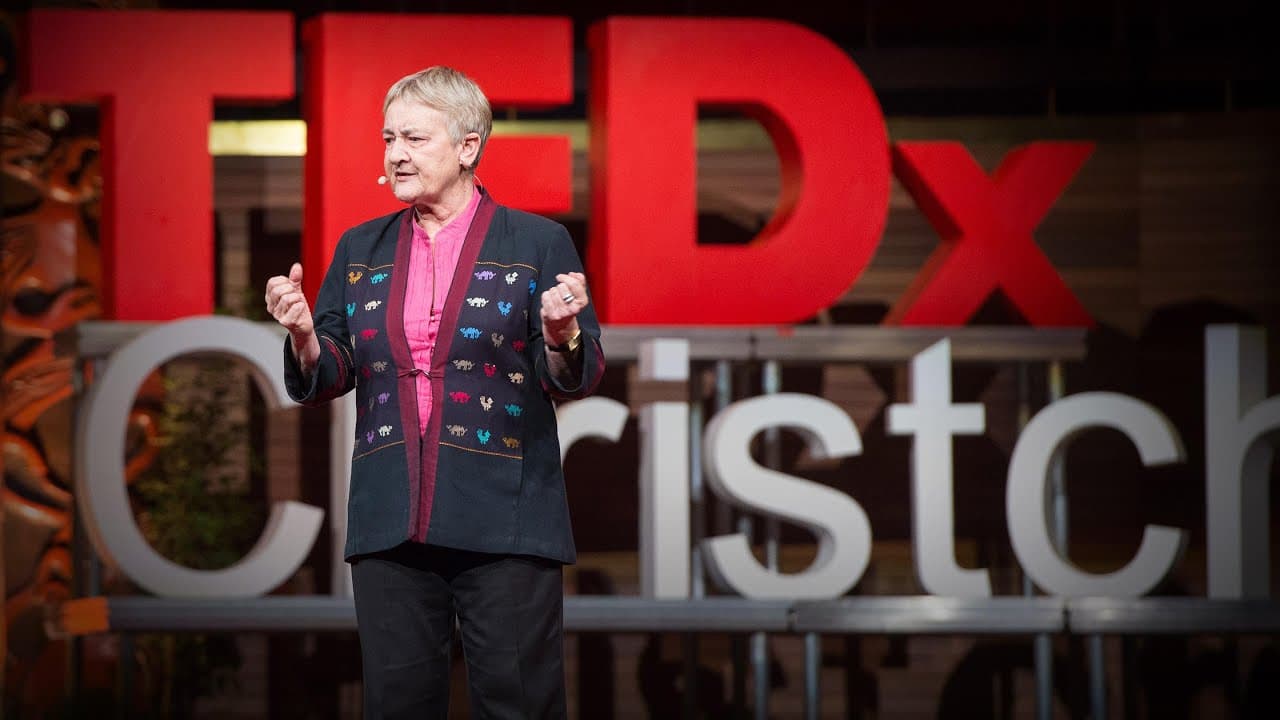
The unpaid work that GDP ignores -- and why it really counts | Marilyn Waring
TL;DR
In this talk, Marilyn Waring discusses the limitations of GDP and the importance of recognizing unpaid work and environmental protection in economic measurements.
Transcript
(In Maori: My mountain is Taupiri.) (Waikato is my river.) (My name is Marilyn.) (Hello.) As you've heard, when I was very young, I was elected to the New Zealand Parliament. And at that age, you learn mostly by listening to others' stories. I remember a woman who'd been injured in a farm accident, and it was coming up to shearing time on the farm,... Read More
Key Insights
- 👦 Family support and unpaid work are undervalued in the GDP, leading to inadequate compensation and recognition for caregivers and homemakers.
- 🌿 Environmental conservation and protection are not prioritized in the GDP, which prioritizes market transactions and economic growth at the expense of natural resources.
- ⛏️ Mining and other destructive activities are valued in the GDP, while the contributions of nonprimary producers and unpaid workers are deemed "of little or no value."
- 📊 The GDP is outdated and flawed, failing to capture the true value of unpaid work and disregarding the impact on the environment.
- 💼 Economic policy based solely on GDP figures overlooks the largest sector of the economy - unpaid work - and fails to address critical issues of need. ⏰ Time use should be considered as a significant indicator, as everyone has the same amount of time and it affects various aspects of life.
- 🌍 The quality of the environment should be given more importance, and lessons from indigenous cultures like the Maori can contribute to sustainable practices.
- 💰 GDP-centric thinking leads to a narrow focus on monetary exchanges, ignoring the broader implications of decisions and valuing war as a means of growth.
Install to Summarize YouTube Videos and Get Transcripts
Explore YouTube Video Summarizer or Get YouTube Transcript Extractor
Questions & Answers
Q: What is the story that Marilyn shares about a woman injured in a farm accident?
Marilyn shares the story of a woman who was injured in a farm accident and had to be replaced by a shepherd during shearing time. Her mother came to help with managing the household and preparing food for the shearing gangs, but the family did not receive any compensation for her assistance.
Q: What happened when a mining company applied for a license to mine Mt. Pirongia?
A mining company called Gold Mines New Zealand applied for a prospecting license on Mt. Pirongia, a mountain known for its extraordinary ecosystems and native forests. The company focused on the economic benefits of mining the mountain, but the community valued its natural beauty and conservation. Fortunately, they were able to prevent the mining from taking place.
Q: What pattern did Marilyn notice in the stories she heard?
Marilyn noticed a pattern in the stories she listened to, which highlighted the undervaluation of certain roles and activities in society. Examples included the assumption that mothers and family members would provide unpaid assistance, as well as the disregard for nonprimary producers. This pattern of undervaluing certain contributions prompted Marilyn to question the underlying values and assumptions embedded in the GDP.
Q: How does the GDP measure and value different types of work?
The GDP, as an economic formula, was established by Western-educated men in 1953. Its measurement focuses primarily on market transactions and includes legal and illegal exchanges. The work done by nonprimary producers, such as unpaid household chores, childcare, and breastfeeding, is considered "of little or no value" according to the GDP. This means that activities outside of market exchanges and traditional monetary transactions are not accounted for or recognized as contributing to the economy.
Q: Why does Marilyn argue that the GDP is inadequate as a measure of economic well-being?
Marilyn argues that the GDP is inadequate as a measure of economic well-being because it fails to capture and account for the full range of human activities and contributions. It prioritizes market exchanges and monetary transactions, disregarding unpaid work and environmental sustainability. Additionally, the GDP can be distorted by tax havens and does not reflect the true state of a nation's economy or the well-being of its citizens. Marilyn believes that alternative measures, such as time use data and a focus on environmental quality, are necessary to achieve a more holistic understanding of economic well-being.
Summary & Key Takeaways
-
The speaker shares personal experiences and stories about the limitations and biases of the economic measure called the gross domestic product (GDP).
-
The GDP primarily focuses on market transactions and ignores important unpaid work and activities, such as caregiving, household chores, and environmental protection.
-
The speaker advocates for a more comprehensive and inclusive measure of progress that considers non-market activities and the well-being of people and the environment.
Read in Other Languages (beta)
Share This Summary 📚
Summarize YouTube Videos and Get Video Transcripts with 1-Click
Try YouTube Summary with ChatGPT & Claude or YouTube Transcript Generator
Explore More Summaries from TED 📚

Summarize YouTube Videos and Get Video Transcripts with 1-Click
Try YouTube Summary with ChatGPT & Claude or YouTube Transcript Generator