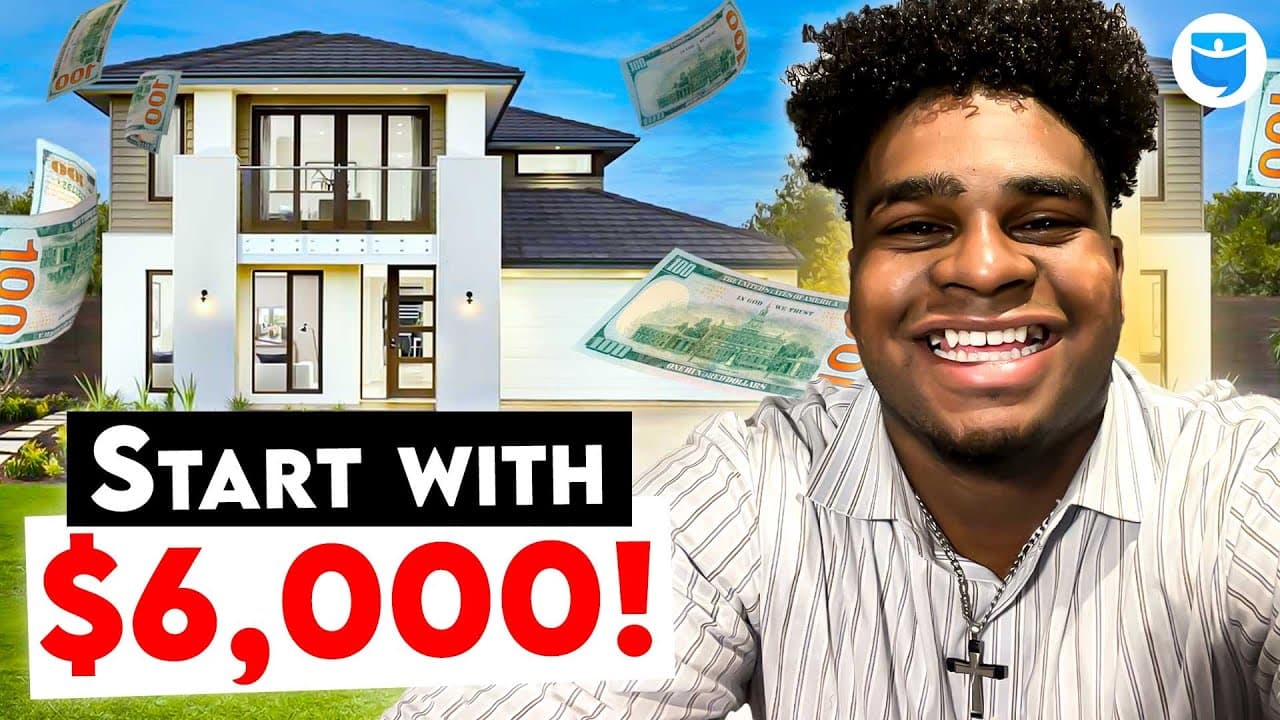
How to Start House Hacking with $6K at Age 23
TL;DR
Ty Lewis started his real estate journey at 23 by house hacking a duplex, investing only $6,000. Despite challenges, such as property repairs and leveraging a small budget, Ty successfully generates cash flow by renting out part of his property. His story highlights the importance of patience, networking, and strategic financial planning in real estate investing.
Transcript
every real estate investor has a different property different strategy and even a different portfolio what we will share that's not different is how we got started and today I'm here with my really great friend Ty Lewis he's got an absolutely amazing story that he shared with me at BP con back in Orlando 2023 this year and I thought hey Ty we need ... Read More
Key Insights
- Ty Lewis began his real estate journey in 2020 after his father's passing, which motivated him to start investing early.
- House hacking allows Ty to live in one side of a duplex while renting out the other, effectively reducing his living expenses.
- Ty used a 3% down payment strategy to purchase his first property, demonstrating that significant savings are not always necessary to start investing.
- Networking and learning from others in the real estate community were crucial to Ty's success in finding and managing his property.
- Having a financial reserve is essential for unexpected property repairs and maintenance, as Ty learned through personal experience.
- Ty emphasizes the importance of knowing one's strengths and outsourcing tasks like repairs to professionals.
- Real estate investing offers tax benefits and principal paydown advantages, contributing to long-term financial growth.
- Ty's future goals include expanding his real estate portfolio and using his experiences to mentor others in financial literacy and investment.
Install to Summarize YouTube Videos and Get Transcripts
Explore YouTube Video Summarizer or Get YouTube Transcript Extractor
Questions & Answers
Q: How can I start house hacking with minimal savings?
Starting house hacking with minimal savings involves using strategies like low down payment loans. Ty Lewis used a 3% down payment to purchase a duplex, allowing him to live in one unit and rent out the other. Networking with real estate professionals and understanding financing options can help identify opportunities that align with limited budgets.
Q: What are the benefits of house hacking a duplex?
House hacking a duplex allows the owner to live in one unit while renting out the other, effectively reducing living expenses and generating rental income. This strategy provides cash flow, helps with mortgage payments, and offers tax benefits. It’s a practical entry point for new investors seeking to build equity and experience in real estate.
Q: What challenges might I face when house hacking?
Challenges in house hacking include property maintenance, unexpected repairs, and managing tenant relationships. Ty faced issues like HVAC problems and pest control, highlighting the need for financial reserves and a reliable network of professionals. Understanding these potential hurdles and preparing for them can ease the house hacking journey.
Q: How important is networking in real estate investing?
Networking is crucial in real estate investing as it provides access to valuable resources, advice, and opportunities. Ty's success was partly due to learning from other investors, real estate agents, and professionals who guided him through property acquisition and management. Building a strong network can lead to better decision-making and investment outcomes.
Q: What financial strategies did Ty use to purchase his first property?
Ty leveraged a 3% down payment loan to purchase his first duplex, minimizing initial costs. He also utilized potential rental income to qualify for the mortgage. This approach, combined with careful budgeting and financial planning, enabled him to enter the real estate market with limited savings.
Q: How did Ty Lewis handle property repairs and maintenance?
Ty Lewis addressed property repairs by leveraging his network to find reliable professionals for tasks beyond his expertise, such as HVAC repairs and pest control. He emphasized the importance of having financial reserves to cover unexpected expenses, ensuring that these challenges did not derail his investment strategy.
Q: What are Ty's future goals in real estate?
Ty aims to expand his real estate portfolio and focus on mentoring others in financial literacy and investment. Inspired by his father's legacy, he plans to build cash flow and equity, enabling him to pursue his passion for coaching and community engagement while maintaining financial independence through real estate.
Q: Why is financial planning important in real estate investing?
Financial planning is vital in real estate investing to ensure that investors can manage expenses, handle unexpected repairs, and leverage opportunities effectively. Ty's experience shows that strategic budgeting, understanding financing options, and maintaining financial reserves are key to sustaining and growing a real estate portfolio successfully.
Summary & Key Takeaways
-
Ty Lewis started investing in real estate at age 23 with a $6,000 down payment on a duplex. He lives in one unit and rents out the other, generating cash flow while reducing living expenses. His journey emphasizes the importance of networking, financial planning, and leveraging small resources to start investing.
-
The process of acquiring his first property involved patience and learning from real estate communities. Ty's strategy included house hacking, allowing him to qualify for a mortgage by factoring in potential rental income, which helped him manage finances effectively.
-
Despite challenges such as property maintenance and repairs, Ty's experience highlights the importance of having financial reserves and a strong support network. His future plans involve expanding his portfolio and mentoring others, inspired by his father's legacy and his own passion for financial education.
Read in Other Languages (beta)
Share This Summary 📚
Summarize YouTube Videos and Get Video Transcripts with 1-Click
Try YouTube Summary with ChatGPT & Claude or YouTube Transcript Generator
Explore More Summaries from Real Estate Rookie 📚




Summarize YouTube Videos and Get Video Transcripts with 1-Click
Try YouTube Summary with ChatGPT & Claude or YouTube Transcript Generator