Block Diagram of Embedded System
TL;DR
This video discusses the block diagram of an embedded system, including its different blocks such as the processor, power source, clock and oscillator circuit, memory, real-time clock, reset, and more.
Transcript
hello friends let's see what is block diagram of embedded system or what the different blocks are there in the embedded system so you can see the block diagram of embedded system let's see what are the different blocks in the block diagram of embedded system now different blocks are the very first is processor second is power source third is clock ... Read More
Key Insights
- 😤 An embedded system stores software in hardware, known as firmware, and utilizes different types of memory, such as ROM and flash memory.
- 😫 The processor is a crucial component of an embedded system and is selected based on factors like instruction set, bit operation, speed, and algorithm processing.
- 🖐️ Power source management and optimization play significant roles in the efficient operation of an embedded system.
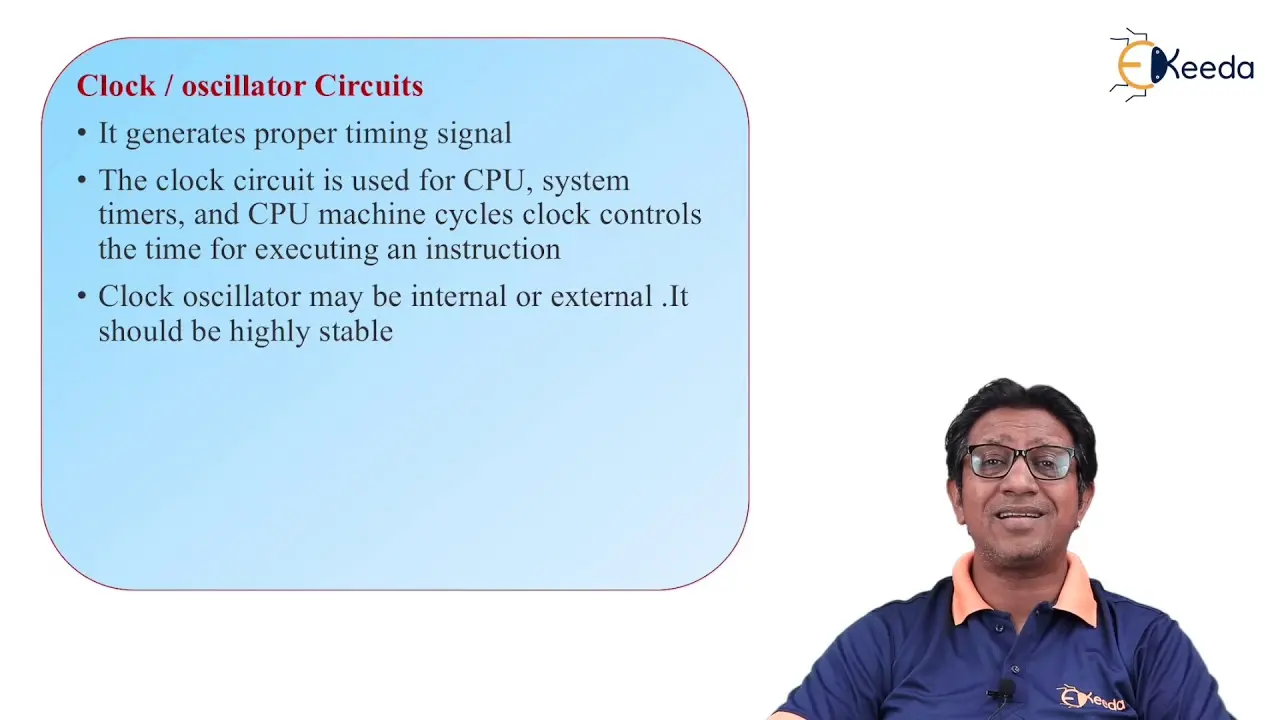
- ⏲️ Clock and oscillator circuits provide timing signals, while a real-time clock is crucial for scheduling tasks and ensuring accurate time-based operations.
- ✊ Reset and power on reset circuits ensure proper system startup and program execution.
- 🐕🦺 Real-time operating systems (RTOS) are essential for systems that require guaranteed response and delivery of services within specific timing constraints.
Install to Summarize YouTube Videos and Get Transcripts
Explore YouTube Video Summarizer or Get YouTube Transcript Extractor
Questions & Answers
Q: What is the purpose of memory in an embedded system?
Memory in an embedded system stores the firmware, which is the software that runs on the system. It can be internal ROM, flash ROM, or external flash memory. These memories store instructions and data for the processor to execute and manipulate.
Q: How is a processor selected for an embedded system?
The selection of a processor for an embedded system depends on several criteria. The instruction set should be simple and minimal to make programming easier. The maximum bit operation determines the amount of data the processor can handle at a time. Speed, measured in frequency (megahertz or gigahertz), determines the processor's efficiency. Finally, the algorithm processing and capability factor determines whether a simple or specialized processor (like a DSP) is needed for complex functions.
Q: What is the role of clock and oscillator circuits in an embedded system?
Clock and oscillator circuits provide timing signals for various components of the embedded system, including the processor and timers. The clock's stability is crucial to ensure proper timing and synchronization of operations. Crystal or additional circuitry can generate the clock signal, and it can be either internal or external.
Q: What is the purpose of a real-time operating system (RTOS)?
An RTOS is essential for real-time systems that have specific timing constraints and deadlines. It ensures that tasks and services are completed within the required time frame. For example, in a microwave oven or washing machine, the RTOS guarantees that timers, tasks, and functions are executed accurately and in a timely manner.
Summary & Key Takeaways
-
An embedded system is a fixed dedicated system where software is stored in hardware (firmware) in the form of internal ROM, flash ROM, or external flash.
-
The processor is the heart of the system, responsible for generating timing signals, performing calculations, and controlling functions. The selection of a processor depends on factors like instruction set, bit operation, speed, and algorithm processing.
-
Power for the embedded system can be supplied internally (battery) or externally (adapters). Disabling unused units can save power, and using wait and stop instructions in programming can further optimize power consumption.
-
The clock and oscillator circuit provide proper timing signals, and a stable clock is crucial for the proper functioning of the system. A real-time clock helps with scheduling tasks and driving timers and counters. Reset circuits and power-on reset circuits ensure proper system startup.
-
Real-time operating systems (RTOS) are essential for systems that require guaranteed response within specific timing constraints.
Read in Other Languages (beta)
Share This Summary 📚
Summarize YouTube Videos and Get Video Transcripts with 1-Click
Try YouTube Summary with ChatGPT & Claude or YouTube Transcript Generator
Explore More Summaries from Ekeeda 📚






Summarize YouTube Videos and Get Video Transcripts with 1-Click
Try YouTube Summary with ChatGPT & Claude or YouTube Transcript Generator