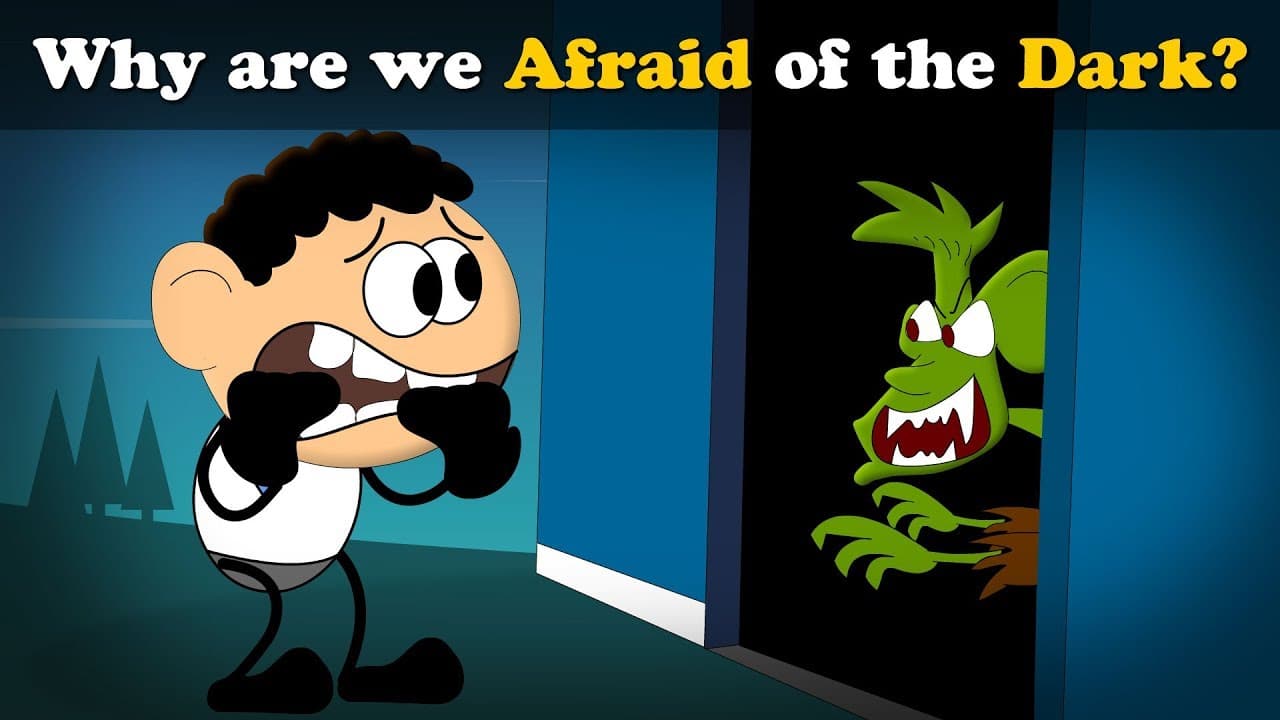
Why are we Afraid of the Dark? + more videos | #aumsum #kids #science #education #children
TL;DR
Humans fear the dark due to evolution and our imagination of potential dangers lurking. Horses have a mechanism to stay upright while napping. Bananas contain a small amount of radioactive potassium but won't cause radiation poisoning. Trees communicate and share resources through a network of fungal connections.
Transcript
It's AumSum Time Why are we afraid of the dark? I'm so cooooll. I'm not afraid. Hahaha. Some experts say humans have developed this fear due to evolution. In prehistoric times. Our ancestors were at high risk of being attacked by predators or enemies. When in dark. Hence, through evolution. The tendency to fear darkness developed. Also, in the dark... Read More
Key Insights
- 😨 Humans developed a fear of the dark due to the evolutionary association of darkness with potential threats.
- 🦡 Anxiety in the dark stems from our limited ability to see and our tendency to imagine worst-case scenarios.
- 😨 External influences, such as parental warnings and media depictions, contribute to our fear of the dark.
- 💀 Horses have a mechanism called stay apparatus that allows them to nap while standing, ensuring a quick reaction to potential danger.
- 🧑⚕️ Bananas contain a small amount of radioactive potassium, but the exposure is insignificant and poses no health risks.
- 💁 Trees communicate and share resources through a mycorrhizal network, forming a supportive community.
- 😨 Understanding the reasons behind our fears can help us address and overcome them.
Install to Summarize YouTube Videos and Get Transcripts
Explore YouTube Video Summarizer or Get YouTube Transcript Extractor
Questions & Answers
Q: Why are humans afraid of the dark?
Humans fear the dark due to evolutionary reasons. In prehistoric times, darkness was associated with heightened risks of predator attacks or enemy ambushes. This fear developed as a survival instinct to protect ourselves.
Q: How does the imagination play a role in our fear of the dark?
Our imagination tends to amplify the fear of darkness by creating imaginary threats and worst-case scenarios. Since we cannot see clearly in the dark, our mind fills in the gaps with frightening possibilities, intensifying our fear.
Q: How do horses sleep?
Horses have a unique sleep mechanism. Despite being able to sleep lying down, their size and vulnerability to predators make it difficult for them to get up quickly. They developed a mechanism called the stay apparatus, which allows them to take short naps while standing.
Q: Do bananas contain radioactive substances?
Yes, bananas contain a small amount of a radioactive isotope called K-40. However, the radiation exposure from eating a banana is minimal and poses no risk of radiation poisoning. To exceed safe levels, one would need to consume an unrealistic amount of bananas simultaneously.
Q: How do trees communicate with each other?
Trees communicate through a network of fungal connections called a mycorrhizal network. They send chemical signals through these connections, allowing them to share resources and provide nourishment to smaller plants. This network helps trees support each other and thrive collectively.
Summary & Key Takeaways
-
The fear of the dark developed in humans through evolution as a response to potential predators or enemies in prehistoric times.
-
Darkness creates anxiety because we cannot see properly, leading us to imagine worst-case scenarios.
-
Our fear of the dark is influenced by others' reactions and external sources, such as parents' warnings or horror movies with dark settings.
-
Horses have a mechanism called stay apparatus that helps them take short naps while standing, ensuring they can quickly escape from predators.
-
Bananas contain a small amount of a radioactive isotope called K-40, but eating them in normal quantities poses no risk of radiation poisoning.
-
Trees are connected through a network of fungi called mycorrhizal network, enabling communication and resource-sharing between them.
Read in Other Languages (beta)
Share This Summary 📚
Summarize YouTube Videos and Get Video Transcripts with 1-Click
Try YouTube Summary with ChatGPT & Claude or YouTube Transcript Generator
Explore More Summaries from It's AumSum Time 📚
Summarize YouTube Videos and Get Video Transcripts with 1-Click
Try YouTube Summary with ChatGPT & Claude or YouTube Transcript Generator