The Philosophy Of Plato
TL;DR
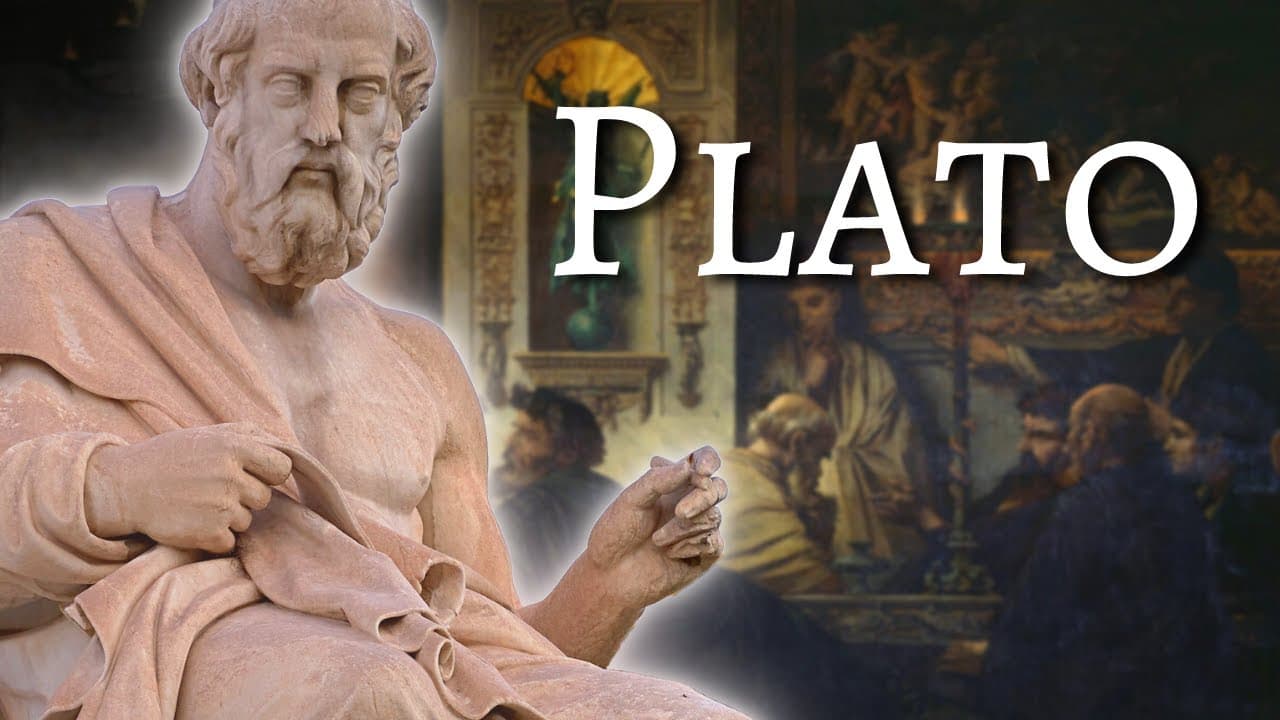
This video discusses Plato's life, his philosophy of justice, his political ideals, and his metaphysics of the realm of forms.
Transcript
Throughout history each era has had within it a resounding voice; a figure who embodies the very essence of that age. And when we look back to the vibrancy of Periclean Greece we can say without doubt that it is Plato who we hear. It was his work that brought philosophy out of the dark corner of academia where the common man, if he so choose, ... Read More
Key Insights
- 👥 Plato's work brought philosophy out of academia and made it accessible to the common man, with countless students still studying his thoughts today.
- 🚌 Plato was an athlete and competed in the Isthmian games, but it was through meeting Socrates and his tutelage that he developed a love for wisdom.
- ✈️ Plato traveled to various places including Egypt, Italy, Judea, and India, spending a total of 12 years away from Athens before returning and establishing The Academy.
- 🏛️ Plato's desire was to create the ideal state, which he outlined in his famous work, The Republic, believing that human nature and greed were the primary factors preventing its realization.
- 🏛️ Plato believed that governments are influenced by human behavior, which originates from desire, emotion, and knowledge, and individuals should be assigned roles based on their strongest driving force.
- 📚 Plato's system of selection for rulers involved complete equality of educational opportunity, starting with a physical and musical education, followed by examinations and years of training in philosophy.
- 🌍 While Plato's political ideal may seem impractical, his ideas and images can still provide ingredients for the development of future states, and his work remains an ethical exploration of justice and societal harmony.
- 🔍 The metaphysics of Plato revolve around the theory of forms, where he explains the duality of the universe, with a physical realm perceived through senses and a realm of eternal forms accessible through reason and thought.
Install to Summarize YouTube Videos and Get Transcripts
Explore YouTube Video Summarizer or Get YouTube Transcript Extractor
Questions & Answers
Q: How did Plato's meeting with Socrates influence his philosophical journey?
Plato's meeting with Socrates had a profound impact on his philosophical journey as it sparked his passion for wisdom and love for philosophy. Socrates became his mentor and taught him the art of dialectics.
Q: Why did Plato establish The Academy in Athens?
After the death of Socrates, Plato came under suspicion by the Athenian authorities and decided to travel the world. Eventually, he returned to Athens and established The Academy to continue his philosophical teachings and write his famous dialogues.
Q: What were Plato's thoughts on democracy in relation to his political ideals?
Plato had a passionate contempt for democracy as he believed that it resulted in the election of ill-informed and ill-intentioned individuals into positions of power. He aimed to create an ideal state ruled by philosopher kings who had acquired knowledge and wisdom.
Q: How did Plato envision the education system in his ideal state?
Plato believed in complete equality of educational opportunity in his ideal state, with no discrimination based on class, race, or gender. Education was crucial, and individuals would go through a rigorous process of examination and training to determine their roles in society.
Q: How did Plato define justice in his society?
Plato defined justice as each individual being placed in the role they were best suited for and effectively coordinating their actions to create an efficient and harmonious society. A just man is one who does his best and gives the full equivalent of what he receives.
Q: What is Plato's doctrine of ideas or theory of forms?
Plato's doctrine of ideas suggests that our universe is divided into the physical realm, which can be perceived through the senses, and the realm of forms, which can only be conceived through reason and thought. The ideals or forms exist in the realm of forms and are considered more real than the physical imitations we experience.
Answer: Plato's metaphysics delves into the concept of the realm of forms, where timeless and unchangeable ideals exist. He believed that without this realm, life would be meaningless, and our experiences would be nothing more than bundles of sensations. The realm of forms provides objective truth and purpose to existence.
Summary & Key Takeaways
-
Plato was a Greek philosopher who brought philosophy out of academia and into the common man's world.
-
He was a student of Socrates and established The Academy, one of the earliest known organized schools in western civilization.
-
Plato's political ideas and his concept of justice revolve around creating an ideal state led by philosopher kings, and his metaphysics explores the realm of forms.
Read in Other Languages (beta)
Share This Summary 📚
Summarize YouTube Videos and Get Video Transcripts with 1-Click
Try YouTube Summary with ChatGPT & Claude or YouTube Transcript Generator
Explore More Summaries from Let's Talk Philosophy 📚


Summarize YouTube Videos and Get Video Transcripts with 1-Click
Try YouTube Summary with ChatGPT & Claude or YouTube Transcript Generator