Will AI Take Over Human Creativity?
TL;DR
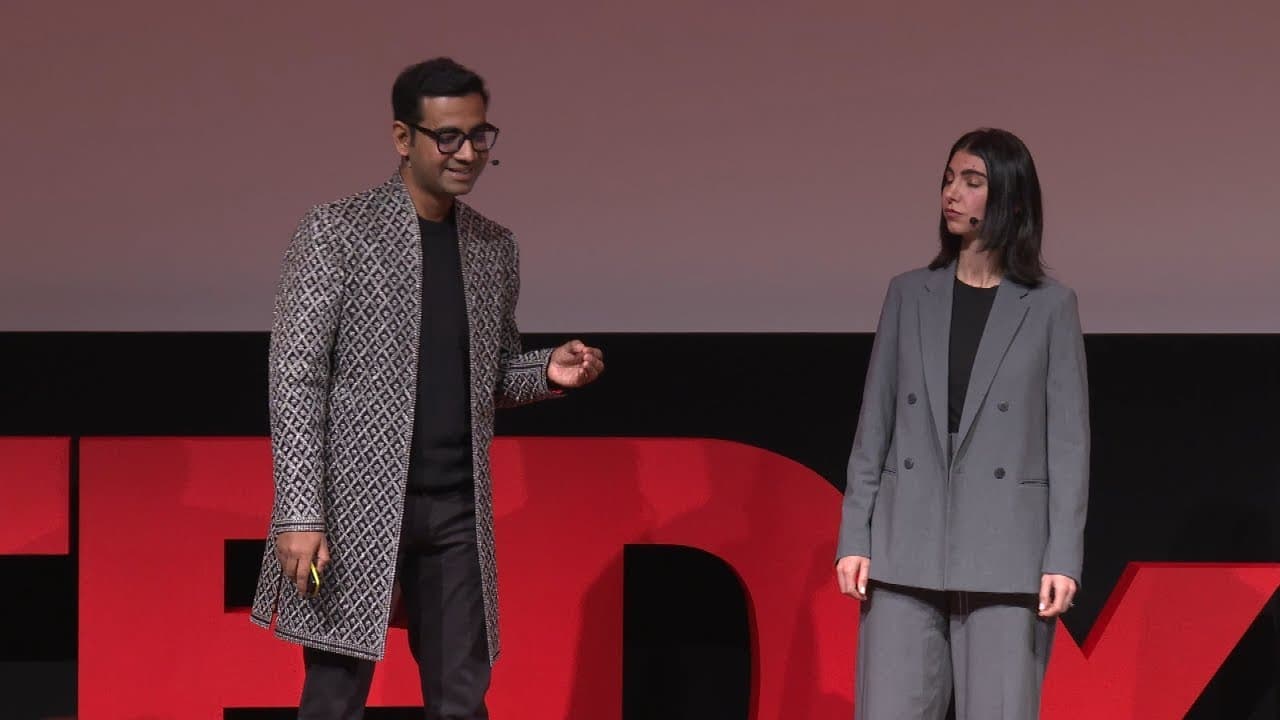
AI has the ability to generate creative works that are indistinguishable from human creations, but it lacks the lived experiences that give human creativity its depth. While AI can replicate patterns and generate art, true creativity comes from human emotions and experiences. AI should be seen as a collaborator that expands human creative boundaries rather than replacing them.
Transcript
East [singing] in your heartbeat. [music] West in my reply, one [music] breath between us. [music] Two worlds [singing] in one cry. Let us start with a quick show of hands. How many of you enjoyed that piece of music? And how many of you thought it sounded human? Well, we have a small confession. That entire piece of music was generated by artifici... Read More
Key Insights
- AI can generate music that sounds human, challenging the distinction between human and machine creativity.
- A study found 97% of participants couldn't distinguish AI-generated music from human-created music.
- AI works by recognizing patterns in data, not by understanding or experiencing emotions.
- Human creativity is rooted in lived experiences, emotions, and personal history.
- AI can replicate creative patterns but lacks the motivation and emotional depth of human creators.
- Creativity has always been influenced by past works and is not purely individual.
- AI can be a tool that enhances and collaborates with human creativity, not just a replicator.
- Technological advances in music, like electric guitars and synthesizers, have historically expanded creative possibilities.
Install to Summarize YouTube Videos and Get Transcripts
Explore YouTube Video Summarizer or Get YouTube Transcript Extractor
Questions & Answers
Q: How does AI create music that sounds human?
AI creates music by analyzing large datasets of existing music to recognize patterns and relationships between notes, rhythms, and harmonies. It uses these patterns to predict and generate new compositions that mimic human-created music. However, AI lacks the emotional understanding and personal experience that human composers bring to their work.
Q: Why can't AI replace human creativity entirely?
AI cannot replace human creativity entirely because it lacks the lived experiences and emotions that drive true creative expression. Human creativity is deeply rooted in personal history, emotions, and the ability to break rules and push boundaries. AI can replicate patterns but does not possess the intrinsic motivation or emotional depth that humans have.
Q: What role can AI play in human creativity?
AI can play the role of a collaborator in human creativity, serving as a tool that enhances and expands creative possibilities. By working alongside humans, AI can help generate new ideas, explore combinational creativity, and push creative boundaries. The focus should be on building a creative ecosystem where AI complements human creativity.
Q: How do humans perceive AI-generated art?
Humans often perceive AI-generated art as impressive and sometimes indistinguishable from human-made art. However, there is a level of discomfort when people realize that a machine, without emotions or experiences, created something that evokes emotional responses. This raises questions about the nature of creativity and the role of AI in artistic expression.
Q: What historical examples show technology expanding creativity?
Historical examples of technology expanding creativity include the introduction of the electric guitar, synthesizers, and Autotune. Each of these innovations faced initial resistance but eventually became integral to new creative expressions in music. These technologies demonstrate how new tools can open up new possibilities and eras in creative fields.
Q: Can AI experience emotions like humans?
AI cannot experience emotions like humans because it lacks consciousness and the ability to feel. AI processes data and patterns to generate responses that may mimic emotional expressions, but it does not have the subjective experiences or emotional depth that characterize human emotions. AI's 'emotions' are purely imitative and data-driven.
Q: How does AI challenge the definition of creativity?
AI challenges the definition of creativity by producing works that are indistinguishable from human creations, questioning whether creativity is solely a human trait. While AI can replicate and generate creative works based on patterns, it lacks the emotional and experiential components that traditionally define creativity. This prompts a reevaluation of what creativity means in the age of AI.
Q: What choices do we face with AI in creativity?
With AI in creativity, we face choices about how to integrate it into our creative processes, determining what is generated and preserved, who owns and benefits from AI-created works, and what should be regulated. These decisions will shape the creative ecosystem and define the role of AI as a collaborator rather than a replacement for human creativity.
Summary & Key Takeaways
-
AI can create music and art that are indistinguishable from human creations, challenging our understanding of creativity. Despite AI's ability to replicate patterns, true creativity comes from human experiences and emotions. AI should be viewed as a collaborator that expands creative boundaries.
-
The video discusses the impact of AI on creativity, emphasizing that while AI can generate art, it lacks the emotional experiences that define human creativity. The speakers argue for a collaborative approach, where AI enhances human creativity rather than replacing it.
-
Historically, new technologies in music have expanded creative possibilities. Similarly, AI should be seen as a tool that collaborates with humans, pushing creativity into a new era. The choice lies in how we integrate AI into our creative processes and ecosystems.
Read in Other Languages (beta)
Share This Summary 📚
Summarize YouTube Videos and Get Video Transcripts with 1-Click
Try YouTube Summary with ChatGPT & Claude or YouTube Transcript Generator
Explore More Summaries from TEDx Talks 📚
Summarize YouTube Videos and Get Video Transcripts with 1-Click
Try YouTube Summary with ChatGPT & Claude or YouTube Transcript Generator