Raghava KK: Coloring Outside the Lines | Nat Geo Live
TL;DR
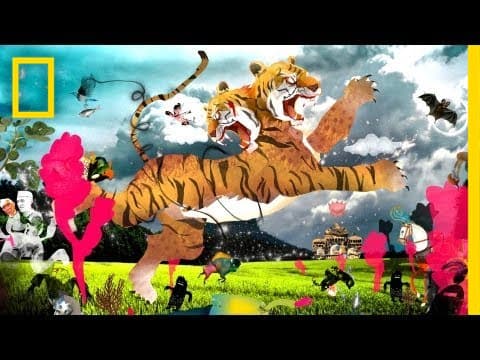
Perspectives shape our understanding of the world, and through art and science, we can explore multiple perspectives and foster creativity.
Transcript
hi you know I have to tell you a little bit about my family first um I come from this really boring academic scientific family and um you know every male member is given the task of bringing back home ivy league decals for our classic Ambassador car in India you know my mother's a little different she's a bit of a hippie she's the one who taught me... Read More
Key Insights
- 🎓 Education should focus on discipline, curiosity, and learning how to learn, rather than conforming to a system.
- 🖐️ Stories play a crucial role in shaping our understanding of ourselves and the world around us.
- 🔂 Multiple perspectives, rather than a single truth, provide a more comprehensive understanding of complex issues.
- 🌍 Art and science can complement each other and offer new ways to explore and engage with the world.
- ❓ Teaching perspectives is vital for fostering creativity and empathy.
- 💗 The speaker's personal experiences growing up in a diverse country like India inform her art's emphasis on multiple perspectives.
- 🥰 The integration of brainwave technology with art allows for a more interactive and dynamic experience.
Install to Summarize YouTube Videos and Get Transcripts
Explore YouTube Video Summarizer or Get YouTube Transcript Extractor
Questions & Answers
Q: How did the speaker's family background influence her views on education?
The speaker's family, consisting of academic and philosophical individuals, instilled in her the value of learning discipline, curiosity, and being a good citizen. Her mother's hippie nature and her father's philosophical outlook further shaped her perspectives on education.
Q: What is the speaker's opinion on knowledge deployed by individuals and crowds?
The speaker believes that knowledge deployed by individuals is biased and subjective. She also finds fault with the idea of a single truth emerging from a crowd, as it lacks engagement and disregards different perspectives. She proposes the emergence of a third form of knowledge where multiple truths coexist.
Q: How does the speaker use art to explore multiple perspectives?
The speaker uses art to recreate Indian history through various viewpoints, presenting a more honest representation of the country's past. She believes that teaching multiple perspectives through art fosters creativity and empathy.
Q: How does the speaker incorporate science into her art?
The speaker utilizes a brainwave measuring device called an EEG headset to create interactive art. The device measures her mental state and alters her art accordingly. Through this integration of art and science, she explores dynamic and ever-changing perspectives.
Summary & Key Takeaways
-
The speaker comes from a diverse family background and shares her personal journey of leaving formal education to pursue a life of learning and exploration.
-
She emphasizes the importance of storytelling and multiple truths coexisting to gain a richer understanding of ourselves and the world.
-
The speaker discusses the need to teach perspectives to children and shares a children's book she created for that purpose.
Read in Other Languages (beta)
Share This Summary 📚
Summarize YouTube Videos and Get Video Transcripts with 1-Click
Try YouTube Summary with ChatGPT & Claude or YouTube Transcript Generator
Explore More Summaries from National Geographic 📚

Summarize YouTube Videos and Get Video Transcripts with 1-Click
Try YouTube Summary with ChatGPT & Claude or YouTube Transcript Generator