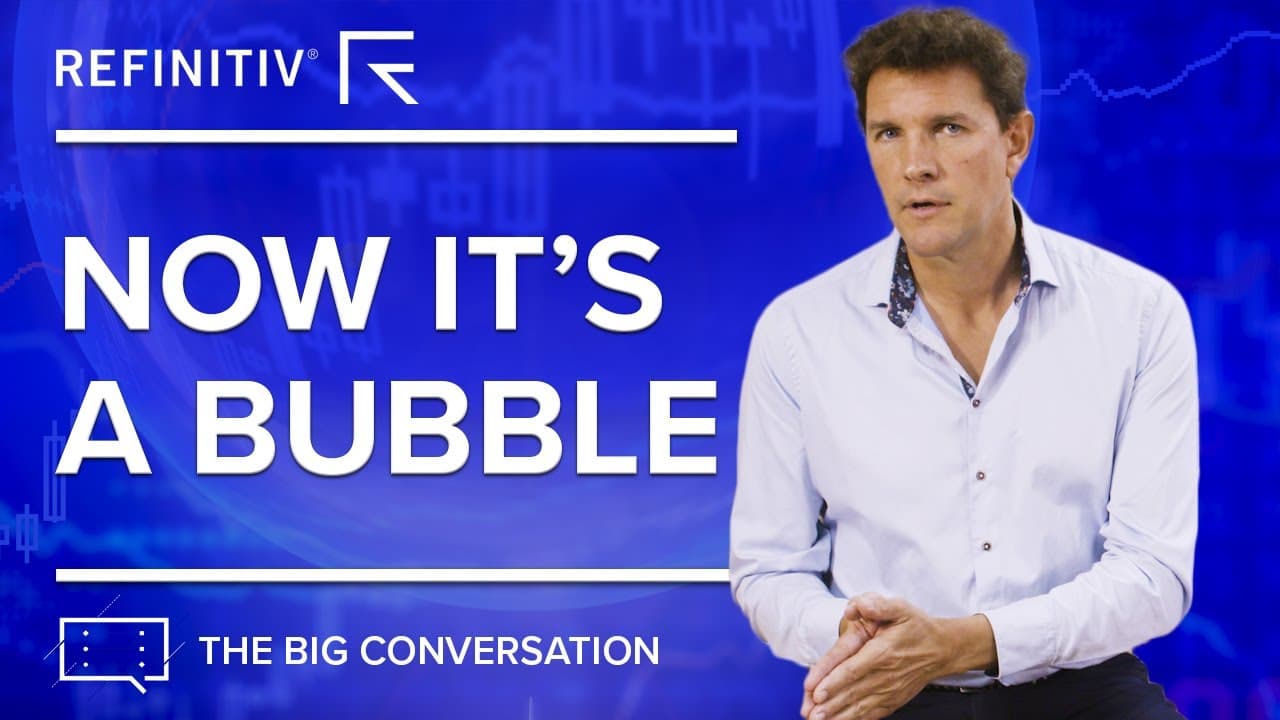
Now it’s a bubble| The Big Conversation | Refinitiv
TL;DR
The U.S. equity market is showing signs of a bubble, with the reemergence of retail investors and increased demand for ESG data.
Transcript
Back in January, when the S&P 500 was making new all time highs, it was not displaying all the signs that we would have expected if the equity market had been a true bubble. But wind onto today, and with the Nasdaq having made new all time highs, there are now far more classic bubble signs than there were earlier this year. That's The Big Conversat... Read More
Key Insights
- 👁️🗨️ The U.S. equity market has shown signs of a bubble, with increased retail investor participation and emotional attachment.
- 👁️🗨️ Previous bubbles, such as the dot com boom and the Japanese asset bubble, had extended periods of deflation.
- 😑 The pre-COVID equity market was driven by corporate share buybacks and pension fund flows.
- 💗 Demand for ESG data has surged, indicating a growing interest in sustainable finance and socially responsible investing.
- 🍳 The market rebound after the pandemic has broken records and extended the valuation disconnect.
- 👁️🗨️ The Fed's actions and retail investor participation have contributed to the creation of an equity bubble.
- 👁️🗨️ The sustainability of the equity market's rebound and the potential consequences of a bubble deflation are uncertain.
Install to Summarize YouTube Videos and Get Transcripts
Explore YouTube Video Summarizer or Get YouTube Transcript Extractor
Questions & Answers
Q: How did the equity market perform before and after the COVID-19 pandemic?
Before the pandemic, the market lacked signs of a bubble, driven by corporate share buybacks and pension fund flows. However, the market rebounded strongly after the pandemic, breaking records and attracting retail investors.
Q: What factors differentiate a bubble market from a non-bubble market?
A true bubble market is characterized by extreme emotional involvement from investors, peak mania, and a prolonged period of deflation after a burst. Emotional attachment and public interaction drive the bubble.
Q: How has retail investor participation affected the equity market?
Retail investors have reentered the market, driving increased trading volumes and stock choices. They have displayed a strong belief in dip buying and a willingness to follow the Fed's actions.
Q: Why has demand for ESG data increased?
The demand for ESG data has increased due to its association with higher-performing assets during the pandemic. Investors are also focusing on investing in sustainable finance and socially responsible companies.
Summary & Key Takeaways
-
In January, the equity market lacked the signs of a bubble, with little emotional involvement from investors. However, with the rebound from the COVID-19 pandemic, the market has experienced a surge in retail investor participation and emotional attachment.
-
Previous bubbles, such as the dot com boom and the Japanese asset bubble, were characterized by extreme public interaction and emotional attachment, leading to extended periods of deflation.
-
The drivers of the pre-COVID equity market were corporate share buybacks and 401K pension flows. However, the current market rebound has broken records and extended the valuation disconnect.
-
Demand for ESG data has increased significantly, indicating a growing interest in sustainable finance and socially responsible investing.
Read in Other Languages (beta)
Share This Summary 📚
Summarize YouTube Videos and Get Video Transcripts with 1-Click
Try YouTube Summary with ChatGPT & Claude or YouTube Transcript Generator
Explore More Summaries from Real Vision 📚


Summarize YouTube Videos and Get Video Transcripts with 1-Click
Try YouTube Summary with ChatGPT & Claude or YouTube Transcript Generator