Disney World and the Death of Cities
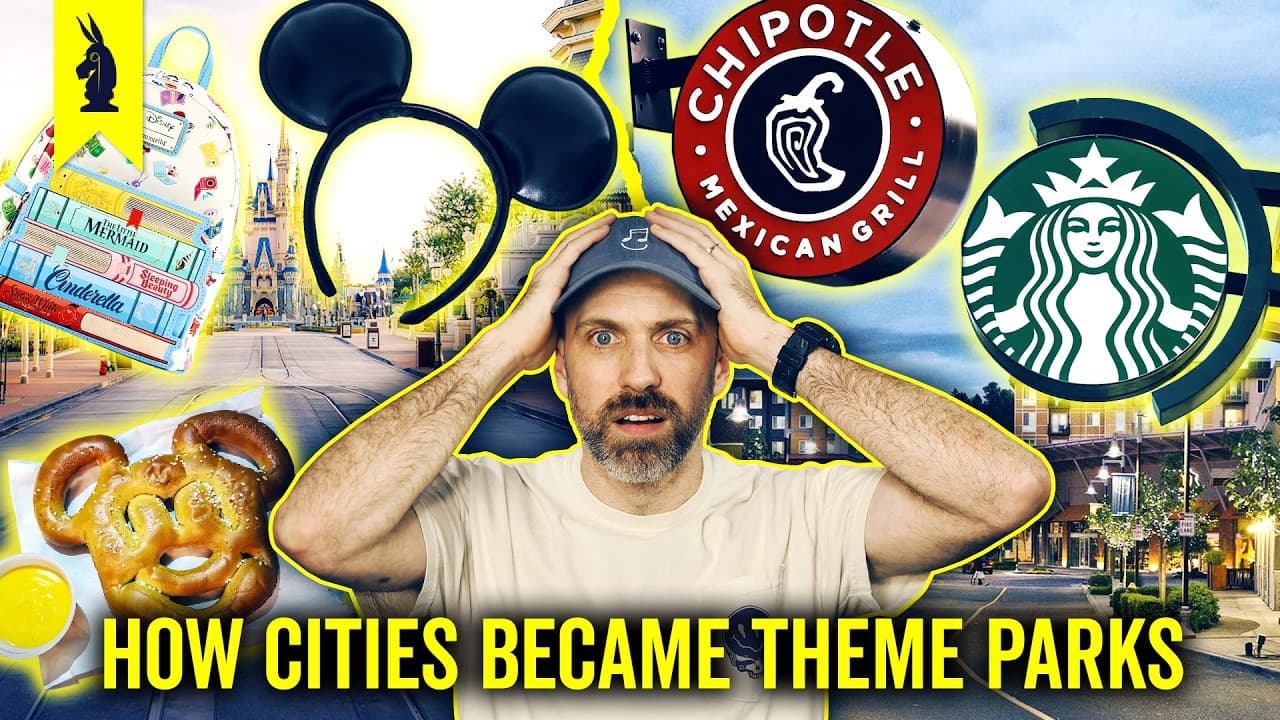
TL;DR
Theme parks manipulate perceptions of reality through controlled environments and consumerism.
Transcript
when I was 17 years old I got arrested at Universal Studios Orlando I was surrounded by security guards and cops and golf carts I was separated from my friends and I got rushed into an underground police station now to my stupid teenage brain this was both scary and honestly kind of fun you know one second I was in this magical and safe controlled ... Read More
Key Insights
- 👾 Theme parks are examples of controlled spaces that create idealized experiences through strategic design and surveillance to ensure compliance and satisfaction.
- 💖 The hyperreality produced by theme parks parallels trends in urban development, which increasingly rely on commercial enticements rather than authentic community building.
- 💖 Emotional consumption in theme parks is designed to cater to psychological needs, transforming guests into willing participants in their own commodification.
- 💖 Urban planning influenced by theme park aesthetics risks erasing genuine cultural landmarks and experiences, focusing instead on consumable and sanitized environments.
- 🥺 Nostalgic representation in theme parks allows visitors to escape from historical realities, leading to a preference for living in a constructed simulacrum of the past.
- 😑 Social control strategies used in theme parks extend into public spaces, fostering a culture of compliance in exchange for curated experiences rather than freedom of expression.
- 🥺 The commercialization of public spaces contributes to the proliferation of "everywhere nowhere" environments, leading to a placeless existence that diminishes local identity and culture.
Install to Summarize YouTube Videos and Get Transcripts
Explore YouTube Video Summarizer or Get YouTube Transcript Extractor
Questions & Answers
Q: How does the theme park environment manipulate visitors' perceptions?
Theme parks create a controlled fantasy world that limits visitors' interpretations of reality, reducing complex experiences into easily digestible symbols. This manipulation is achieved through design elements that guide behavior, promote specific emotional responses, and shape desires, leading guests to conflate their experiences with reality. In this way, they foster an environment where reality feels more like an extension of the park.
Q: What are some examples of how cities have adopted theme park techniques?
Urban developments such as lifestyle centers and public spaces increasingly mimic theme park aesthetics, emphasizing consumption and entertainment. Neighborhoods filled with boutique shopping, entertainment venues, and strict regulations reflect a shift toward spaces designed for consumer satisfaction rather than genuine community interactions. This trend shows how city landscapes are scripted and sanitized, parallel to the experience one has in a theme park.
Q: What impact does hyperreality have on societal behavior towards public spaces?
Hyperreality blurs the line between genuine experiences and manufactured ones, leading people to engage with artificial environments without critical awareness. This phenomenon can create a demand for experiences that prioritize superficial enjoyment over authentic connections, ultimately transforming how community spaces are utilized and valued while potentially marginalizing those who do not fit the consumer mold.
Q: In what ways do theme parks ensure a consistent visitor experience?
Theme parks employ sophisticated methods to maintain order, such as using surveillance systems, designated pathways, and trained employees who adhere to strict behavioral standards. These factors help establish a seamless, controlled environment where visitors are managed for optimal convenience and satisfaction. By micromanaging sensory experiences, parks ensure guests are oriented toward consumption, minimizing disruptions to their constructed experience.
Q: How does nostalgia play a role in the success of theme parks?
Nostalgia is heavily leveraged within theme parks, allowing them to offer visitors an idealized version of the past devoid of its conflicts. This manufactured nostalgia creates an emotional pull that attracts guests to revisit experiences that seem comforting and uncomplicated, contributing to the hyperreal environments where idealized memories overshadow historical complexities.
Q: Why is the concept of social control significant in theme parks?
Social control within theme parks manifests through design choices and regulations that dictate visitor behavior. By managing the environment and enforcing adherence to norms, parks create a sense of safety and predictability that enhances enjoyment while simultaneously restricting freedom. This form of control reflects broader societal shifts that prioritize subdued behavior in public realms.
Q: What is the potential risk of urban spaces becoming theme park-like?
As urban areas adopt theme park aesthetics, they risk becoming commercialized and sanitized, prioritizing consumption over community engagement. This trend may lead to a homogenization of spaces, where local culture is supplanted by curated experiences, thereby alienating individuals from genuinely connecting with their environment and each other.
Q: How does the theme park model influence individual identity and consumer behavior?
Theme parks blur the lines between consumption and self-expression, transforming purchasing into an emotional experience where identity can be crafted via themed merchandise and curated experiences. This model reinforces the idea that happiness and individuality can be achieved through consumerism, perpetuating a cycle where identity becomes increasingly tied to what one buys rather than who one is.
Summary & Key Takeaways
-
Many people associate theme parks with freedom and joy; however, these public spaces are managed environments where control is pervasive, often employing tactics akin to policing to ensure compliance.
-
The psychological effects of such control lead to a societal expectation of consumption and entertainment that aligns more with hyperreality than actual reality, shaping how we perceive urban spaces.
-
As theme park logic infiltrates our cities, public spaces risk becoming mere extensions of commercial interests, emphasizing consumption over genuine community engagement.
Read in Other Languages (beta)
Share This Summary 📚
Summarize YouTube Videos and Get Video Transcripts with 1-Click
Try YouTube Summary with ChatGPT & Claude or YouTube Transcript Generator