How to Improve Indonesian Speaking Skills
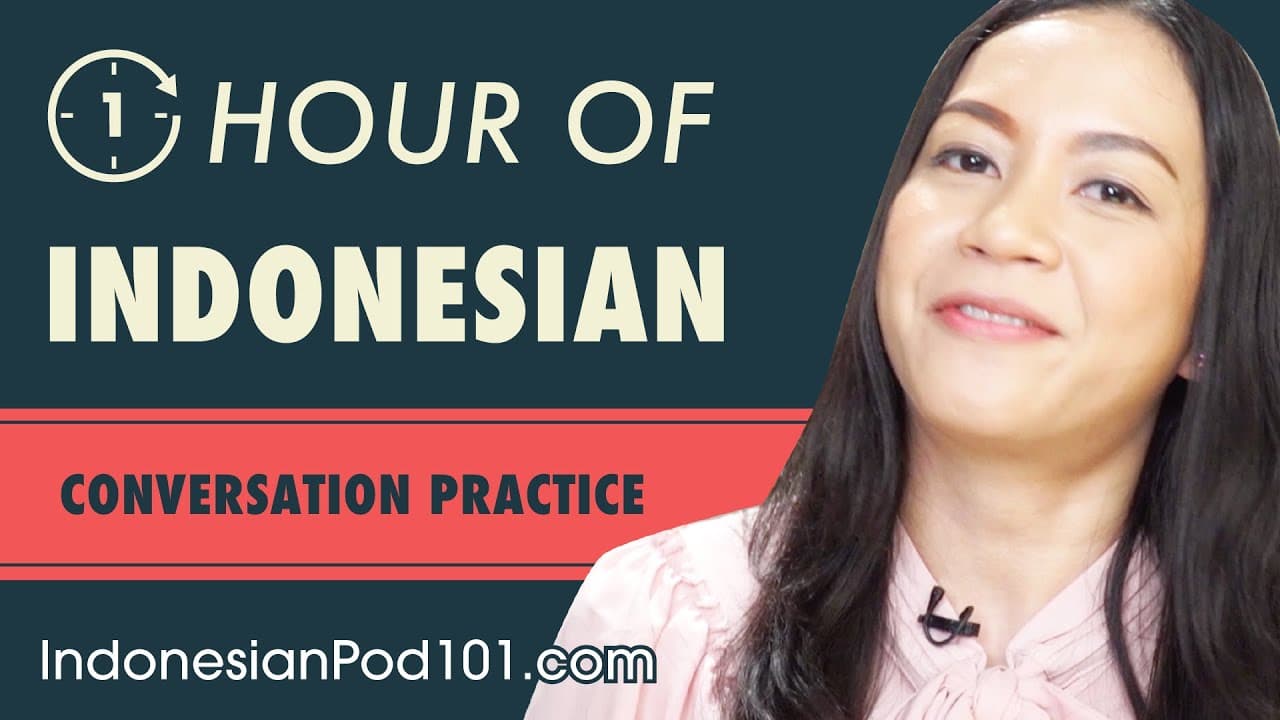
TL;DR
To improve Indonesian speaking skills, practice common phrases and greetings used in daily conversation. Understanding the context and usage of phrases like 'Permisi' (excuse me) and 'Maaf' (sorry) can enhance communication. Familiarity with informal expressions and cultural nuances is crucial for effective interaction.
Transcript
Hai bonus pict will Indonesian female first person sign up free lifetime account at Indonesian fatwa-online.com Halo Bu apa ini ini pohon beringin hai oh Apa itu ujar Hai itu keris hai oh apa ini Hai ini keluar hai oh begitu the box in the season will going to learn how to use Permisi another world without waiting in Indonesia We should you some in... Read More
Key Insights
- Permisi is used to politely interrupt or ask for attention in Indonesian.
- Maaf can be used for both 'excuse me' and 'I'm sorry,' depending on the context.
- Informal expressions like 'dong' soften requests and are used among friends and family.
- Common greetings include 'Selamat pagi' (good morning) and 'Selamat malam' (good night).
- In Indonesia, a handshake and a nod are common greetings.
- Shopping phrases include 'Ini berapa harganya?' (How much is this?).
- 'Sampai jumpa' is a versatile phrase for saying goodbye.
- Using 'Terima kasih' (thank you) is essential in polite conversations.
Install to Summarize YouTube Videos and Get Transcripts
Explore YouTube Video Summarizer or Get YouTube Transcript Extractor
Questions & Answers
Q: How to politely ask for something in Indonesian?
To politely ask for something in Indonesian, you can use the word 'Permisi' at the beginning of your request, which translates to 'excuse me.' This is often followed by the phrase 'saya mau' (I would like) or 'bolehkah saya' (may I) to make a polite request. For example, 'Permisi, bolehkah saya minta kopi?' means 'Excuse me, may I have a coffee?'
Q: What is the informal way to say 'please' in Indonesian?
In informal settings, Indonesians often use the word 'dong' to imply 'please' and soften requests. It is commonly used among friends and family. For example, 'Tolong bantu saya dong' means 'Please help me.' However, it's important to note that 'dong' is not suitable for formal situations or with strangers.
Q: What are the common greetings in Indonesian?
Common greetings in Indonesian include 'Selamat pagi' for good morning, 'Selamat siang' for good afternoon, 'Selamat sore' for good evening, and 'Selamat malam' for good night. 'Halo' is a casual way to say hello. These greetings are essential for everyday interactions and reflect the time of day.
Q: How do you apologize in Indonesian?
To apologize in Indonesian, you can use 'Maaf' for a simple 'sorry' or 'Saya minta maaf' for 'I am sorry.' 'Maaf' is versatile and can be used in both formal and informal situations. It's important to understand the context to choose the appropriate form of apology.
Q: What is the phrase for 'goodbye' in Indonesian?
In Indonesian, 'Selamat tinggal' is used for saying goodbye when you are leaving, while 'Sampai jumpa' means 'see you later' and can be used in both formal and informal contexts. These expressions are commonly used in farewells and parting situations.
Q: How do you ask for the price of an item in Indonesian?
To ask for the price of an item in Indonesian, you can say 'Ini berapa harganya?' which translates to 'How much is this?' It's a straightforward way to inquire about prices while shopping. Adding 'Permisi' at the beginning can make the question more polite.
Q: What are some cultural nuances in Indonesian communication?
Indonesian communication often includes the use of polite expressions and gestures. For instance, a handshake followed by a nod is a common greeting. Informal expressions like 'dong' are used among friends, while formal settings require more respectful language. Understanding these nuances is key to effective interaction.
Q: Why is understanding context important in Indonesian language?
Understanding context in the Indonesian language is crucial because many words and phrases have multiple meanings depending on their usage. For example, 'Maaf' can mean both 'excuse me' and 'I'm sorry.' Using the right expression in the appropriate context ensures clear communication and shows cultural awareness.
Summary & Key Takeaways
-
The video provides essential phrases and expressions to improve Indonesian speaking skills. It covers polite requests, apologies, and common greetings. Understanding these basics is crucial for effective communication in everyday situations.
-
Viewers learn the importance of context in using phrases like 'Permisi' for polite interruptions and 'Maaf' for apologies. The video emphasizes the cultural nuances of informal expressions.
-
Practical examples, such as shopping dialogues and greetings, help learners understand how to apply these phrases in real-life situations. The video is a resourceful guide for beginners looking to converse in Indonesian.
Read in Other Languages (beta)
Share This Summary 📚
Summarize YouTube Videos and Get Video Transcripts with 1-Click
Try YouTube Summary with ChatGPT & Claude or YouTube Transcript Generator
Explore More Summaries from Learn Indonesian with IndonesianPod101.com 📚






Summarize YouTube Videos and Get Video Transcripts with 1-Click
Try YouTube Summary with ChatGPT & Claude or YouTube Transcript Generator