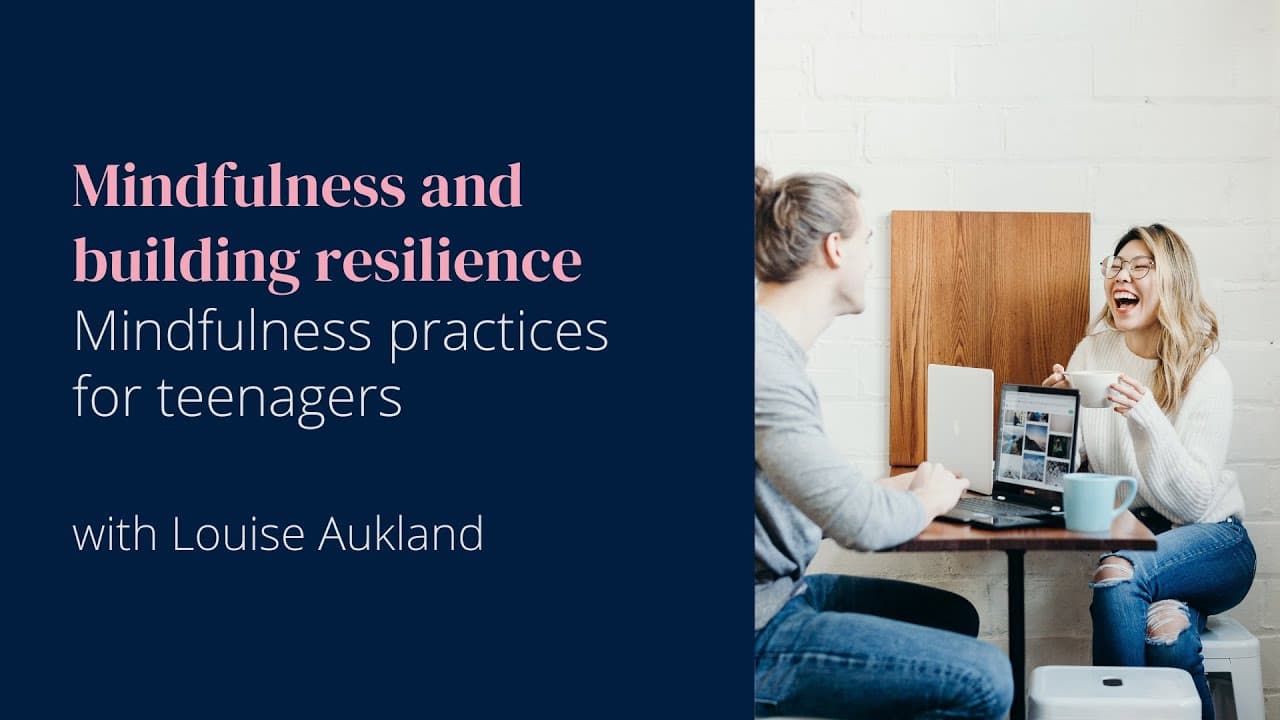
Oxford University Press: Mindfulness practices for teenagers - Louise Aukland
TL;DR
Learn effective mindfulness practices for teaching teenagers, including breathing exercises, sensory awareness, and dealing with difficult thoughts.
Transcript
this mean when you are practicing with teens so let's recall our three aspects we're paying attention moment by moment in a particular way and that way is non-judgmental it's open and it's with curiosity so those are the three aspects and when we practice mindfulness that would be your meditation some young people i never even mentioned the word me... Read More
Key Insights
- 🎁 Mindfulness practices for teens involve being non-judgmentally curious about the present moment.
- 🖐️ Breathing exercises like "stop and breathe" and finger breathing provide tactile sensations that can be helpful for teenagers.
- 🎓 Incorporating mindfulness into classroom activities can enhance transitions and physical education lessons.
- 🥹 Mindfulness helps in managing stress, difficult thought patterns, and cultivating gratitude.
- 🧑🏫 Practicing mindfulness oneself before teaching it to teens is crucial.
- ✋ Mindfulness can be applied in various situations, including high-stress situations like taking tests or doing oral presentations.
- 🥵 Sensory awareness exercises like mindful eating, listening, and seeing help teens engage with their environment.
Install to Summarize YouTube Videos and Get Transcripts
Explore YouTube Video Summarizer or Get YouTube Transcript Extractor
Questions & Answers
Q: What are some breathing exercises that can help teens manage stress?
Some effective breathing exercises for stress management include "stop and breathe," 7-11 breathing, and finger breathing. These exercises help teens recognize and understand their breathing patterns and utilize them to manage stress.
Q: How can mindfulness practices be incorporated into classroom activities?
Mindfulness practices like sitting practices, body scans, and mindful movement can be integrated into classroom activities. For example, sitting practices can be used as transitions between activities, body scans can be practiced at bedtime, and mindful movement can be incorporated into physical education lessons.
Q: How can mindfulness help in dealing with difficult thought patterns?
Mindfulness teaches teens to step back from their thoughts and observe them without judgment, as if they were traffic on a road or clouds passing through the sky. Recognizing that thoughts are not facts allows teens to choose whether to act on them or let them pass by. This helps in managing difficult thought patterns.
Q: What are some gratitude practices that can be used alongside mindfulness?
Gratitude practices like "three good things," savoring the good, or expressing gratitude can be incorporated into mindfulness or practiced independently. These practices help teens focus on positive aspects of their lives and cultivate a sense of gratitude.
Summary & Key Takeaways
-
Mindfulness is practiced with teens by paying attention moment by moment with non-judgmental curiosity.
-
Breathing exercises like "stop and breathe," 7-11 breathing, and finger breathing can help manage stress.
-
Sitting practices, body scans, and mindful movement can be incorporated into classroom activities for transitions and physical education.
Read in Other Languages (beta)
Share This Summary 📚
Summarize YouTube Videos and Get Video Transcripts with 1-Click
Try YouTube Summary with ChatGPT & Claude or YouTube Transcript Generator
Explore More Summaries from Oxford Education 📚


Summarize YouTube Videos and Get Video Transcripts with 1-Click
Try YouTube Summary with ChatGPT & Claude or YouTube Transcript Generator