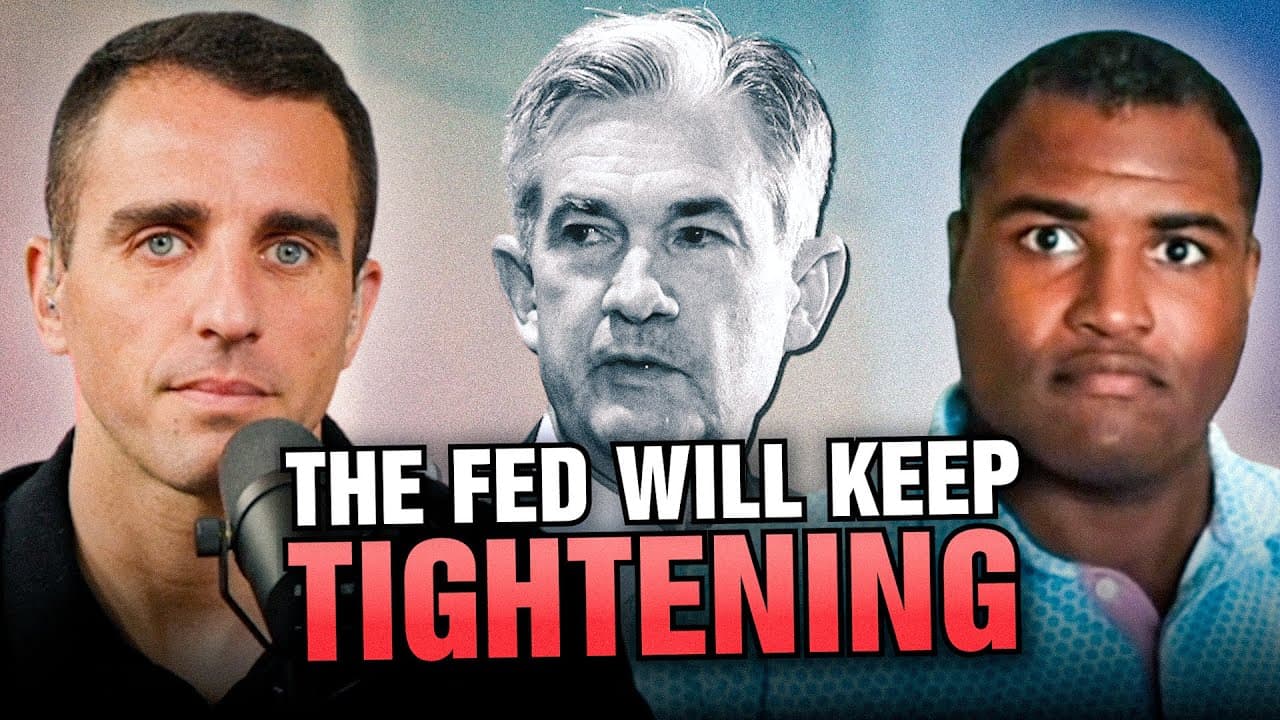
The Fed Will Continue To Tighten | Darius Dale
TL;DR
Jerome Powell's hawkish stance suggests prolonged tightening, affecting economic and market expectations.
Transcript
all right guys bang bang I've got Darius here Darius I figured a perfect place to start will be with the Federal Reserve Mr Jerome Powell came out his famous eight-minute speech that shook the world what was your take on the on his latest comments his latest comments very hawkish I mean you don't need me to tell you that um I think uh this is somet... Read More
Key Insights
- ❓ Powell's emphasis on sustained monetary tightening highlights the Fed's commitment to combat inflation effectively, potentially unsettling market forecasts.
- ☠️ The resilience of the labor market complicates Fed decisions on interest rates, indicating a robust economic backdrop despite inflation concerns.
- 😨 Indicators show that inflation may not be as persistent as previously feared, allowing the possibility for market reassessment of future Fed actions.
- 📈 A significant disparity exists between GDP growth and gross domestic income, suggesting that traditional metrics might not fully capture current economic realities.
- ♻️ Investors' strategies are evolving, with an increasing recognition of a possibly stabilizing economic environment, contrasting with broader bearish sentiments.
- ✋ Projected inflation trends suggest a return to higher baseline levels globally, necessitating revised expectations for asset markets over the coming years.
- ✋ Risks associated with Fed policy adjustments remain high, particularly if adverse economic indicators begin to surface.
Install to Summarize YouTube Videos and Get Transcripts
Explore YouTube Video Summarizer or Get YouTube Transcript Extractor
Questions & Answers
Q: What does Jerome Powell's recent speech imply about future Fed actions?
Powell’s speech suggests that the Fed will keep interest rates higher for an extended period to combat inflation effectively. This hawkish narrative contradicts market optimism for a near-term pivot towards rate cuts. The Fed's goal is to ensure inflation aligns with target objectives, urging the market to reconsider its forward-looking positioning.
Q: How is the labor market currently influencing Fed policy decisions?
The vibrant labor market indicates robust economic growth, which makes the Fed cautious about rate adjustments. While individuals perceive economic signals through market fluctuations, the Fed is more concerned with labor metrics, suggesting that tighter monetary policies will remain until inflation pressures decrease significantly.
Q: What are the implications of the observed inflation deceleration?
The recent dip in core inflation indicators might hint at a transitory nature of current inflation, which initially perplexed markets expecting more persistent inflation. This breakdown could provide the Fed with a rationale to maintain or adjust monetary policy based on reduced inflation volatility, impacting investment strategies.
Q: What are the potential risks if the Fed continues its tightening policy?
Continuous tightening may lead to unintended consequences, particularly if the labor market begins to show signs of stress or if significant economic segments start faltering. The possibility of breaking something in the economy, particularly the labor market, remains a crucial concern, with repercussions for both growth and inflation management.
Q: How are investors adjusting their strategies amid current economic forecasts?
Investors appear to be adjusting their portfolios to reflect both growth and inflation narratives, with many holding onto bearish sentiments despite recent market rallies. The emergence of a potentially stabilizing economic scenario could shift investment strategies toward more bullish perspectives, despite underlying recession fears.
Q: What does the disparity between GDP and gross domestic income indicate?
The significant gap between GDP and gross domestic income suggests a disconnect in economic performance metrics, indicating that while production may slow, income levels remain high. This divergence complicates recession predictions, suggesting that traditional economic indicators might need to be reevaluated to reflect true growth dynamics.
Q: Will the Fed potentially revise its inflation target?
Currently, there's skepticism about such a revision in the near term. While inflation might trend higher than the Fed's traditional targets, the Fed appears committed to maintaining a 2% inflation target through tightening measures, unless faced with compelling evidence necessitating policy shifts.
Q: What does the analysis suggest about the future of inflation?
Projections indicate that inflation may stabilize at a higher baseline compared to previous decades due to factors such as de-globalization and emerging economic alliances. This suggests that while a dramatic increase in rates is unlikely, a sustained upward adjustment in inflation levels could likely remain a feature of the economic landscape.
Summary & Key Takeaways
-
Jerome Powell's recent speech indicates a commitment to maintaining tighter monetary policy for longer, countering market expectations of a pivot to rate cuts.
-
The current labor market remains robust, raising questions about the Federal Reserve's ability to manage inflation without triggering significant economic downturns.
-
Analysts highlight a possible inflection point in inflation trends, suggesting potential shifts in long-term economic expectations and asset market dynamics.
Read in Other Languages (beta)
Share This Summary 📚
Summarize YouTube Videos and Get Video Transcripts with 1-Click
Try YouTube Summary with ChatGPT & Claude or YouTube Transcript Generator
Explore More Summaries from Anthony Pompliano 📚
Summarize YouTube Videos and Get Video Transcripts with 1-Click
Try YouTube Summary with ChatGPT & Claude or YouTube Transcript Generator